Thane Metro ₹12,200 crore project: Shinde orders outreach amid legal, resident pushback
Synopsis
A former Supreme Court judge has publicly called the ₹12,200 crore Thane Internal Metro potentially illegal for bypassing the city's statutory Development Plan — and DCM Eknath Shinde's response was not a legal rebuttal but an outreach drive. With 9.5% of construction done, 3,000 trees at risk, and a rerouting proposal on the table, this project is far from settled.
Key Takeaways
DCM Eknath Shinde on 3 August directed MahaRail to launch a public awareness campaign, including workshops during Ganeshotsav , to address objections against the ₹12,200-crore Thane Internal Metro .
The 29-km metro line — 26 km elevated and 3 km underground — is 9.5% complete and will connect with Metro Lines 4 and 5 .
Former Supreme Court judge Justice Abhay S Oka called the project potentially illegal, noting it does not appear in the city's statutory Development Plan under the MRTP Act .
Transport Minister Pratap Sarnaik proposed rerouting through Samata Nagar and Lokmanya Nagar to benefit over 1,00,000 residents ; MahaRail has been asked for a comparative study within three weeks .
Citizens' organisations warned the project threatens close to 3,000 mature trees in Thane and have vowed to file formal objections.
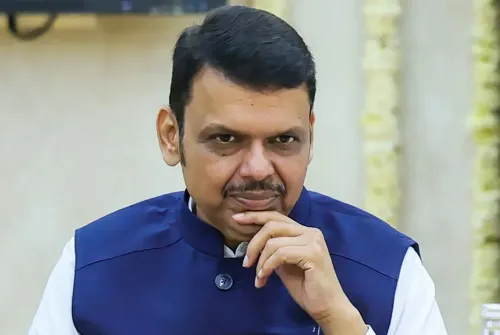
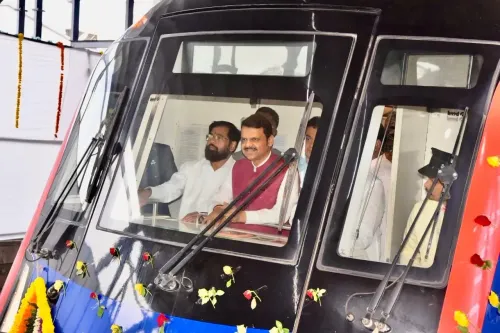
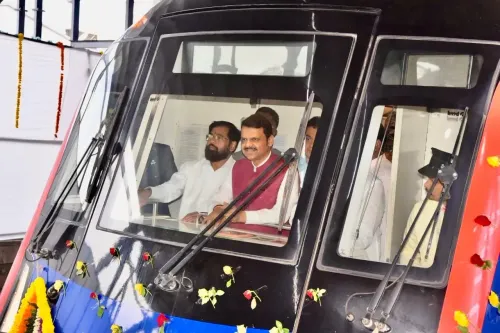
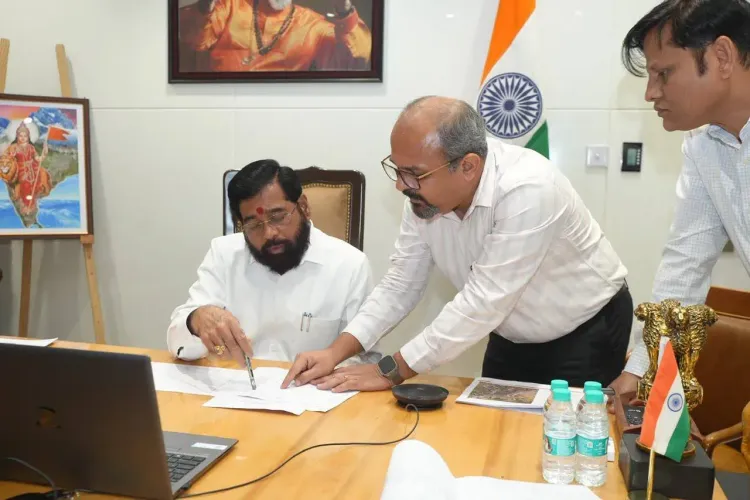
Maharashtra Deputy Chief Minister and Urban Development Minister Eknath Shinde on Monday, 3 August directed MahaRail authorities to launch a comprehensive public awareness campaign — including local seminars and interactive workshops — to address mounting objections against the ₹12,200-crore Thane Internal Metro Project. The directive follows sustained resistance from residents, local representatives, and environmentalists, and comes a day after a former Supreme Court judge publicly questioned the project's legal standing.
What the Project Involves
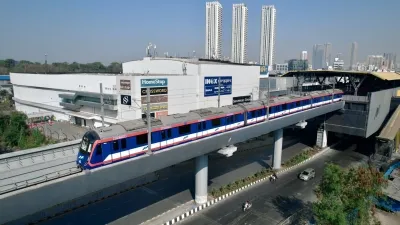
The 29-kilometre Thane Internal Metro line consists of a 26-km elevated corridor covering key areas of Thane City and a 3-km underground stretch linking the existing Thane railway station to a proposed new station. Designed to ease severe traffic congestion and improve daily commutes, the line will integrate with Metro Line 4 at Rayladevi and Metro Line 5 at Balkum Naka. As of now, 9.5% of overall construction is complete, with station work and casting yards progressing steadily.
Key Directives from the Review Meeting
During a virtual review meeting, DCM Shinde instructed officials to resolve public grievances immediately and bring all stakeholders on board. He mandated MahaRail to organise interactive workshops and put up informative hoardings during the upcoming Ganeshotsav festival to explain the project's scope directly to citizens.
Transport Minister Pratap Sarnaik advocated rerouting the line through Samata Nagar, Lokmanya Nagar, and Aai Mata Temple toward Shivai Nagar, arguing the adjustment would benefit over 1,00,000 residents. Responding to the proposal, Shinde directed MahaRail to complete a comparative study within three weeks to evaluate passenger benefits and minimise residential displacement.
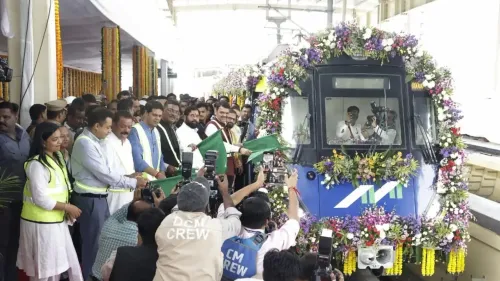
Shinde also instructed officials to find quick, actionable solutions to localised concerns raised by residents of Eden Woods, Hiranandani Estate, and Chendani Koliwada. He highlighted that the project was inaugurated by Prime Minister Narendra Modi and features on the central government's priority list for urban development.
Legal Challenge and Environmental Concerns
The directives come a day after former Supreme Court judge Justice Abhay S Oka, speaking at an interactive session, criticised Thane's urban planning and specifically flagged the Thane Internal Ring Metro as potentially illegal and lacking adequate public consultation. Justice Oka noted that the project does not appear in the municipal corporation's statutory Development Plan (DP) under the Maharashtra Regional and Town Planning (MRTP) Act, making its execution legally indefensible in his assessment. He stated that executing major infrastructure works without citizen participation goes against constitutional rights.
Separately, representatives of citizens' organisations warned that the internal circular Metro project threatens close to 3,000 mature trees in Thane, and declared they would formally raise objections against the large-scale loss of green cover.
Political Consensus and Next Steps
Member of Parliament Naresh Mhaske emphasised the need to build consensus among elected leaders, while Shinde urged local representatives to take the lead in addressing citizens' doubts. The review meeting was attended by Transport Minister Sarnaik, MP Mhaske, MLAs Niranjan Davkhare, Adv Madhavi Naik, and Ravindra Phatak, along with Thane Municipal Commissioner Saurabh Rao, MahaRail CEO Shravan Hardikar, and key administrative officers.
With a legal cloud over its statutory basis, environmental objections gathering force, and a rerouting study now underway, the project's timeline and final alignment remain uncertain. The next three weeks — when MahaRail's comparative study is due — will be a critical test of whether the government can convert outreach into genuine consensus.
Point of View
Not a legal answer — and that gap is telling. Justice Oka's observation that the Thane Internal Metro is absent from the city's statutory Development Plan is not a procedural quibble; it strikes at the constitutional legitimacy of the project. The government's pivot to Ganeshotsav hoardings and interactive workshops suggests it is betting on optics over process. With a rerouting study now mandated and environmental objections mounting, the ₹12,200 crore project faces the kind of multi-front resistance that has stalled large urban infrastructure in Maharashtra before. The three-week comparative study will reveal whether the administration is genuinely open to course-correction or simply buying time.
NationPress
18 Sept 2026
Frequently Asked Questions
What is the Thane Internal Metro Project?
The Thane Internal Metro is a ₹12,200-crore urban rail project comprising a 29-km line — 26 km elevated and 3 km underground — designed to ease traffic congestion in Thane City and improve connectivity to Thane railway station. It will integrate with Metro Line 4 at Rayladevi and Metro Line 5 at Balkum Naka, and was inaugurated by Prime Minister Narendra Modi.
Why are residents and officials objecting to the Thane Metro?
Residents of areas including Eden Woods, Hiranandani Estate, and Chendani Koliwada have raised localised grievances about the ongoing construction. Citizens' organisations have also warned that the project threatens close to 3,000 mature trees. Separately, a former Supreme Court judge has questioned whether the project has a valid statutory basis under Maharashtra's planning laws.
What did former Supreme Court judge Justice Abhay S Oka say about the project?
Justice Abhay S Oka stated that the Thane Internal Ring Metro does not appear in the municipal corporation's statutory Development Plan under the Maharashtra Regional and Town Planning (MRTP) Act, making its execution legally indefensible in his assessment. He also argued that proceeding without proper public consultation violates citizens' constitutional rights.
What is the proposed rerouting of the Thane Metro?
Transport Minister Pratap Sarnaik proposed rerouting the metro line through Samata Nagar, Lokmanya Nagar, and Aai Mata Temple toward Shivai Nagar, arguing it would benefit over 1,00,000 residents. DCM Eknath Shinde has directed MahaRail to complete a comparative study evaluating this proposal within three weeks.
How much of the Thane Internal Metro has been built so far?
As of the review meeting on 3 August, 9.5% of the overall construction is complete, with work on stations and casting yards progressing steadily. The project's final alignment and timeline remain subject to the outcome of the ongoing comparative study and resolution of public objections.