NLSIU 34th convocation: Karnataka CM Shivakumar urges law graduates to guard democracy
Synopsis
At NLSIU's 34th convocation, Karnataka CM D.K. Shivakumar did more than deliver a speech — he announced a dedicated judicial training institution and a pro bono Start-up Law Clinic, while challenging graduates to measure India's greatness not by GDP but by how justly it grows. With Chief Justice of India Justice Surya Kant in the audience, the address carried rare institutional weight.
Key Takeaways
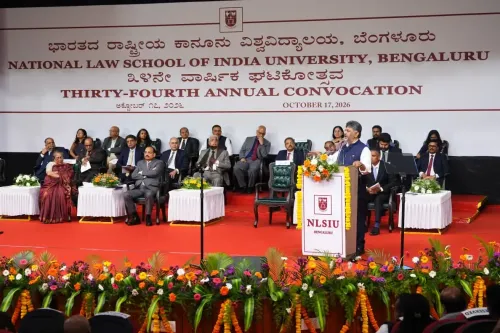
Shivakumar addressed the 34th convocation of NLSIU at the Jnana Jyothi Auditorium, Bengaluru on 17 October 2026 .
He urged graduates to question power, uphold constitutional values and prioritise justice for ordinary citizens.
The Karnataka government will set up a dedicated institution to train law graduates for judicial service examinations and provide continuing education for young advocates.
A Start-up Law Clinic at NLSIU will offer free, pro bono legal advice to young entrepreneurs.
Chief Justice of India Justice Surya Kant , serving as NLSIU Chancellor, was among the dignitaries present.
Shivakumar invoked Dr.
Ambedkar's ideals and India's 2047 development goal, urging graduates to measure success by lives improved and rights protected.
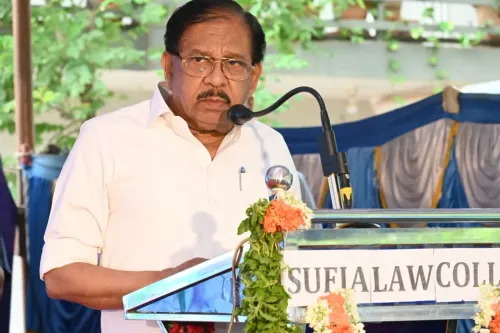
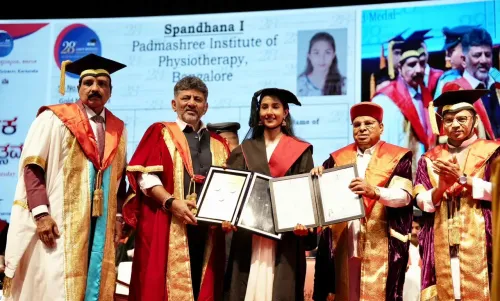
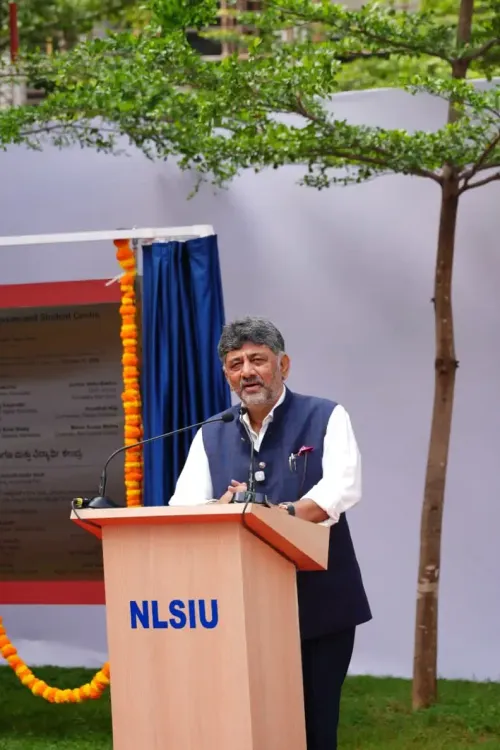
Karnataka Chief Minister D.K. Shivakumar on 17 October 2026 called on young law graduates at the 34th convocation of the National Law School of India University (NLSIU) to defend democratic institutions, uphold constitutional values and ensure justice reaches every citizen. Addressing the ceremony at the Jnana Jyothi Auditorium in Bengaluru, Shivakumar urged graduates never to stop questioning power, never to compromise on their values, and never to forget the people they serve.
The Call to Defend Democracy
Shivakumar said a robust democracy is not defined by consensus with the government but by every citizen's freedom to question it — a pointed remark at a time when, he noted, democratic institutions across the world are under strain. 'Never stop questioning, never compromise on your values and never forget the people,' he told the graduating class, stressing that young lawyers and future policymakers carry a special constitutional responsibility.
He urged graduates to debate, challenge ideas and take ownership of solutions — insisting that constitutional principles must not remain confined to textbooks but must actively guide governance, policymaking and public life.
What the Government Announced
Beyond the address, the Chief Minister announced two concrete initiatives. First, the Karnataka government will establish a dedicated institution to prepare law graduates for judicial service examinations and to provide continuing legal education for young advocates. Second, the government will support the creation of a Start-up Law Clinic at NLSIU, where students, faculty and practising lawyers will offer free, pro bono legal advice to young entrepreneurs.
These commitments signal an intent to bridge the gap between legal education and access to justice — a recurring concern in a country where, as Shivakumar noted, crores of cases are pending before courts, leaving individuals and families in prolonged limbo.
Justice, Backlog and the Human Cost
'For us, it may be just another case number. But for that person, it could be their entire life,' Shivakumar said, articulating the urgency of making justice faster, simpler, more affordable and more accessible. India's judicial backlog — estimated in the crores — has long been flagged by the Supreme Court and law commissions as one of the most pressing structural challenges in the legal system.
He also widened the frame of development, arguing it should be measured not solely through economic growth, infrastructure or employment figures, but through the dignity, liberty, equality and security citizens actually experience.
Ambedkar, the Constitution and India at 2047
Invoking the ideals of Dr. B.R. Ambedkar and the framers of the Constitution, Shivakumar said justice, liberty, equality and fraternity form the irreducible foundation of Indian democracy. With India targeting developed-nation status by 2047, he asked graduates to look beyond the classroom and engage with the lived challenges of farmers, workers, women and ordinary families.
'India's greatness will not be measured only by how much we grow, but by how justly we grow,' he said, urging the new lawyers to measure personal success by the lives they improve and the rights they protect.
On a personal note, Shivakumar revealed that he had once aspired to become a lawyer himself, but was drawn into politics after receiving a party ticket while still a student.
Dignitaries Present
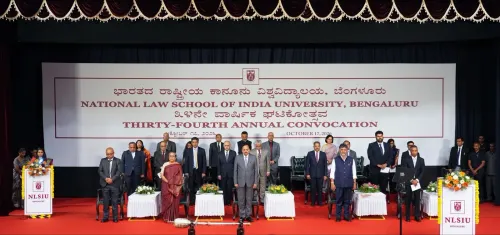
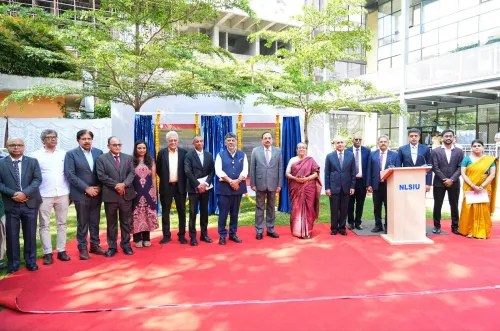
The convocation was attended by Chief Justice of India and NLSIU Chancellor Justice Surya Kant, chief guest Arundhati Nag, Higher Education Minister Basavaraj Rayareddy, judges of the Supreme Court and High Courts, NLSIU Vice-Chancellor Dr. Sudhir Krishnaswamy, faculty members and other dignitaries. The gathering underlined the institution's standing as one of India's premier legal education centres.
As NLSIU marks its 34th convocation, the dual announcements on judicial training and pro bono clinics will be closely watched for follow-through — particularly the Start-up Law Clinic, which, if operationalised, could offer a scalable model for access-to-justice initiatives at other national law universities.
Point of View
Critiquing democratic backsliding globally and personalising the justice backlog — but the announcements will matter more than the oratory. A dedicated judicial training institution is a meaningful gap-filler, given that most state-level preparation for judicial service exams is left to private coaching. The pro bono Start-up Law Clinic is a genuinely interesting idea, but its impact hinges entirely on whether it is institutionalised with faculty incentives and student credit, or remains a headline with no follow-through. Notably, with Chief Justice Surya Kant on the dais, any political undercurrents in the address — including implicit critiques of the Centre — carried added symbolic weight that mainstream coverage is likely to underplay.
NationPress
17 Oct 2026
Frequently Asked Questions
What did Karnataka CM D.K. Shivakumar say at the NLSIU convocation?
Chief Minister D.K. Shivakumar urged the graduating class at NLSIU's 34th convocation to protect democratic institutions, uphold constitutional values and ensure justice for every citizen. He asked them never to stop questioning power, never to compromise on their values and never to forget the people they serve.
What new institutions did the Karnataka government announce at the NLSIU convocation?
The Karnataka government announced two initiatives: a dedicated institution to train law graduates for judicial service examinations and provide continuing education for young advocates, and a Start-up Law Clinic at NLSIU offering free pro bono legal advice to young entrepreneurs.
Who attended the NLSIU 34th convocation ceremony?
The ceremony was attended by Chief Justice of India and NLSIU Chancellor Justice Surya Kant, chief guest Arundhati Nag, Higher Education Minister Basavaraj Rayareddy, Supreme Court and High Court judges, NLSIU Vice-Chancellor Dr. Sudhir Krishnaswamy, and other dignitaries.
Why did Shivakumar highlight the judicial backlog at the NLSIU convocation?
Shivakumar raised the issue to underscore that the justice system's scale is experienced as personal suffering by litigants. He noted that crores of cases are pending before Indian courts and emphasised the need to make justice faster, simpler, more affordable and more accessible to ordinary citizens.
What is the significance of the NLSIU convocation in the national legal context?
NLSIU is India's foremost national law university, and its convocation draws the Chief Justice of India as Chancellor, lending institutional weight to the event. The announcements made here — on judicial training and pro bono clinics — could serve as models for other national law schools across the country.