Shivraj Singh Chouhan Sets Three Demands for Agri-Tech Firms at UP-Japan Meet
Synopsis
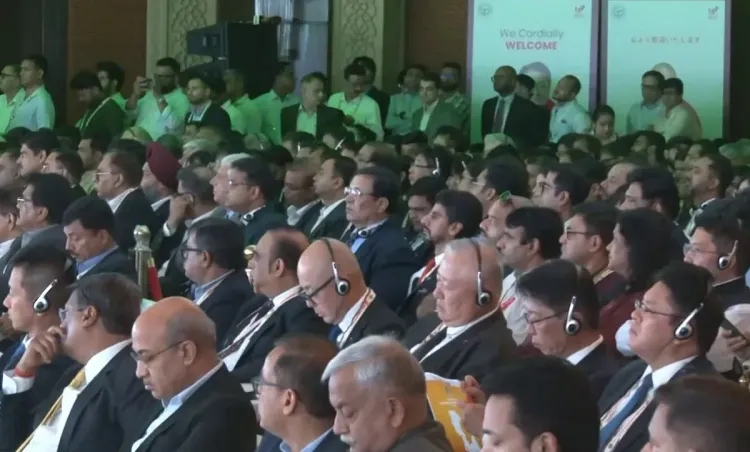
At the UP-Japan Investment Meet on 19 August 2026, Union Agriculture Minister Shivraj Singh Chouhan set three demands for Escorts Kubota, Minda Corporation, and other firms: centre the small farmer, skill and employ rural youth, and help make India a global agri-tech hub.
Key Takeaways
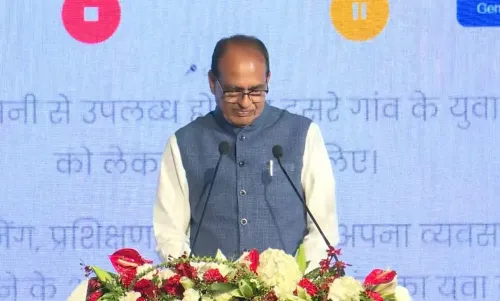
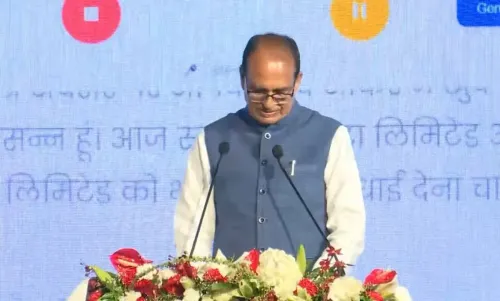
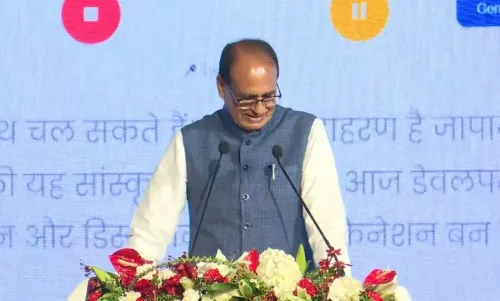
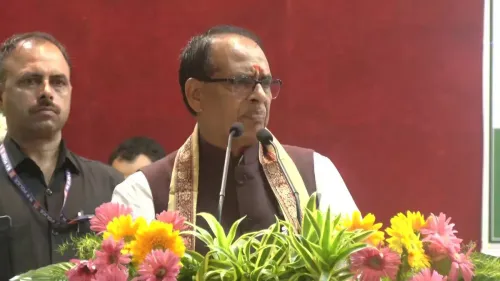
Union Agriculture Minister Shivraj Singh Chouhan addressed the UP-Japan Investment Meet on 19 August 2026 .
He set three expectations for companies including Escorts Kubota and Minda Corporation : farmer-first product design, rural youth skilling and employment, and building India as a global agri-tech hub.
Chouhan specifically demanded that machinery be affordable and accessible to small and marginal farmers , who make up the overwhelming majority of India's farming population.
Escorts Kubota is a joint venture between India's Escorts Ltd and Japan's Kubota Corporation , focused on tractors and agricultural machinery.
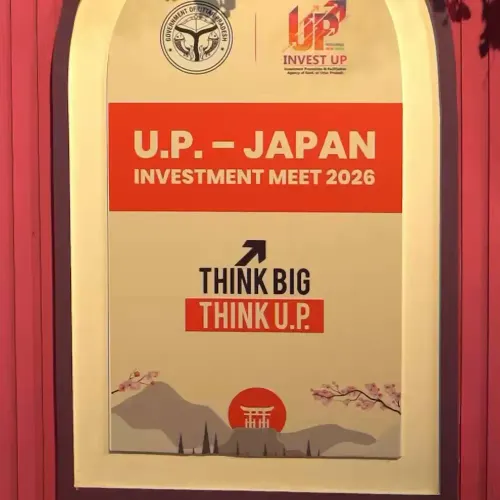
The meet is part of Uttar Pradesh's sustained push to attract Japanese FDI into manufacturing and agri-tech corridors.
The demands align with existing frameworks including Make in India , SMAM , and the India-Japan CEPA of 2011 .
At the UP-Japan Investment Meet, Union Agriculture Minister Shivraj Singh Chouhan drew a clear line in the sand: investment in Indian agriculture is welcome, but only if it reaches the last farmer in the last village. Speaking on 19 August 2026, the minister laid out three non-negotiable expectations for companies including Escorts Kubota and Minda Corporation — a message that reframed the summit not as a capital-attraction exercise, but as a social contract.
Three Demands, One Clear Priority: The Small Farmer
Chouhan's first demand was unambiguous: put the farmer at the centre. 'ऐसी तकनीक और मशीनें बनाइए, जो छोटे किसान के लिए भी उपयोगी हों' ('Build technology and machines that are useful even for the small farmer'), he said — a direct pushback against high-end agri-tech that serves large landholders while bypassing the 86 per cent of Indian farmers who own less than two hectares. Accessibility, he stressed, must be built into the product design, not bolted on as an afterthought.
His second demand pivoted to rural youth. Chouhan called on firms to offer training, employment, and entrepreneurship opportunities to young people in villages — so that, in his words, the village youth becomes not merely a spectator of this development journey, but a 'partner and architect of his own destiny.' It is a phrase that signals the minister's awareness of a stubborn political reality: industrial investment that bypasses rural youth breeds resentment, not growth.
India as a Global Agri-Tech Hub — The Ambition Behind the Ask
The third demand was the most ambitious. Chouhan asked every company in the room to actively help position India as a global centre for agricultural technology. This is not rhetorical flourish — it connects directly to the government's longer arc of policy: the Make in India initiative launched in 2014, the Sub-Mission on Agricultural Mechanization (SMAM) running since the same year, and the India-Japan Comprehensive Economic Partnership Agreement of 2011, all of which were designed to channel East Asian manufacturing capital into Indian production ecosystems.
Escorts Kubota — the joint venture between India's Escorts Ltd and Japan's Kubota Corporation — is precisely the kind of partnership these frameworks envisioned: a marriage of Japanese precision engineering and Indian agricultural scale. Minda Corporation, with its expertise in automotive electronics and systems, adds a technology-integration dimension that points toward smarter, sensor-equipped farm machinery.
Why Uttar Pradesh, Why Now
Uttar Pradesh has been running a sustained campaign to attract Japanese investment into its manufacturing and agri-tech corridors — a strategy that fits the broader pattern of northern Indian states competing for East Asian FDI as supply chains diversify away from China. Hosting a dedicated UP-Japan Investment Meet signals that the state is not waiting for national-level deals to trickle down; it is building its own pipeline.
Chouhan's presence — and his pointed three-point charter — gives that pitch a political spine. The minister is, in effect, telling Japanese and Indian boardrooms that the government will measure success not by the size of the cheque signed at the summit, but by whether a smallholder in Uttar Pradesh can afford and operate the machine that results from it.
The real test comes in the follow-through: whether the Escorts Kubota project and the broader UP-Japan pipeline produce MoUs with farmer-affordability clauses and rural skilling commitments — or whether the three demands remain a minister's wish list on a conference stage.
Point of View
Tangible returns from industrial investment summits, and the minister is putting that expectation on record in front of corporate audiences. By tying Japanese FDI to smallholder accessibility and rural youth employment, he is threading the needle between the government's manufacturing ambitions and its electoral compulsions in states like Uttar Pradesh. The agri-tech hub ambition also fits a longer pattern of India seeking to move from being a destination for low-cost manufacturing to becoming an originator of globally competitive farm technology. Whether these demands get written into actual project agreements — or remain aspirational conference rhetoric — will define the political legacy of this investment push.
NationPress
5 Oct 2026
Frequently Asked Questions
What did Shivraj Singh Chouhan say at the UP-Japan Investment Meet?
Union Agriculture Minister Shivraj Singh Chouhan laid out three expectations for companies at the UP-Japan Investment Meet on 19 August 2026: design technology accessible to small farmers, provide training and employment opportunities to rural youth, and help position India as a global agri-tech hub.
What is Escorts Kubota and why is it significant?
Escorts Kubota is a joint venture between India's Escorts Ltd and Japan's Kubota Corporation, focused on tractors and agricultural machinery manufacturing. Its involvement in the UP-Japan Investment Meet signals Japanese capital flowing into India's farm equipment sector.
What is the UP-Japan Investment Meet?
The UP-Japan Investment Meet is an investment promotion summit hosted by Uttar Pradesh to attract Japanese companies into the state's manufacturing and agricultural technology sectors, part of a broader state-level strategy to channel East Asian FDI into northern India.
What government schemes support agricultural mechanization in India?
The Sub-Mission on Agricultural Mechanization (SMAM), operational since 2014, is the primary central government scheme to promote farm machinery access for smallholder farmers. It works alongside the Make in India initiative and the India-Japan Comprehensive Economic Partnership Agreement of 2011.
What is Minda Corporation's role in agriculture?
Minda Corporation is an Indian automotive components manufacturer specialising in electronics and systems. Its presence at the UP-Japan Investment Meet points toward the integration of smart electronics and sensor technology into next-generation agricultural machinery.