Shivraj Singh Chouhan backs Modi's decolonisation drive
Synopsis
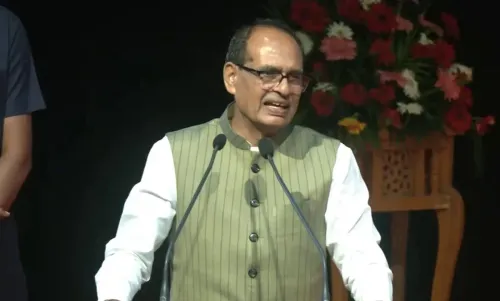
Agriculture Minister Shivraj Singh Chouhan on 17 June 2026 backed PM Modi's symbolic decolonisation drive, citing the renaming of Race Course Road, India Gate Netaji statue, new Parliament building, and Mughal Gardens as efforts to restore national self-respect.
Key Takeaways
Shivraj Singh Chouhan posted on 17 June 2026 praising PM Modi's decolonisation steps as efforts to awaken India's self-respect, not mere name changes.
Race Course Road was renamed Lok Kalyan Marg in 2016 , one of the first symbolic acts of the Modi government.
A permanent statue of Netaji Subhas Chandra Bose was installed at India Gate , replacing a colonial-era statue of King George V at the same canopy.
The new Parliament building was inaugurated on 28 May 2023 as an indigenous replacement for the British-era structure.
Mughal Gardens at Rashtrapati Bhavan were renamed Amrit Udyan in April 2023 as part of Azadi Ka Amrit Mahotsav celebrations.
The BJP's decolonisation project has run in parallel at the state level, with multiple city, road, and institution renamings across BJP-governed states.
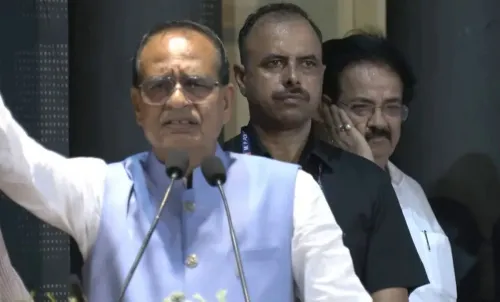
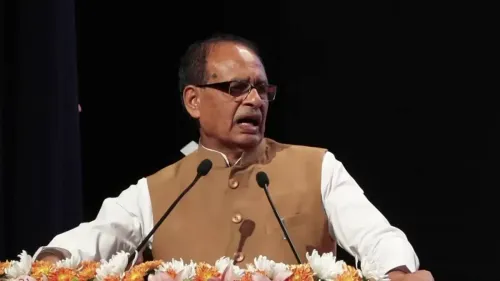
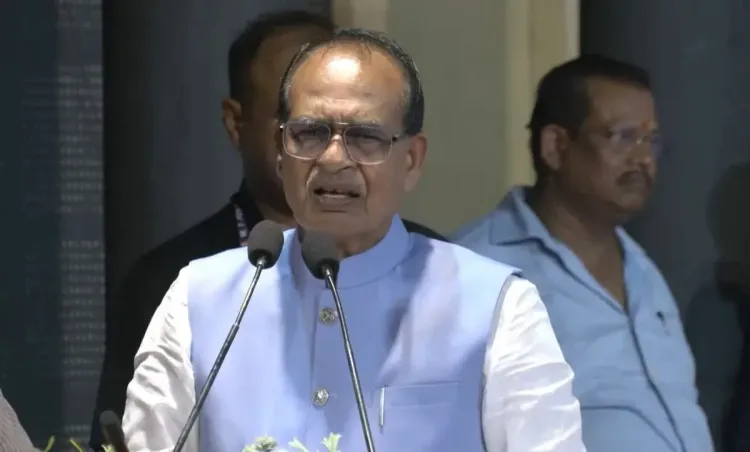
Union Agriculture Minister Shivraj Singh Chouhan on Wednesday, 17 June 2026, took to X to highlight what he described as Prime Minister Narendra Modi's sustained effort to free India from a 'colonial mindset,' pointing to a series of symbolic changes undertaken by the central government since 2014.
In his post, Chouhan wrote — 'ये केवल नाम परिवर्तन नहीं हैं, बल्कि देश के स्वाभिमान को जागृत करने के प्रयास हैं' ('These are not merely name changes, but efforts to awaken the self-respect of the nation') — citing four specific acts: renaming 7 Race Course Road to Lok Kalyan Marg, installing a statue of Netaji Subhas Chandra Bose at India Gate, constructing the new Parliament building, and renaming the Mughal Gardens at Rashtrapati Bhavan to Amrit Udyan.
Context
The four actions Chouhan cited span the full arc of the Modi government. Race Course Road, the address of the Prime Minister's official residence, was renamed Lok Kalyan Marg (Road of Public Welfare) in 2016, among the earliest symbolic steps after the BJP came to power in 2014. The renaming was framed as replacing a colonial-era name rooted in equestrian sport with one that centred citizen welfare.
At India Gate, a hologram of Netaji was unveiled in 2021 as part of the Azadi Ka Amrit Mahotsav celebrations marking 75 years of independence, with a permanent granite statue later installed at the same canopy that once housed a statue of King George V.
Policy Backdrop
The new Parliament building was inaugurated on 28 May 2023 with explicit emphasis on moving beyond the colonial-era structure built during British rule. The same period saw the Mughal Gardens at Rashtrapati Bhavan rechristened Amrit Udyan — 'Garden of Nectar' — in April 2023, a renaming the government tied to the broader spirit of the Amrit Mahotsav.
Taken together, these steps form part of a wider BJP-led project of replacing colonial and certain historical names across roads, airports, cities, and institutions with indigenous alternatives. State governments aligned with the BJP have undertaken parallel renamings, and the installation of statues honouring leaders outside the dominant Congress-era freedom narrative has been a recurring feature of this effort.
Stakeholders and Impact
The government consistently frames these changes as exercises in restoring civilisational self-confidence rather than routine administrative updates. For the general public, the most visible impact has been the opening of the new Parliament complex — a functional shift alongside the symbolic one — and the annual opening of Amrit Udyan to visitors, which has drawn large footfalls.
Critics have argued that the renamings prioritise optics over substantive policy, while supporters contend that symbolic sovereignty matters alongside economic development. Chouhan's post does not engage with the critique but amplifies the government's established framing.
What's Next
With the Monsoon Session of Parliament approaching, attention will be on whether the government advances a more formal decolonisation policy framework — potentially covering additional central government buildings, roads, or institutions. Chouhan's post signals that the BJP's senior leadership continues to regard these symbolic acts as politically salient and worth communicating actively to the public.
Point of View
' he reinforces a BJP messaging arc that has run unbroken since 2014 and tends to intensify ahead of parliamentary sessions or election cycles. The choice to highlight Netaji Bose alongside the Parliament building and garden renaming is also telling: it signals an ongoing effort to widen the BJP's claim over India's freedom movement beyond the Congress-Nehru lineage. For a senior leader of Chouhan's stature, posting this in mid-2026 suggests the party sees decolonisation symbolism as still electorally and culturally potent.
NationPress
18 Sept 2026
Frequently Asked Questions
Why did Modi rename Race Course Road to Lok Kalyan Marg?
The renaming in 2016 replaced a colonial-era name rooted in equestrian sport with one meaning 'Road of Public Welfare,' framing the PM's residence as a symbol of citizen-centred governance rather than British-era leisure culture.
Why is there a statue of Netaji Subhas Chandra Bose at India Gate?
The government installed a permanent statue of Netaji at the India Gate canopy — which previously housed a statue of King George V — as part of Azadi Ka Amrit Mahotsav, honouring a freedom leader the BJP has sought to foreground alongside the Congress-era narrative.
What is Amrit Udyan and why was Mughal Gardens renamed?
Amrit Udyan, meaning 'Garden of Nectar,' is the new name for the Mughal Gardens at Rashtrapati Bhavan, renamed in April 2023 to replace a name associated with Mughal-era history with one tied to India's 75th independence anniversary spirit.
When was the new Parliament building inaugurated?
The new Parliament building was inaugurated on 28 May 2023, presented by the government as a modern, indigenous structure replacing the colonial-era Parliament house built during British rule.
What is Shivraj Singh Chouhan's role in the Modi government?
Shivraj Singh Chouhan is the Union Minister of Agriculture and Farmers Welfare and Rural Development in the Modi government, and is a senior BJP leader who served four terms as Chief Minister of Madhya Pradesh.