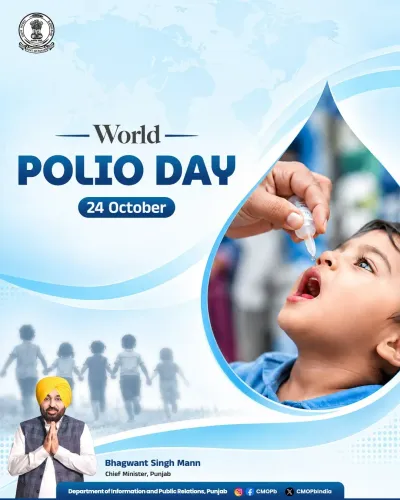
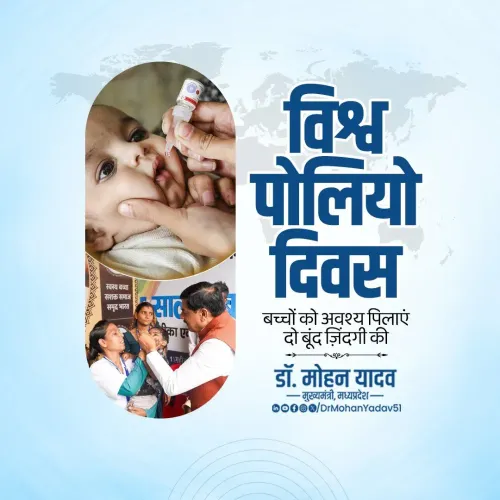
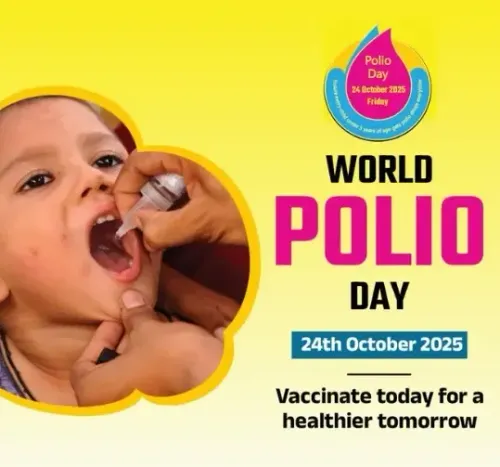
Shivraj Chouhan marks World Polio Day, recalls India's polio-free triumph
Synopsis
On World Polio Day 2026, Union Minister Shivraj Singh Chouhan celebrated India's polio-free status — WHO-certified since 2014 — and invoked the 'do boond zindagi ki' slogan to urge continued vigilance through small, sustained efforts.
Key Takeaways
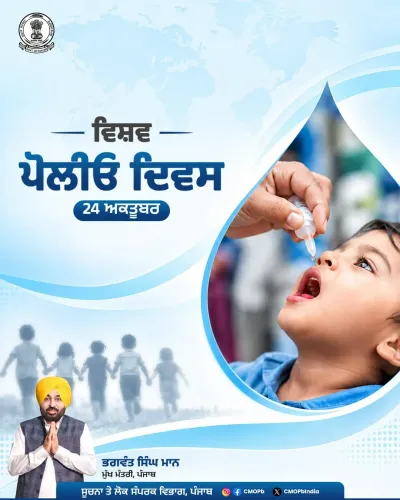
World Polio Day falls on 24 October every year, dedicated to global polio eradication awareness.
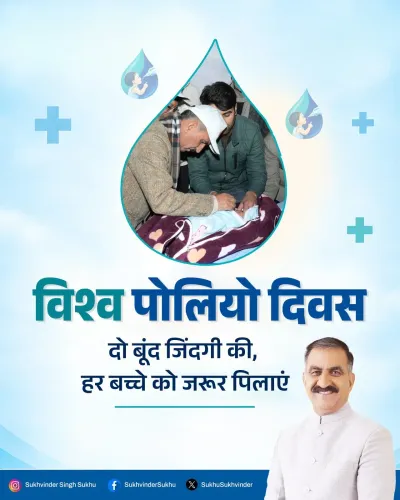
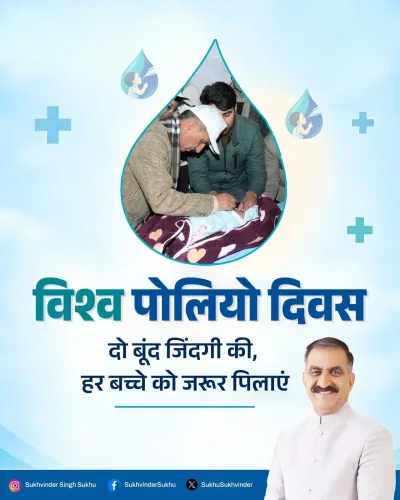
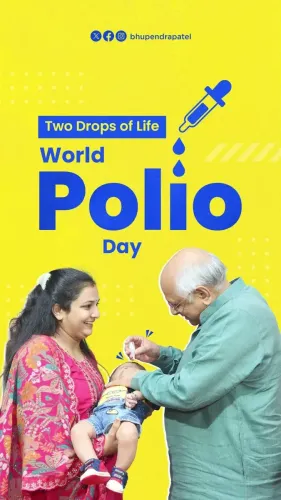
India's Pulse Polio Immunisation Programme was launched in 1995 under the slogan 'Do Boond Zindagi Ki' ('two drops of life').
India recorded its last wild poliovirus case in 2011 , followed by WHO polio-free certification in March 2014 .
Union Minister Shivraj Singh Chouhan urged continued awareness and resolve, framing small collective efforts as the foundation of great public-health goals.
Maintaining polio-free status requires ongoing annual vaccination rounds and active disease surveillance.
Twelve years after the World Health Organization certified India polio-free, the milestone still carries the power to inspire — and Union Agriculture Minister Shivraj Singh Chouhan invoked it on World Polio Day, 24 October 2026, calling on every Indian to keep the flame of awareness burning.
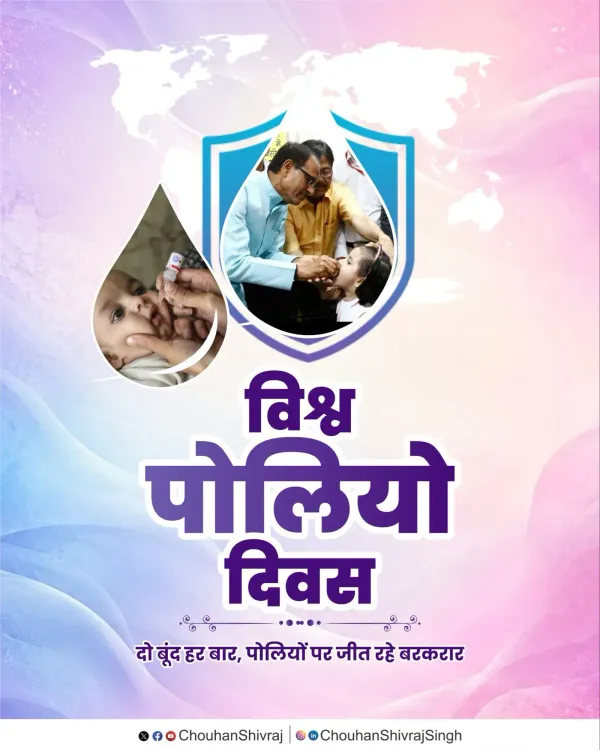
In his post on X, Chouhan wrote: 'Do boond zindagi ki' ['two drops of life'] — the iconic slogan of India's mass immunisation drive — before urging citizens to 'resolve, on this sacred occasion, to ensure the complete fulfilment of this noble mission.' His message: even the grandest public-health goals are won through small, relentless acts.
'Do Boond Zindagi Ki' — the slogan that moved a nation
The Pulse Polio Immunisation Programme, launched in 1995, turned two oral drops of vaccine into one of the most recognisable public-health campaigns in Indian history. Delivered by health workers reaching tens of millions of children on fixed national immunisation days every year, the programme kept wild poliovirus on the retreat for over a decade.
India's last confirmed case of wild poliovirus was recorded in 2011, in West Bengal. In March 2014, the WHO made it official: India was certified polio-free — a feat once considered near-impossible for a country of its population density and geographic complexity.
From 2011's last case to a sustained zero
Maintaining polio-free status demands constant vigilance. Annual pulse polio rounds continue alongside active surveillance for acute flaccid paralysis — the clinical signal that flags any possible re-emergence. India's elimination story is held up globally as proof that sustained political will, community-level mobilisation, and cold-chain logistics can together defeat a disease that once paralysed hundreds of thousands of children each year.
Chouhan's reminder lands on World Polio Day, a date the global health community uses to spotlight the remaining pockets of transmission — primarily in Afghanistan and Pakistan — and to underline that no country is permanently safe until the virus is eradicated everywhere.
Why a senior leader's voice still matters on this day
Cross-party political ownership was central to India's original success: vaccination drives drew endorsements from leaders at every level, breaking through hesitancy in underserved communities. A senior minister publicly reinforcing the 'two drops' message on the global observance day keeps that social contract alive, signalling to health administrators and frontline workers that the political class has not moved on simply because the headlines have.
India proved that great goals are, as Chouhan put it, won through 'chhote-chhote prayas' — small, small efforts. The work of keeping that record intact is never finished.
Point of View
A political dynamic that was itself a factor in India's eradication success. It also implicitly points toward the unfinished global agenda: as long as wild poliovirus circulates in neighbouring countries, India's zero-case record depends on sustained border surveillance and continued immunisation coverage — a reminder that elimination is a maintenance exercise, not a trophy.
NationPress
24 Oct 2026
Frequently Asked Questions
When was India declared polio-free?
The World Health Organization officially certified India polio-free in March 2014 , three years after the last recorded wild poliovirus case in 2011 .
What is 'Do Boond Zindagi Ki'?
' Do Boond Zindagi Ki ' — meaning 'two drops of life' — is the iconic slogan of India's Pulse Polio Immunisation Programme , referring to the two oral drops of polio vaccine given to children during national immunisation days.
When was India's Pulse Polio Programme launched?
The Pulse Polio Immunisation Programme was launched across India in 1995 as part of the national effort to eradicate poliomyelitis.
Why is World Polio Day observed on 24 October?
World Polio Day is observed on 24 October each year to raise global awareness about polio eradication and to mark the birthday of Jonas Salk, who led the team that developed the first polio vaccine.
Is India still at risk of polio even after being declared polio-free?
Yes. While India has maintained zero wild poliovirus cases since 2011 , health authorities continue annual pulse polio rounds and surveillance because the virus still circulates in some countries, including neighbouring Afghanistan and Pakistan , posing an importation risk.