Goyal Pitches India-EU FTA to Business Delegation in Berlin
Synopsis
Commerce Minister Piyush Goyal met the Indian business delegation in Berlin on October 24, 2026, championing the India-EU Free Trade Agreement and urging MSMEs in textiles, pharma, engineering, and renewables to forge lasting German partnerships while meeting the highest quality and compliance standards.
Key Takeaways
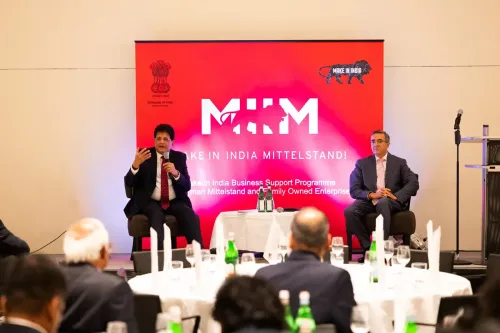
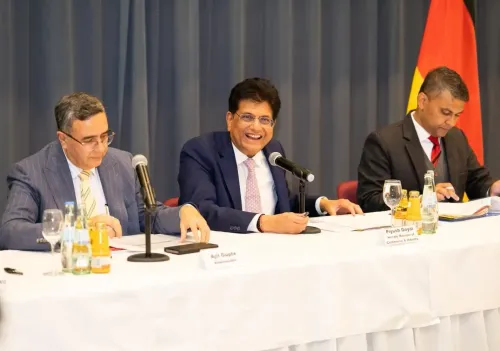
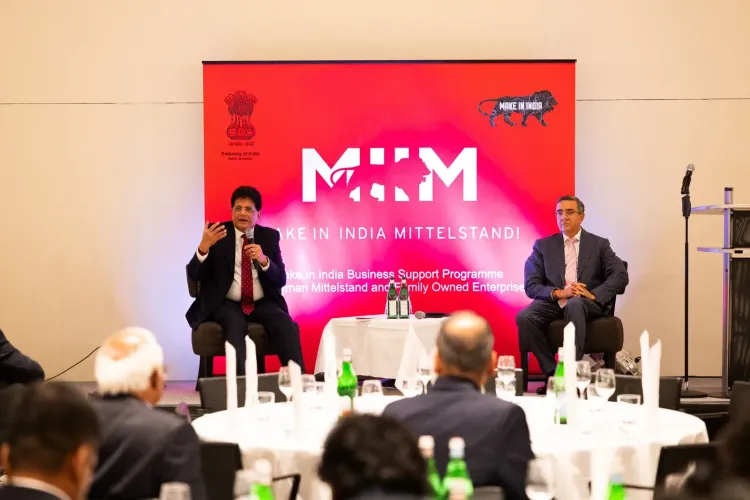
Piyush Goyal held an interaction with the accompanying Indian business delegation in Berlin on October 24, 2026 .
He highlighted the 'transformative potential' of the India-EU Free Trade Agreement (BTIA) for market access, supply chains, and investment flows.
Germany is India's largest EU trading partner , making it the central node of the minister's European outreach.
MSMEs across textiles, pharmaceuticals, engineering, renewable energy, and emerging technologies were specifically urged to build partnerships with German counterparts.
Goyal called on businesses to uphold the highest standards of quality, compliance, and reliability to reinforce India's credibility as a dependable global partner.
India-EU BTIA negotiations were formally resumed in 2022 after a prolonged pause, with subsequent rounds yet to conclude.
Standing before an Indian business delegation in Berlin on Saturday, October 24, 2026, Union Commerce and Industry Minister Piyush Goyal pressed the case for the India-EU Free Trade Agreement as a once-in-a-generation opening — urging companies from textiles to pharmaceuticals to engineering and renewable energy to stop watching and start building.
Germany as the Gateway into Europe
Germany is India's largest trading partner within the European Union, with deep bilateral ties spanning automotive engineering, industrial machinery, chemical manufacturing, and clean technology. That makes Berlin the natural stage for a pitch to Indian business: access the EU, and you effectively route through Germany's supply chains first. Goyal underscored the 'transformative potential' of the India-EU Broad-based Trade and Investment Agreement (BTIA) in expanding market access, strengthening supply chains, and creating new avenues for trade and investment — language that signals the minister views the deal as structurally reshaping, not merely tariff-trimming.
Negotiations on the BTIA, which cover tariffs, services, and investment rules, were formally revived in 2022 at the India-EU Summit after nearly a decade-long stalemate. The Berlin interaction is part of a pattern of high-level ministerial outreach designed to keep private-sector momentum aligned with that diplomatic timetable.
The MSME Call-to-Action
The sharpest message of the interaction was directed squarely at MSMEs — India's small and medium enterprises that generate the bulk of export volumes but often lack the compliance infrastructure to penetrate regulated Western markets. Goyal singled out sectors spanning textiles, pharmaceuticals, engineering, renewable energy, and emerging technologies, calling on businesses to 'seize this opportunity and build lasting partnerships with German counterparts.'
The emphasis was not just on chasing contracts. He called upon the delegation to 'uphold the highest standards of quality, compliance, and reliability' — a pointed reminder that tariff wins mean little if Indian exporters cannot clear EU regulatory bars on product standards, data norms, and supply-chain due diligence. That framing positions the FTA not as a discount, but as a credibility test India must be ready to pass.
India's Wider FTA Push and What Berlin Signals
Since 2022, India has pursued a cluster of free trade agreements with Western economies — including concluded deals with the UAE and Australia and ongoing talks with the UK and the EU — as part of a deliberate strategy to diversify beyond traditional partners and build supply chains resilient to geopolitical disruption. The consistent ministerial drumbeat on quality and compliance is no accident: it is India's answer to the global search for a trusted manufacturing alternative, a repositioning that requires both political deal-making and on-the-ground business culture change.
The next test will come in the following rounds of India-EU FTA negotiations, where the gap between ambition and binding commitments on services and investment will determine whether the Berlin energy translates into enforceable market openings.
For Indian MSMEs eyeing the European shelf, Goyal's message from Berlin is blunt: the door is being pried open — show up ready, or let someone else walk through it.
Point of View
When a deal lands, Indian firms are ready to execute rather than scramble. By singling out MSMEs and pairing the opportunity with a compliance warning, he is also managing reputational risk — EU regulators have raised market-access concerns tied to product standards, and a high-profile push that backfires on quality grounds would embarrass the broader FTA campaign. The Berlin interaction fits a broader pattern where ministerial travel doubles as commercial sales outreach, compressing the gap between state-level deal-making and firm-level readiness. Whether the next round of BTIA talks produces binding movement on services and investment will be the real stress test of this momentum.
NationPress
24 Oct 2026
Frequently Asked Questions
What is the India-EU Free Trade Agreement (BTIA)?
The India-EU Broad-based Trade and Investment Agreement (BTIA) is an ongoing negotiation between India and the European Union covering tariffs, services, and investment rules. Talks were revived in 2022 after nearly a decade-long pause and have not yet concluded.
Why did Piyush Goyal meet the business delegation in Berlin?
Goyal met the accompanying Indian business delegation in Berlin on October 24, 2026, to highlight the opportunities the India-EU FTA presents and to urge Indian companies, especially MSMEs, to build partnerships with German counterparts.
Which sectors did Goyal specifically encourage to engage with the India-EU FTA?
Goyal called on MSMEs across textiles, pharmaceuticals, engineering, renewable energy, and emerging technologies to seize the FTA opportunity and establish lasting ties with German businesses.
Why is Germany important for India's trade strategy with the EU?
Germany is India's largest trading partner within the European Union, with strong bilateral linkages in engineering, automotive, chemicals, and clean technology, making it the primary gateway for Indian firms seeking deeper EU market access.
What did Goyal say about quality and compliance standards?
Goyal urged the delegation to uphold the highest standards of quality, compliance, and reliability, framing these not just as regulatory requirements but as central to reinforcing India's reputation as a dependable global partner.