Shivraj Approves Rs 104 Cr for Weather Stations, Rs 90 Cr Fencing in Uttarakhand
Synopsis
Union Agriculture Minister Shivraj Singh Chouhan announced Rs 90 crore for field fencing to protect Uttarakhand farmland from wild animals and Rs 104 crore for automatic weather stations to strengthen crop insurance infrastructure, while urging farmers to enrol in PMFBY ahead of a potential El Niño-affected Kharif season.
Key Takeaways
A crop-field fencing project in Uttarakhand is underway with an initial outlay of Rs 25 crore ; the remaining Rs 65 crore will be provided, taking the total to Rs 90 crore .
An additional Rs 104 crore is being sanctioned separately for Automatic Weather Stations in Uttarakhand to improve crop-loss assessment under PMFBY .
The weather station funding was announced in response to a request from the Uttarakhand Chief Minister .
Minister Shivraj Singh Chouhan warned of potential El Niño disruption to the monsoon and urged all farmers to enrol in crop insurance for Kharif 2026 .
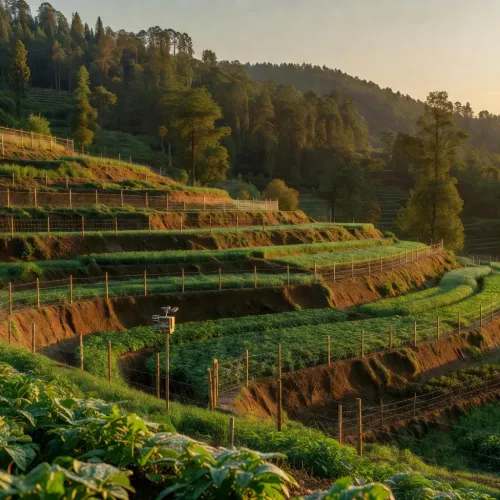
The fencing project addresses chronic human-wildlife conflict in Uttarakhand 's forest-adjacent farming zones.
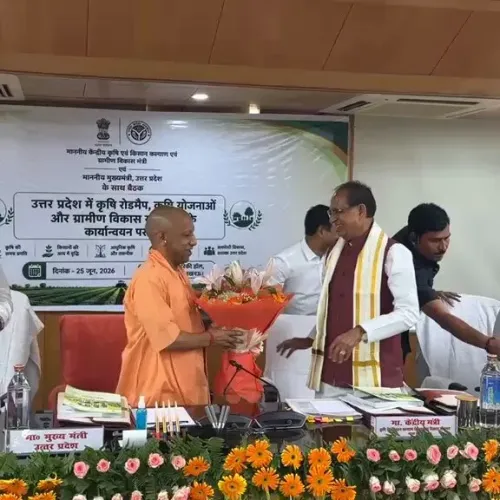
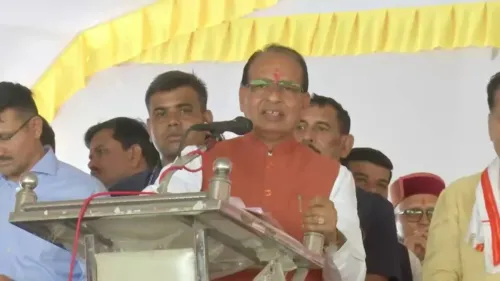
Union Agriculture Minister Shivraj Singh Chouhan on Friday, 26 June 2026 announced a two-pronged financial push for Uttarakhand farmers, committing an additional Rs 104 crore for automatic weather stations and confirming that the state's crop-field fencing project — already underway with an initial Rs 25 crore — will receive the remaining Rs 65 crore to complete a total outlay of Rs 90 crore.
Addressing farmers directly on X, Chouhan said, 'Uttarakhand mein Rs 25 crore ki lagat se gherbaad ka project prarambh hua hai' ('A fencing project worth Rs 25 crore has been launched in Uttarakhand'), adding that the balance Rs 65 crore would be made available to protect farmland from wild animals. He also urged all farmers to enrol in crop insurance, warning that El Niño conditions could affect this season's harvest.
Context
Uttarakhand's hilly and forest-adjacent terrain makes its farming communities especially vulnerable to crop depredation by wild animals, a problem that has intensified as forest cover and wildlife populations have grown. Human-wildlife conflict has been a persistent demand on the state government's agenda, and field fencing has emerged as the most direct infrastructure response. The minister's announcement signals that the Union Agriculture Ministry is treating this as a funded priority rather than a state-only obligation.
Chouhan explicitly credited Uttarakhand Chief Minister's earlier request for better weather monitoring infrastructure, saying the Rs 104 crore for automatic weather stations was being sanctioned separately in response to that representation. This positions the announcement as a cooperative Centre-state initiative rather than a unilateral central directive.
Policy Backdrop
The fencing assistance fits within a broader pattern of central grants for crop-protection infrastructure in biodiversity-rich and Himalayan states, supported in previous years through the Rashtriya Krishi Vikas Yojana. The weather station funding, meanwhile, is directly linked to the Pradhan Mantri Fasal Bima Yojana (PMFBY), launched in 2016, which replaced earlier insurance schemes and introduced technology-based loss assessment as a core feature.
Accurate, granular weather data is critical to PMFBY's parametric and yield-based claims settlement. Gaps in the Automatic Weather Station network have historically delayed or disputed payouts to farmers, making the Rs 104 crore investment a functional upgrade to the insurance architecture rather than a standalone infrastructure project.
On climate risk, Chouhan invoked El Niño — the Pacific Ocean temperature anomaly that can suppress or distort India's southwest monsoon — as justification for urgent insurance enrolment ahead of the Kharif 2026 season. El Niño years have historically correlated with below-normal or erratic rainfall in parts of India, raising the stakes for crop-loss protection.
Stakeholders and Impact
The primary beneficiaries are small and marginal farmers in Uttarakhand's hill districts, where a single season of wildlife damage or weather shock can wipe out subsistence-level incomes. The fencing project, once fully funded at Rs 90 crore, is expected to physically demarcate and protect farmland that has long been exposed to animal intrusions from adjacent forest zones.
Improved weather station density will benefit not just insurance claimants but also agricultural extension services that rely on localised forecasts for advisories on sowing, irrigation, and pest management. For the state government, the dual announcement reduces the fiscal burden of responding to crop losses through ad hoc relief.
What's Next
Attention will now shift to the pace at which the remaining Rs 65 crore fencing funds are released and deployed across targeted districts, and whether the Rs 104 crore weather station network is tendered and installed before the peak of the Kharif 2026 growing season. Farmer enrolment numbers under PMFBY for Kharif 2026 in Uttarakhand will serve as an early indicator of whether the minister's insurance appeal translated into ground-level action. The broader question is whether these investments, if executed on time, can meaningfully reduce the cycle of crop loss and delayed compensation that has defined hill farming in the state.
Point of View
Using state chief ministers' requests as political cover for central grants. The explicit mention of El Niño is notable: it frames crop insurance enrolment not as a bureaucratic exercise but as an urgent risk-management imperative, potentially boosting PMFBY uptake in a state where enrolment has historically lagged. The Rs 104 crore weather station sanction also signals an acknowledgement that PMFBY's credibility problem — slow and disputed claims — is partly a data infrastructure problem. Together, the announcements position the BJP-led Centre as a proactive partner to a BJP-governed state ahead of what could be a difficult agricultural season.
NationPress
25 Sept 2026
Frequently Asked Questions
What is the Uttarakhand crop fencing project announced by Shivraj Singh Chouhan?
Union Agriculture Minister Shivraj Singh Chouhan confirmed that a field fencing project to protect Uttarakhand farmland from wild animals has been launched with an initial Rs 25 crore, and the remaining Rs 65 crore will also be provided, bringing the total project cost to Rs 90 crore.
Why is Rs 104 crore being given to Uttarakhand for weather stations?
The Rs 104 crore is being sanctioned to install Automatic Weather Stations across Uttarakhand, which are needed for accurate, localised weather data to assess crop losses under the Pradhan Mantri Fasal Bima Yojana. The Uttarakhand Chief Minister had earlier requested better weather monitoring infrastructure.
What is El Niño and how does it affect Indian farmers?
El Niño is a warming of Pacific Ocean surface temperatures that can disrupt India's southwest monsoon, leading to below-normal or erratic rainfall. In El Niño years, crop yields in rain-dependent regions can fall sharply, making crop insurance enrolment especially important for farmers.
What is PMFBY and how can Uttarakhand farmers enrol?
The Pradhan Mantri Fasal Bima Yojana (PMFBY) is a central government crop insurance scheme that provides financial compensation to farmers for losses caused by natural calamities, pests, and adverse weather. Farmers can enrol through their bank, Common Service Centres, or the PMFBY portal before the notified cut-off date for each season.
How does human-wildlife conflict affect farmers in Uttarakhand?
Uttarakhand's farms border dense forest areas, exposing crops to damage from wild animals including elephants, wild boar, and monkeys. This has been a long-standing problem for small and marginal farmers in the state's hill districts, leading to the central government funding field fencing as a protective measure.