Shivraj pins PM Modi's message on paper-leak bill push
Synopsis
Union Agriculture Minister Shivraj Singh Chouhan pinned PM Narendra Modi's message to youth on 24 July 2026, in which the Prime Minister announced a Cabinet discussion on a draft bill establishing fast-track courts and stringent punishment for paper leaks, with Parliament set to take it up the following week.
Key Takeaways
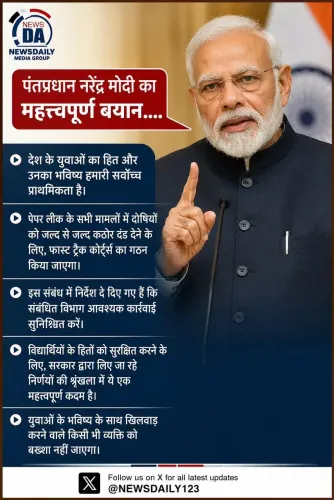
PM Modi acknowledged that paper leaks are 'extremely painful' for 22 lakh students and their families and said results were declared on the 19th .
Offenders have been arrested and are in jail; the government says multiple steps were taken in the two-and-a-half months since the incident.
A draft bill on fast-track courts and stringent punishment for paper leaks was submitted to the PM late at night before the post was made.
The draft was scheduled for Cabinet discussion the following day, with final shape to be given after colleagues' suggestions.
The government aims to pass the bill in Parliament's current session , with the second week beginning Monday.
The move builds on the Public Examinations (Prevention of Unfair Means) Act enacted in February 2024 .
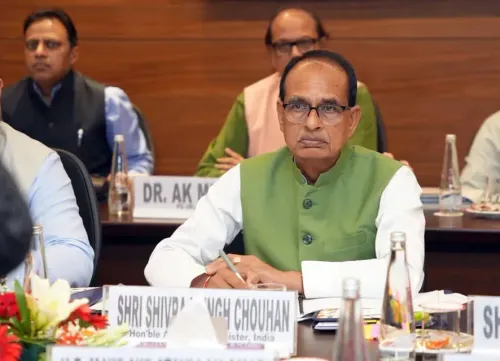
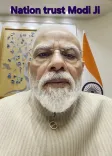
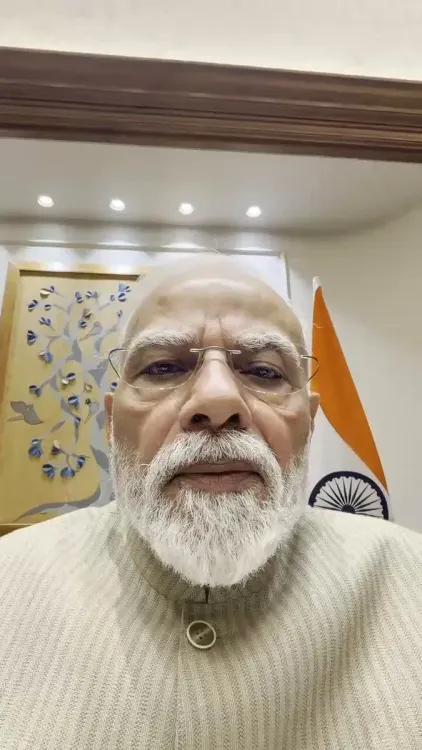
Union Agriculture Minister Shivraj Singh Chouhan on Friday, 24 July 2026 pinned a message from Prime Minister Narendra Modi to his official X account, amplifying the Prime Minister's direct address to the country's youth on the government's legislative response to paper-leak scandals in national competitive examinations.
Context
In the pinned post, PM Modi acknowledged the gravity of paper leaks, stating: 'मैं जानता हूँ कि पेपर लीक कोई मामूली विषय नहीं है' ('I know that a paper leak is no ordinary matter. It is extremely painful for millions of students and their parents.'). He noted that in the two-and-a-half months since the incident, multiple steps had been taken, offenders had been arrested and were in jail, and the government had arranged examinations for 22 lakh students in the shortest possible time. Results were declared on the 19th, and reports of successful candidates celebrating across the country were coming in.
Modi added, however, that the government was 'not going to be satisfied with just this much.' He confirmed that he had directed departments to prepare a draft on fast-track courts, and that the draft — containing provisions for fast-track courts and stringent punishment — had been submitted to him late at night.
Policy Backdrop
The legislative push builds on an existing foundation. Parliament enacted the Public Examinations (Prevention of Unfair Means) Act in February 2024, which criminalised paper leaks and unfair practices in public examinations. Following allegations of a leak in the NEET-UG examination in 2024, the government ordered a CBI investigation, cancelled the exam in affected centres, and conducted a re-test for impacted candidates.
The current draft legislation represents a further escalation — moving beyond investigation to dedicated judicial infrastructure. The emphasis on fast-track courts signals the government's intent to ensure that prosecutions conclude swiftly, acting as a credible deterrent against organised malpractice networks.
What the Draft Proposes
According to PM Modi's statement, the draft legislation covers two core elements: the establishment of fast-track courts specifically for paper-leak cases, and provisions for stringent punishment for those convicted. The draft was to be discussed in the Union Cabinet the following day, with final shape to be given after incorporating suggestions from Cabinet colleagues.
Modi stated that Parliament's second week begins on Monday, and the government's aim is to get the bill passed 'as soon as possible.' The bill's passage in the current session would mark a significant institutional upgrade in the state's response to examination fraud.
Stakeholders and Impact
The primary stakeholders are the millions of students and their families who depend on national competitive examinations — including NEET, JEE, and UPSC — for access to higher education and government employment. Recurring paper-leak scandals have triggered widespread student protests and deepened public scepticism about the integrity of merit-based selection systems.
A fast-track court mechanism, if enacted, would shorten the gap between arrest and conviction, potentially disrupting the organised networks that orchestrate leaks for profit. For the BJP-led government, swift legislative action also carries political weight, demonstrating responsiveness to a constituency of aspirational youth that cuts across states and communities.
What's Next
The immediate milestone is the Cabinet meeting at which the draft bill was to be discussed. If cleared, the government intends to introduce it in Parliament in the ongoing session's second week. The bill's reception in both Houses — and whether the opposition supports or contests its provisions — will determine how quickly it can become law. The broader test will be whether the new judicial architecture translates into convictions fast enough to restore student confidence in the examination system.
Point of View
Shivraj Singh Chouhan is acting as a relay amplifier for a message the BJP clearly wants to reach every aspirant household — signalling that the paper-leak response is a whole-of-government priority, not just an education ministry matter. The proposed fast-track court mechanism follows a well-worn legislative playbook: convert acute public anger into institutional reform within a single parliamentary session, pre-empting the opposition's ability to frame the government as inactive. Whether the bill's passage translates into actual convictions quickly enough to rebuild student trust will be the real measure of its success. The broader arc — from ad-hoc CBI probes in 2024 to dedicated judicial infrastructure in 2026 — suggests the government has concluded that incremental responses no longer suffice for a constituency of crores of exam-going youth.
NationPress
24 Jul 2026
Frequently Asked Questions
What is the fast-track court bill for paper leaks that PM Modi announced?
PM Modi announced a draft bill that proposes establishing fast-track courts specifically to try paper-leak cases and introduces provisions for stringent punishment for those convicted. The draft was set for Cabinet discussion on 25 July 2026, with the aim of passing it in the ongoing Parliament session.
What happened to the students affected by the paper leak?
According to PM Modi's statement, the government arranged examinations for 22 lakh students in the shortest possible time after the leak, and results were declared on the 19th of the month. Reports of successful candidates celebrating across the country were coming in.
Have anyone been arrested for the paper leak?
Yes. PM Modi stated that the guilty have been caught and are in jail, and that multiple steps were taken in the two-and-a-half months following the paper-leak incident.
What is the Public Examinations (Prevention of Unfair Means) Act?
It is a law enacted by Parliament in February 2024 that criminalises paper leaks and unfair practices in public competitive examinations. The proposed fast-track court bill is expected to supplement this existing legislation with dedicated judicial infrastructure.
Why did Shivraj Singh Chouhan pin PM Modi's message on paper leaks?
As a senior BJP leader and Union Minister, Chouhan pinned the Prime Minister's message to amplify the government's response to paper-leak scandals to a wider audience, particularly students and parents who are the primary stakeholders in national competitive examinations.