Shivraj floats skill centre plan for Mandideep's factory belt
Synopsis
Union Minister Shivraj Singh Chouhan proposed a skill centre in Mandideep near Bhopal to link youth training directly to local factory jobs, and suggested converting coaching centres into skill development hubs — a targeted, cost-efficient push to close the employability gap in Madhya Pradesh's industrial belt.
Key Takeaways
Union Minister Shivraj Singh Chouhan proposed a skill centre in Mandideep , the industrial township ~25 km from Bhopal , on 24 October 2026 .
The plan would train youth on-site and funnel them directly into jobs at Mandideep's manufacturing and engineering factories.
Chouhan also proposed repurposing existing coaching centres as skill development centres — redirecting infrastructure from exam prep to industry-ready vocational training.
The model aligns with the Centre's Pradhan Mantri Kaushal Vikas Yojana (PMKVY) , launched in 2015 , which advocates short-duration, industry-linked training.
As a four-term former CM of Madhya Pradesh , Chouhan retains strong ties to the state's industrial and administrative network, giving the proposal political and institutional traction.
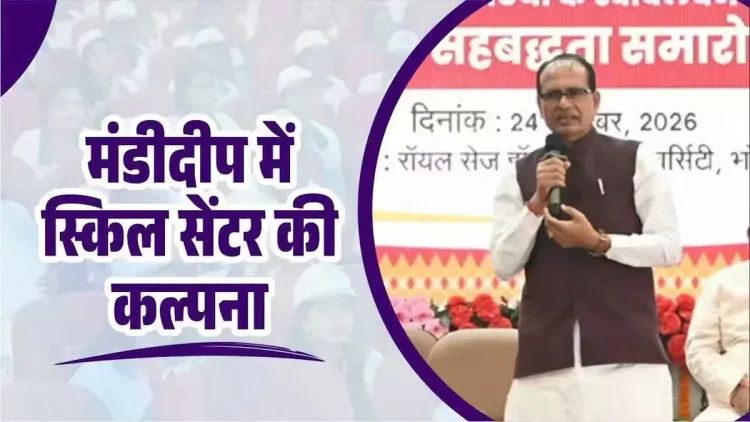
A simple idea with sharp economic logic: train young people where the jobs already exist. Union Agriculture Minister Shivraj Singh Chouhan on Saturday, 24 October 2026, proposed setting up a skill centre in Mandideep — the industrial township near Bhopal — so that youth can learn a trade and walk straight into a factory job in the same area, without the costly detour of migrating to distant cities.
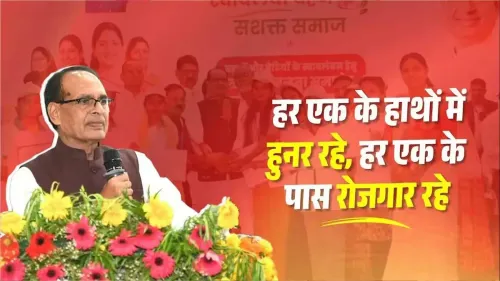
Posting on X in Hindi, Chouhan said: 'Mandideep mein skill centre shuru karne ki kalpana hai, taaki yuvaon ko kaam seekhne ke baad wahin ki factories mein naukri mil sake.' ('The vision is to start a skill centre in Mandideep, so that after learning a skill, youth can get jobs in the factories right there.') He went a step further — proposing that existing coaching centres be repurposed as skill development centres, redirecting their infrastructure from competitive-exam preparation toward job-ready vocational training.
Mandideep: an industrial cluster waiting for trained hands
Mandideep, located roughly 25 kilometres south of Bhopal, is one of Madhya Pradesh's most active manufacturing and engineering hubs, hosting units across pharmaceuticals, auto components, and light engineering. The proximity to a skilled labour pool has long been identified as a gap — companies recruit, but often have to invest heavily in on-the-job training because formally trained workers are scarce locally. A co-located skill centre would collapse that gap.
The model Chouhan is sketching — train-near-employ — is the core logic behind the Centre's Pradhan Mantri Kaushal Vikas Yojana (PMKVY), launched in 2015, which has pushed for short-duration, industry-linked training across the country. The difference here is geographic precision: rather than generic training anywhere, the proposal ties the centre directly to a specific industrial cluster's demand.
Coaching centres as skill hubs: a quiet structural shift
The second strand of Chouhan's proposal carries quietly radical implications. Coaching centres — most of them privately run, concentrated in mid-sized cities — are India's shadow education economy. Millions of young people spend years and substantial fees chasing government-job or engineering entrance exam prep. Repurposing those centres as skill development nodes would mean redirecting that infrastructure, those classrooms, and those young aspirants toward industry-facing competencies.
It is not a new debate. Madhya Pradesh has previously piloted skill initiatives tied to local manufacturing, and central policy has long sought to shift emphasis from degree-and-exam culture to vocational readiness. But converting existing coaching infrastructure, rather than building parallel institutions from scratch, is a cost-efficient angle that deserves watching.
Chouhan brings unusual weight to such proposals — as a four-term Chief Minister of Madhya Pradesh, he built a reputation for youth-welfare schemes and remains closely networked with the state's administrative and industrial machinery. Whether these ideas translate into a formal central or state-government programme will be the real test — but the signal from a minister of his stature pointing at a specific industrial town is not easily dismissed.
Point of View
Demand-driven training. The coaching-centre conversion idea is particularly pointed: rather than building new infrastructure, it proposes harnessing an already-dense private network, which would cut costs and reduce implementation lag. For the BJP, the pitch also serves a political function — positioning a senior leader as a voice for aspirational youth in a state with significant electoral weight. The real test will be whether the idea attracts formal policy backing at the state or central level, or remains a suggestive social-media proposal.
NationPress
24 Oct 2026
Frequently Asked Questions
What did Shivraj Singh Chouhan propose for Mandideep?
He proposed setting up a skill centre in Mandideep, the industrial area near Bhopal, so that youth can learn vocational skills and then get jobs directly in the local factories — eliminating the need to migrate elsewhere for employment.
Why is Mandideep significant for skill development?
Mandideep is one of Madhya Pradesh's most active manufacturing and engineering hubs, hosting industries in pharmaceuticals, auto components, and light engineering. A locally trained workforce would directly address the area's demand for skilled workers.
What is Chouhan's idea about coaching centres?
He suggested converting coaching centres — which currently focus on competitive exam preparation — into skill development centres, repurposing their existing infrastructure for industry-oriented vocational training.
How does this relate to PMKVY?
The Pradhan Mantri Kaushal Vikas Yojana, launched in 2015, promotes short-duration, industry-linked vocational training across India. Chouhan's Mandideep proposal mirrors PMKVY's core logic but applies it with geographic precision to a specific industrial cluster.
Has Madhya Pradesh done skill-centre pilots before?
Yes, Madhya Pradesh has previously experimented with skill centres tied to local manufacturing clusters. Chouhan's latest proposal builds on that track record and reflects a broader national push to shift India's youth from degree-and-exam culture toward job-ready vocational training.