Shivraj Singh Chouhan: Cabinet OKs ₹14,448-Cr Varanasi Corridor
Synopsis
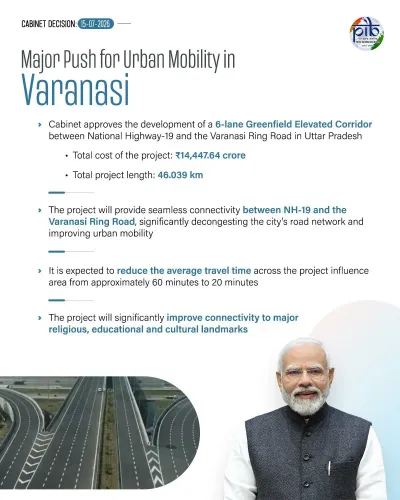
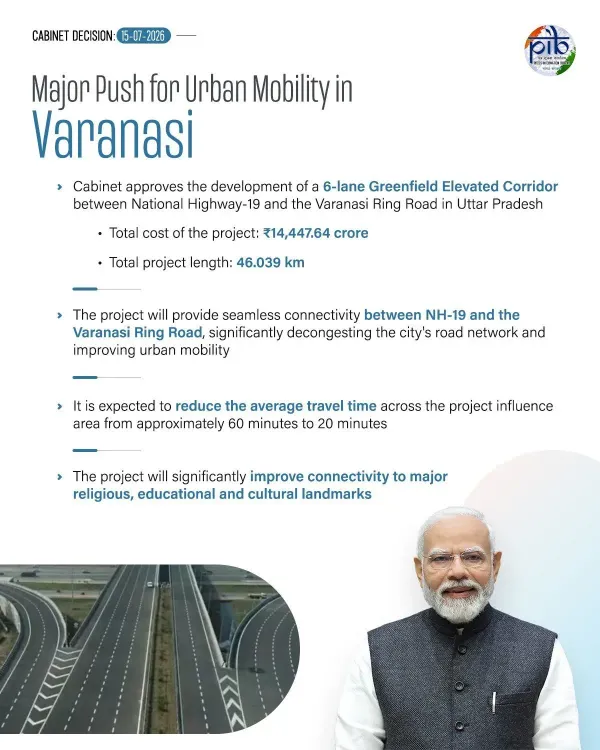
The Union Cabinet has approved a ₹14,447.64-crore, 46.039-km six-lane greenfield elevated corridor in Varanasi connecting NH-19 to the Varanasi Ring Road. The project will cut average travel time from 60 to 20 minutes, boosting pilgrimage, tourism, logistics, and overall development in eastern Uttar Pradesh.
Key Takeaways
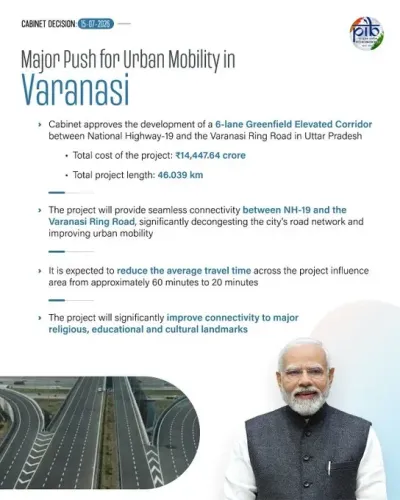
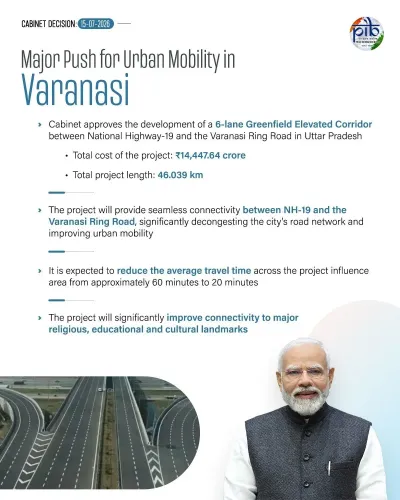
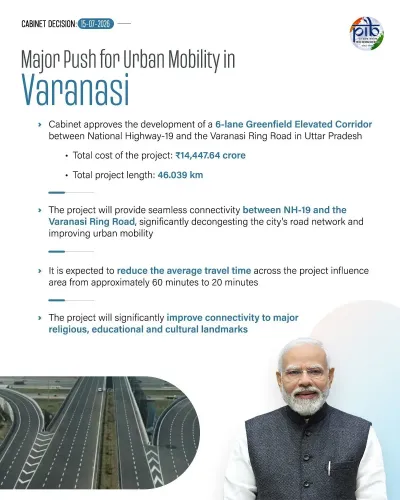
The Union Cabinet approved a ₹14,447.64-crore greenfield elevated corridor in Varanasi on 15 July 2026 .
The corridor spans 46.039 km and will be a six-lane elevated structure linking NH-19 to the Varanasi Ring Road .
Average travel time in the project area will fall from approximately 60 minutes to 20 minutes — a reduction of about 40 minutes.
The project is expected to improve access to religious, educational, and cultural sites, and boost tourism, pilgrimage, and logistics in the region.
The corridor forms part of the Bharatmala Pariyojana , the central government's national highway expansion programme.
Next steps include NHAI tendering , land acquisition, and environmental clearances before construction can begin.
Union Agriculture Minister Shivraj Singh Chouhan announced on Wednesday, 15 July 2026 that the Union Cabinet, under the leadership of Prime Minister Narendra Modi, approved the construction of a 46.039-km, six-lane greenfield elevated corridor in Varanasi, Uttar Pradesh, at a total cost of ₹14,447.64 crore. The corridor will connect NH-19 with the Varanasi Ring Road, aiming to transform urban mobility in one of India's most significant pilgrimage and heritage cities.
Context
Chouhan shared the cabinet decision on X, noting that the project will reduce average travel time in the corridor from approximately 60 minutes to 20 minutes — a two-thirds reduction. In his post, he wrote: 'यह परियोजना NH-19 और वाराणसी रिंग रोड के बीच निर्बाध संपर्क सुनिश्चित कर वाराणसी में शहरी आवागमन को अधिक सुगम बनाएगी' ('This project will ensure seamless connectivity between NH-19 and the Varanasi Ring Road, making urban movement in Varanasi smoother'). The minister also highlighted that the corridor will improve access to major religious, educational, and cultural sites, and give fresh momentum to road safety, logistics, tourism, and pilgrimage in the region.
Varanasi is Prime Minister Modi's parliamentary constituency and has been a consistent focus of central infrastructure investment. The city draws millions of pilgrims and tourists annually, and its road network has long struggled to absorb the resulting traffic volumes.
Policy Backdrop
The approved corridor is part of the broader Bharatmala Pariyojana, the central government's flagship highway programme launched in 2015 to build greenfield expressways and elevated corridors across India. NH-19, the major national highway linking Delhi to Kolkata (formerly numbered NH-2), runs through eastern Uttar Pradesh and is a critical artery for both freight and passenger movement in the region.
Central cabinets have repeatedly cleared high-value elevated corridors and ring-road linkages to decongest pilgrimage and heritage cities. Varanasi Ring Road received earlier central approvals and funding tranches in the 2010s, and this latest sanction represents a significant next phase in integrating the city's bypass infrastructure with the national highway grid.
Stakeholders and Impact
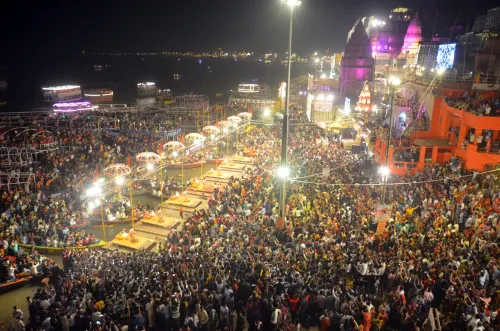
The most immediate beneficiaries are Varanasi's daily commuters, who currently endure congestion-driven travel times that the new corridor promises to cut by 40 minutes on average. Pilgrims visiting the city's celebrated ghats, temples, and religious sites — as well as tourists drawn to its cultural heritage — stand to gain from significantly smoother access routes.
The eastern Uttar Pradesh logistics sector is also expected to benefit. Faster and more reliable connectivity between NH-19 and the ring road will reduce freight transit times and lower transportation costs for businesses operating across the region. Chouhan's post specifically cited the project's potential to drive 'overall development of eastern Uttar Pradesh' (पूर्वी उत्तर प्रदेश के समग्र विकास को भी बल मिलेगा).
What's Next
The project's progress will now depend on NHAI's tendering schedule, land acquisition proceedings, and environmental clearances for the 46.039-km elevated stretch. These steps typically determine the actual construction timeline for greenfield corridors of this scale. Observers will also watch for any complementary cabinet approvals for additional phases or feeder links connecting the corridor to other eastern UP highways.
With the cabinet sanction now in place, the ₹14,447.64-crore corridor marks one of the largest single infrastructure commitments to Varanasi in recent years — and signals that the city will remain a priority node in India's expanding national highway network.
Point of View
447.64-crore elevated corridor in Varanasi is a textbook example of the ruling dispensation's strategy of channelling marquee infrastructure investments into politically significant constituencies — Varanasi being Prime Minister Modi's own seat. It also advances the Bharatmala Pariyojana's mandate of integrating national highways with urban ring roads, a policy arc that has gathered pace since 2015. The projected 40-minute reduction in travel time, if achieved, would materially improve the city's appeal as a pilgrimage and tourism destination, with downstream effects on eastern Uttar Pradesh's logistics economy. The announcement, made by Agriculture Minister Chouhan rather than a roads or transport portfolio holder, underscores how cabinet decisions on flagship projects are amplified across the ruling party's senior leadership.
NationPress
15 Jul 2026
Frequently Asked Questions
What is the Varanasi greenfield elevated corridor approved by the Cabinet?
It is a 46.039-km, six-lane elevated highway corridor in Varanasi, Uttar Pradesh, approved by the Union Cabinet on 15 July 2026 at a cost of ₹14,447.64 crore. The corridor will connect NH-19 to the Varanasi Ring Road, reducing average travel time from about 60 minutes to 20 minutes.
How much will the Varanasi elevated corridor cost?
The project has been approved at a total cost of ₹14,447.64 crore, making it one of the largest single infrastructure investments in Varanasi in recent years.
How will the Varanasi Ring Road corridor reduce travel time?
The six-lane greenfield elevated corridor is designed to provide seamless, uninterrupted connectivity between NH-19 and the Varanasi Ring Road, cutting average travel time in the project area from approximately 60 minutes to 20 minutes.
What is Bharatmala Pariyojana and how does this project relate to it?
Bharatmala Pariyojana is the central government's flagship highway development programme launched in 2015 to build greenfield expressways and elevated corridors across India. The Varanasi corridor is part of this programme's push to link national highways with urban ring roads in major cities.
Who will benefit from the Varanasi elevated corridor project?
Daily commuters, pilgrims, and tourists visiting Varanasi's religious and cultural sites will benefit from faster travel times. The eastern Uttar Pradesh logistics and freight sector is also expected to gain from improved connectivity along the NH-19 corridor.