Shivraj Singh Chouhan calls for state-society effort on women's safety
Synopsis
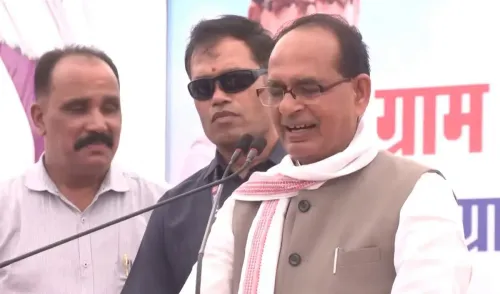
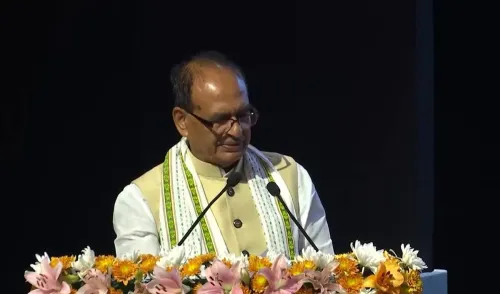
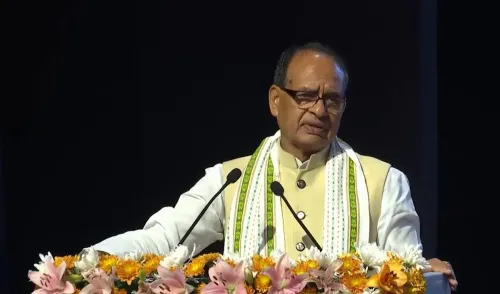
Union Agriculture Minister Shivraj Singh Chouhan posted on 17 October calling women the root of culture and family, and urged both government and society to work together for their protection — invoking the spirit of flagship schemes like Beti Bachao Beti Padhao.
Key Takeaways
Union Agriculture Minister Shivraj Singh Chouhan posted on 17 October 2026 stressing the need for state and societal effort on women's protection.
His post described women, sisters, and daughters as the 'root of our culture and family.' The statement aligns with the BJP government's long-standing gender-welfare architecture, including Beti Bachao Beti Padhao (launched 2015 ).
The Nirbhaya Fund , created in 2013 , continues to finance women's safety projects across states.
Chouhan explicitly called for action at 'both government and society levels,' framing women's safety as a shared civic responsibility.
Women — as mothers, sisters, and daughters — are the foundation of both culture and family, and protecting them demands action at every level of society, not just from the government alone. That is the message Union Agriculture Minister Shivraj Singh Chouhan put out on Saturday, 17 October 2026, in a pointed statement on women's welfare that cuts to the heart of a persistent national conversation.
Posting in Hindi, Chouhan wrote: 'Mahila, bahan, beti hamari sanskriti aur parivaar ka mool hain. Inki suraksha ke liye sarkar aur samaj dono staron par prayas karne honge.' ('Women, sisters, daughters are the root of our culture and family. For their protection, efforts must be made at both the government and society levels.') The framing is deliberate — invoking cultural identity alongside institutional responsibility.
A call that echoes across welfare policy
Chouhan's statement slots into a pattern of messaging from senior BJP leaders who have consistently positioned women's security as a shared civic duty, not merely a law-and-order question. The ruling party's gender-welfare architecture includes flagship programmes such as Beti Bachao Beti Padhao, launched in 2015 to tackle a declining child sex ratio and to promote the survival, safety, and education of the girl child. That scheme — championed by Chouhan during his tenure as Chief Minister of Madhya Pradesh — remains one of the most visible central interventions in the space.
Underneath the welfare framework also sits the Nirbhaya Fund, created in 2013 to channel financing into projects for women's safety and empowerment in the wake of the 2012 Delhi incident that shook the country. More than a decade on, successive governments have continued to draw on and expand this fund as a resource for states implementing safety infrastructure.
Why 'both levels' matters
The explicit pairing of 'government and society' in Chouhan's post is worth noting. It signals that policy alone — however well-funded — cannot substitute for community norms and awareness. As a four-term Chief Minister who ran state-level campaigns around women's dignity, Chouhan is one of the few ministers whose credibility on this issue is built on ground-level execution, not just parliamentary rhetoric. The message arrives as civil society groups and opposition politicians continue to press for stronger enforcement of existing protections for women across Indian states.
Point of View
The statement carries more institutional weight than a routine social-media post. It also subtly pushes responsibility onto society — a move that could prefigure fresh awareness drives ahead of the winter parliamentary session, where women's safety implementation is likely to face scrutiny.
NationPress
17 Oct 2026
Frequently Asked Questions
What did Shivraj Singh Chouhan say about women's safety on 17 October 2026?
He posted in Hindi that women, sisters, and daughters are the root of India's culture and family, and that efforts for their protection must come from both the government and society.
What is the Beti Bachao Beti Padhao scheme?
Beti Bachao Beti Padhao is a central government scheme launched in 2015 to address the declining child sex ratio and to promote the survival, safety, and education of the girl child.
What is the Nirbhaya Fund?
The Nirbhaya Fund was created in 2013 to finance government and civil-society projects aimed at women's safety and empowerment, following the 2012 Delhi incident.
Why does Shivraj Singh Chouhan speak on women's welfare?
As a four-term former Chief Minister of Madhya Pradesh and senior BJP leader, Chouhan has a long record of state-level campaigns on women's dignity and was closely associated with the Beti Bachao Beti Padhao push.
What does 'government and society both' mean in the context of women's safety in India?
It signals that legal frameworks and funded schemes must be matched by community-level awareness and cultural change — an approach advocated across party lines but particularly central to the ruling party's welfare messaging.