Shivraj Singh Chouhan Champions Viksit Bharat 2047 Vision
Synopsis
Union Agriculture Minister Shivraj Singh Chouhan on 17 October 2026 posted on X calling India's current growth a 'milestone' and reaffirming the national goal of building a developed India by 2047, in line with PM Modi's Viksit Bharat vision first articulated in 2022.
Key Takeaways
Union Agriculture Minister Shivraj Singh Chouhan posted on X on 17 October 2026 invoking the Viksit Bharat 2047 goal.
He framed India's current global recognition for progress as a 'milestone' ( padaav ), not a final destination.
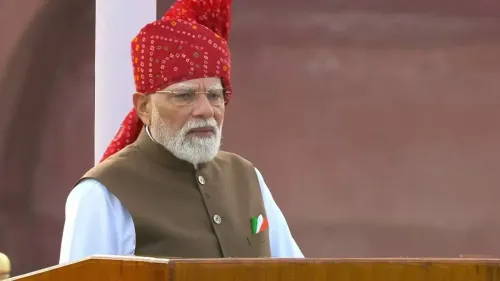
The Viksit Bharat @2047 vision was first articulated by PM Narendra Modi in his 2022 Independence Day address.
Chouhan is a four-term former Chief Minister of Madhya Pradesh and now oversees Agriculture, Farmers Welfare, and Rural Development at the Union level.
Agriculture and rural development are among the most critical sectoral pillars for achieving broad-based developed-country status by 2047.
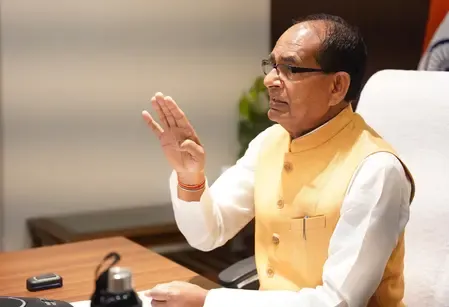
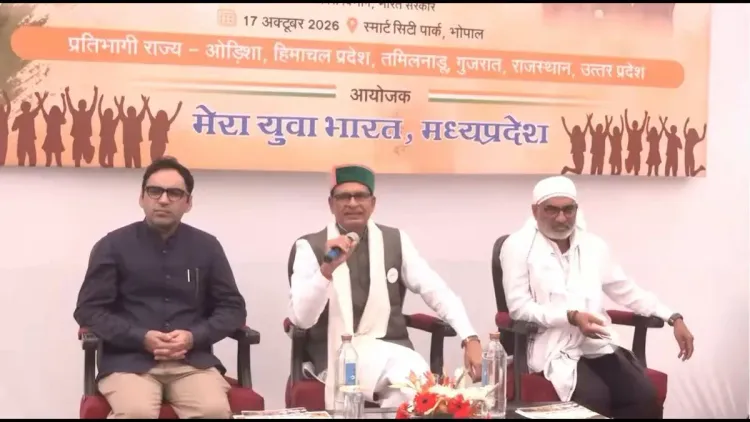
The world is watching India with astonishment — and Union Agriculture Minister Shivraj Singh Chouhan wants every Indian to know that the journey is far from over. On Saturday, 17 October 2026, Chouhan took to X to frame India's current growth story not as an arrival, but as a waypoint on the road to a fully developed nation by 2047.
In his post, Chouhan wrote: 'Aaj Bharat ki pragati aur vikas par duniya aashcharyachakit hai. Lekin yeh padaav hai, hamara lakshya hai 2047 tak Viksit Bharat ka nirman...' — 'Today the world is astonished at India's progress and development. But this is a milestone, our goal is to build a Developed India by 2047.' The message is deliberate and familiar: acknowledge the gains, then reset the bar higher.
What Viksit Bharat 2047 actually means
Prime Minister Narendra Modi first articulated the Viksit Bharat @2047 vision in his 2022 Independence Day address, framing the centenary of India's independence as the target date for achieving developed-country status. The intervening period — called Amrit Kaal — is positioned as a concentrated sprint of structural reform across agriculture, infrastructure, manufacturing, and human capital. Since then, the vision has anchored Union Budget speeches, ministry roadmaps, and party communication alike.
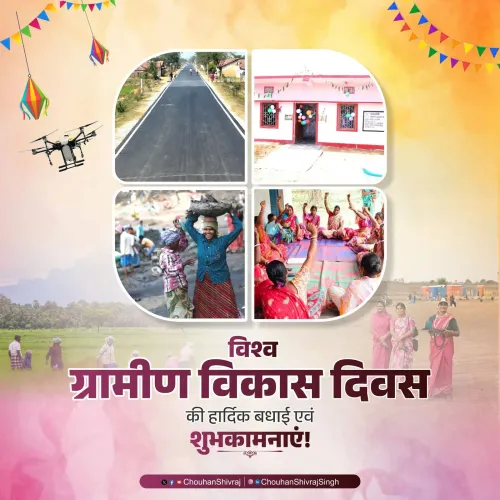
Chouhan's post slots squarely into that established rhythm. As the minister responsible for Agriculture & Farmers Welfare and Rural Development — two sectors that remain central to any credible path toward broad-based prosperity — his endorsement of the 2047 goal carries sectoral weight. Rural India accounts for roughly two-thirds of the country's population, and agricultural reform is consistently cited as one of the most consequential levers in any long-run development strategy.
From Madhya Pradesh statehouse to national roadmap
Chouhan brings a particular credibility to aspirational governance messaging. A four-term Chief Minister of Madhya Pradesh before joining the Union Cabinet, he oversaw one of India's more closely watched state-level development trajectories. That background lends his championing of the 2047 framework a ground-level texture that goes beyond Delhi's policy corridors — he has, in practice, administered the kind of rural programmes the Viksit Bharat blueprint depends on scaling nationally.
The broader pattern behind posts like this one is well-established: successive Union governments have used the 2047 milestone to build a long-arc narrative that connects post-1991 liberalisation, the Atmanirbhar Bharat self-reliance push, and current infrastructure investment into a single coherent arc. The political utility is obvious. The policy substance, however, will be tested in sectoral roadmaps and budgetary allocations — particularly in agriculture and rural development — in the months ahead.
India's ambition is on record. The clock to 2047 is running.
Point of View
The rhetorical move also pre-empts criticism of slow sectoral reform by embedding it within an optimistic long-arc narrative. The 2047 frame has become the BJP's most durable governance brand, and senior ministers reinforcing it routinely signals a coordinated communication strategy rather than a standalone statement. The real test of substance will arrive with the next Union Budget's allocations for farm income support, rural infrastructure, and agri-technology — the sectors where the 2047 vision must be operationalised.
NationPress
17 Oct 2026
Frequently Asked Questions
What is the Viksit Bharat 2047 vision?
Viksit Bharat 2047 is India's stated national goal to achieve developed-country status by 2047, the centenary of independence, first outlined by PM Narendra Modi in his 2022 Independence Day address.
What did Shivraj Singh Chouhan post on 17 October 2026?
Chouhan posted on X saying the world is astonished by India's progress, but that this progress is only a milestone — the real goal is building a developed India by 2047.
Who is Shivraj Singh Chouhan?
Shivraj Singh Chouhan is the Union Minister of Agriculture and Farmers Welfare and Rural Development, a senior BJP leader, and a four-term former Chief Minister of Madhya Pradesh.
What is Amrit Kaal in the context of India's development?
Amrit Kaal refers to the period leading up to 2047 that PM Modi designated as a concentrated phase of structural reform and nation-building to help India achieve developed-country status.
Why is agriculture important to the Viksit Bharat 2047 goal?
Agriculture and rural development are critical because rural India accounts for roughly two-thirds of the population, and broad-based prosperity — essential for developed-country status — depends on raising farm incomes and rural living standards.