Shivraj Singh Chouhan Greets Pilgrims on Amarnath Yatra Start
Synopsis
Union Agriculture Minister Shivraj Singh Chouhan on 3 July 2026 greeted pilgrims on the commencement of the Amarnath Yatra, calling it a divine symbol of Sanatan culture and unbreakable devotion to Mahadev, and praying for a safe, auspicious journey for all devotees.
Key Takeaways
Union Agriculture Minister Shivraj Singh Chouhan posted greetings on 3 July 2026 marking the start of the Amarnath Yatra .
He described the pilgrimage as a 'divine symbol of Sanatan culture, faith, devotion, penance and unbreakable bhakti towards Mahadev.' The Amarnath Yatra draws hundreds of thousands of pilgrims annually to a high-altitude cave shrine in Jammu and Kashmir .
The Shri Amarnath Shrine Board manages pilgrimage logistics; the central government has held direct responsibility for the Union Territory since 2019 .
The yatra operates under extensive security protocols due to the region's proximity to the Line of Control .
Senior BJP ministers routinely issue public messages at the start of major Hindu pilgrimages as part of the party's cultural outreach.
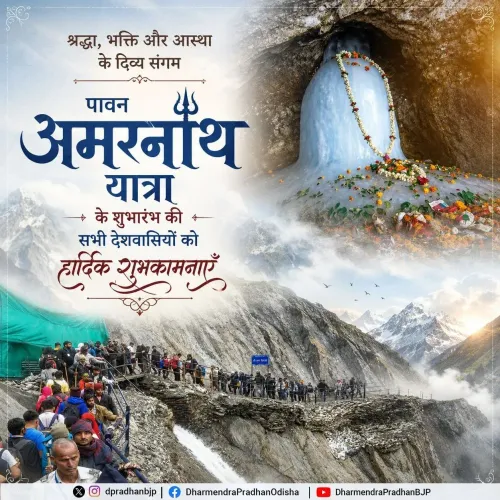
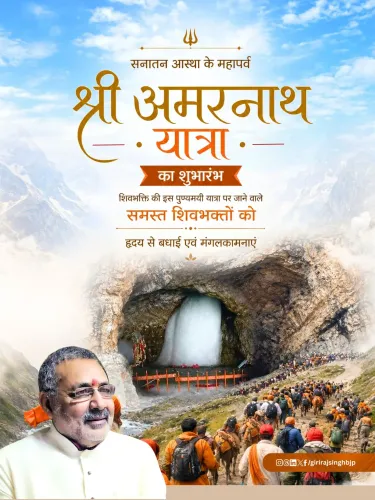
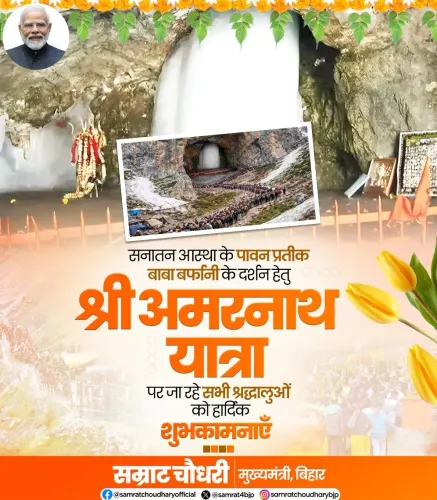
Union Agriculture Minister Shivraj Singh Chouhan on Friday, 3 July 2026, extended greetings to pilgrims across India as the sacred Amarnath Yatra commenced, invoking the blessings of Baba Barfani (the ice-formed Shiva lingam) for a safe and spiritually fulfilling journey for all devotees.
In his post, Chouhan wrote: 'Om Namah Shivay! Baba Barfani Shri Amarnath Ji ki pavitra yatra ke shubharambh par sabhi shraddhaaluon ko hardik shubhkamnaen!' — translating to: 'Heartfelt greetings to all devotees on the auspicious commencement of the sacred Amarnath Yatra of Baba Barfani Shri Amarnath Ji!' He described the pilgrimage as a 'divine symbol of great Sanatan culture, faith, devotion, penance, and unbreakable bhakti towards Mahadev, the lord of all gods.'
Context
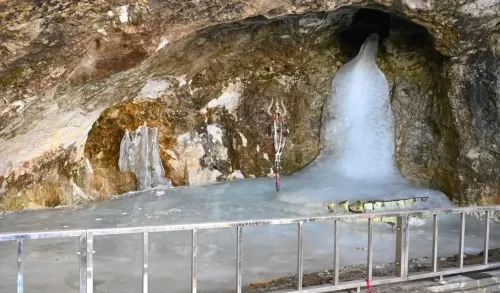
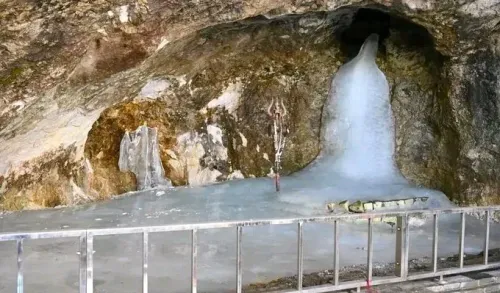
The Shri Amarnath Yatra is one of India's most significant annual Hindu pilgrimages, drawing hundreds of thousands of devotees each year to the high-altitude cave shrine located in Jammu and Kashmir. The shrine houses a naturally formed ice lingam, revered as a manifestation of Lord Shiva, and is considered among the holiest sites in the Sanatan tradition. Chouhan's message underscores the pilgrimage's deep cultural and spiritual resonance for crores of Indians.
The minister prayed that the journey of all pilgrims be 'pleasant, auspicious and welfare-bearing,' and that Baba Barfani fill their lives with 'happiness, prosperity, good health and joy, and always keep his blessings upon all.' His message, signed off with 'Jai Baba Barfani!', follows a pattern of senior leaders marking the yatra's opening with public outreach.
Policy Backdrop
The Shri Amarnath Shrine Board, a statutory body, is responsible for managing the annual pilgrimage — covering pilgrim registration, facilities, and coordination with security agencies. Following the 2019 reorganisation of Jammu and Kashmir into a Union Territory, the central government assumed direct responsibility for pilgrimage logistics and infrastructure, significantly expanding its administrative role in facilitating the yatra.
The Union Ministry of Home Affairs oversees the security framework for the yatra, which requires extensive deployment given the region's proximity to the Line of Control and its history of security challenges. Government facilitation of the pilgrimage has grown steadily since 2019 as part of broader efforts to promote religious tourism and affirm administrative integration of the Union Territory.
Stakeholders and Impact
The Amarnath Yatra affects a wide range of stakeholders: Hindu pilgrims from across India and abroad, residents of Jammu and Kashmir who depend on the yatra season for economic activity, and security forces tasked with protecting the route. Local communities along the traditional Baltal and Pahalgam tracks see significant seasonal commerce during the pilgrimage window.
Senior BJP leaders, including cabinet ministers, routinely issue public messages at the start of major Hindu pilgrimages, reflecting the party's emphasis on cultural and religious traditions as part of its political identity. Chouhan, as a former four-term Chief Minister of Madhya Pradesh and a prominent face of the party, holds particular resonance with the party's core devotee base.
What's Next
Official figures on pilgrim footfall, any weather-related disruptions, and security updates are expected to emerge as the 2026 Amarnath Yatra progresses through its season. The Shri Amarnath Shrine Board is expected to release periodic updates on registration numbers and infrastructure arrangements. Any significant development — including record pilgrim turnout or adverse incidents — is likely to draw further statements from central government ministers.
Point of View
Reinforcing the party's identity as a custodian of Sanatan traditions. The post carries added institutional weight given the central government's expanded role in managing the Amarnath Yatra since the 2019 reorganisation of Jammu and Kashmir. As a former four-term Chief Minister with a large grassroots following, Chouhan's religious outreach also serves to consolidate his personal connect with the party's devotee base ahead of future electoral cycles. The broader pattern suggests that government facilitation and political messaging around the yatra will continue to intensify as religious tourism becomes an increasingly prominent plank of Union Territory development policy.
NationPress
3 Jul 2026
Frequently Asked Questions
When did the Amarnath Yatra 2026 start?
The Amarnath Yatra 2026 commenced on or around 3 July 2026 , the date on which Union Agriculture Minister Shivraj Singh Chouhan posted his greetings marking the pilgrimage's shubharambh (auspicious beginning).
What is Baba Barfani in the context of the Amarnath Yatra?
Baba Barfani refers to the naturally formed ice lingam inside the Amarnath cave shrine in Jammu and Kashmir , revered as a manifestation of Lord Shiva. The name translates roughly to 'the ice-formed lord' and is central to the devotional significance of the annual pilgrimage.
Who manages the Amarnath Yatra?
The Shri Amarnath Shrine Board is the statutory body responsible for managing the annual pilgrimage, covering registration, facilities, and coordination with security agencies. Since the 2019 reorganisation of Jammu and Kashmir , the central government holds direct administrative oversight.
Why do BJP ministers post messages about the Amarnath Yatra?
Senior BJP leaders regularly issue public messages at the start of major Hindu pilgrimages, reflecting the party's emphasis on Sanatan cultural and religious traditions as a core part of its political identity and voter outreach.
What is the significance of the Amarnath Yatra for India?
The Amarnath Yatra is one of India's most significant Hindu pilgrimages, drawing hundreds of thousands of devotees annually to a high-altitude cave shrine in Jammu and Kashmir . It holds deep spiritual importance in the Sanatan tradition and also drives significant seasonal economic activity in the region.