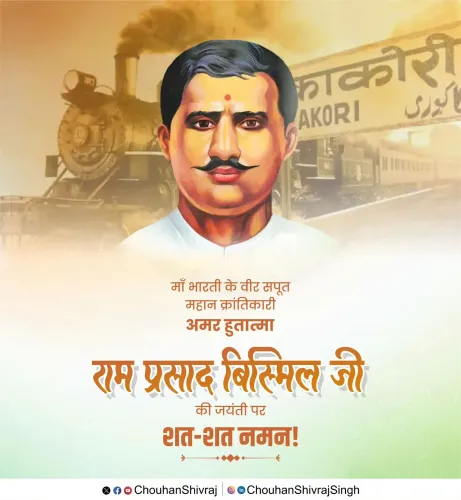
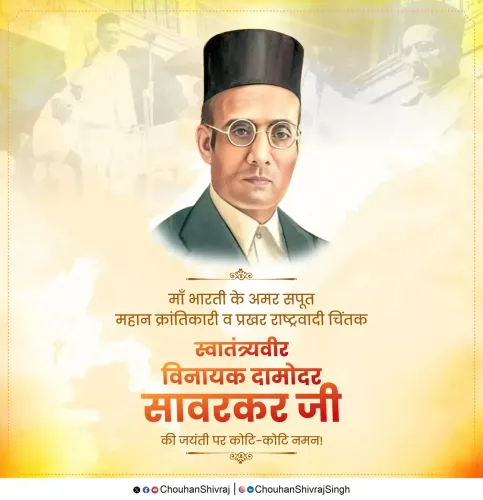
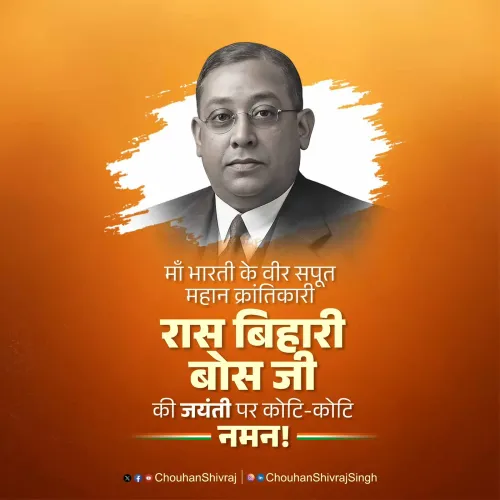
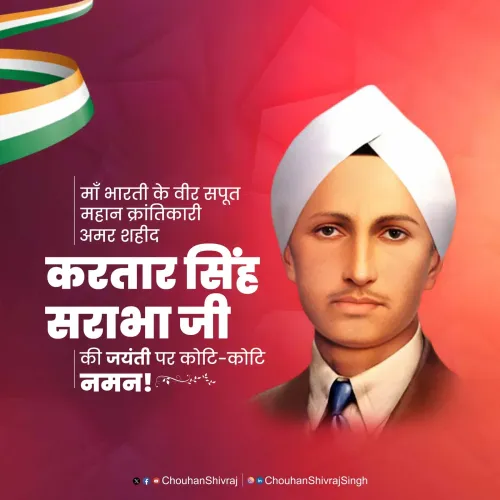
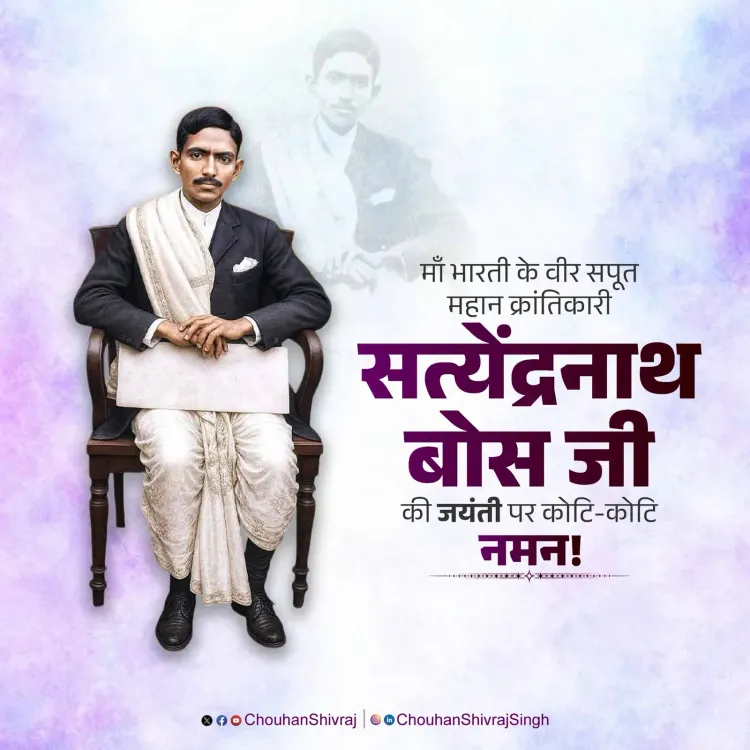
Shivraj Singh Chouhan pays tribute to revolutionary Satyendranath Bose
Synopsis
Union Agriculture Minister Shivraj Singh Chouhan on 30 July 2026 paid tribute to Bengali revolutionary Satyendranath Bose on his birth anniversary, hailing the Jugantar-linked martyr executed in 1908 as an eternal inspiration for India's youth.
Key Takeaways
Shivraj Singh Chouhan posted a Hindi tribute to Satyendranath Bose on his birth anniversary on 30 July 2026 .
Satyendranath Bose (1882–1908) was a Bengali revolutionary linked to the Jugantar group and the Alipore Bomb Case .
Bose was executed in 1908 at approximately 26 years of age , making him one of the earliest martyrs of India's armed independence movement.
Chouhan described Bose's sacrifice as an enduring inspiration for Indian youth to serve the nation.
No new policy, scheme, or programme was announced alongside the tribute.
A century after his execution, Satyendranath Bose — Bengali revolutionary, Jugantar militant, and a name etched in the Alipore Bomb Case — was remembered on his birth anniversary by Union Agriculture Minister Shivraj Singh Chouhan on Thursday, 30 July 2026.
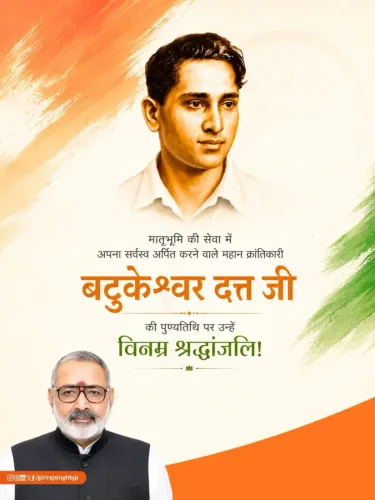
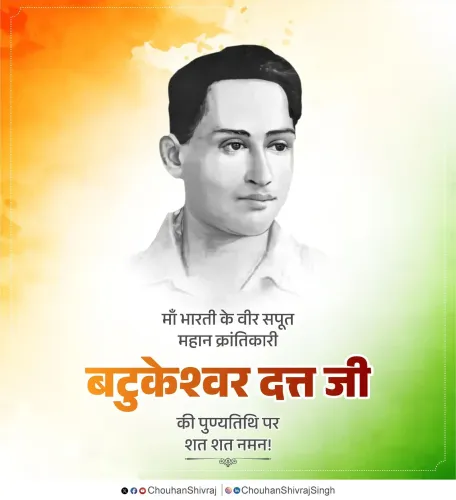
Chouhan posted in Hindi, offering 'koti-koti naman' — a crore-fold salute — to Bose, whom he called 'maa Bharati ka veer saput' (a brave son of Mother India) and a 'mahan krantikari' (great revolutionary). He wrote that Bose's 'unparalleled struggle and sacrifice for the freedom of the motherland will forever inspire the youth to serve the nation.'
Satyendranath Bose (1882–1908) was among the early armed nationalists who challenged British colonial rule at a time when mainstream politics still leaned toward petitions and constitutional methods. Associated with the Jugantar group — a radical Bengali secret society — he was drawn into the orbit of the Alipore Bomb Case, one of the most dramatic sedition trials of the colonial era, which also ensnared the philosopher-revolutionary Aurobindo Ghosh. Bose was executed in 1908, aged just twenty-six, becoming one of the earliest martyrs of India's armed independence movement.
Honouring the forgotten fighters
The tribute fits a well-established pattern in Indian political culture: ministers and legislators across parties mark the birth and martyrdom anniversaries of pre-independence revolutionaries with public statements, particularly those whose names sit outside the first rank of textbook history. For figures like Bose — significant in Bengal's revolutionary tradition but less nationally prominent than a Bhagat Singh or a Subhas Chandra Bose — these annual remembrances serve as the primary mechanism by which their legacies stay in public circulation.
Chouhan's post carries no policy announcement or programme launch. It is a moment of institutional memory — the state pausing, however briefly, to acknowledge a young man who gave his life before the republic he died for had even been imagined.
The youth of India, Chouhan wrote, will find in Bose's sacrifice a lasting call to national service. That framing — revolutionary martyrdom as a template for civic duty — is the enduring idiom of India's republic when it looks back at its own violent birth.
Point of View
Particularly those with deep roots in Bengal — a state the party has made a sustained electoral priority. Invoking armed nationalists like Bose allows the ruling party to frame patriotism in terms of sacrifice and decisive action, a register that resonates with its core ideological narrative. The choice of a relatively lesser-known revolutionary also signals an intent to reclaim historical memory from regional parties that have long owned Bengal's freedom-fighter legacy. The tribute carries no policy weight, but in Indian politics, memory is itself a form of soft power.
NationPress
30 Jul 2026
Frequently Asked Questions
Who was Satyendranath Bose, the revolutionary?
Satyendranath Bose (1882–1908) was a Bengali revolutionary associated with the Jugantar group who was executed by British authorities for his role in early armed nationalist activities, including his connection to the Alipore Bomb Case .
What is the Alipore Bomb Case?
The Alipore Bomb Case was a landmark colonial-era sedition trial arising from the revolutionary activities of the Jugantar group in Bengal; it famously implicated philosopher-revolutionary Aurobindo Ghosh and several other nationalists.
Why did Shivraj Singh Chouhan pay tribute to Satyendranath Bose?
Shivraj Singh Chouhan posted a tribute on 30 July 2026 to mark Bose's birth anniversary, calling his sacrifice an eternal inspiration for Indian youth to serve the nation.
What was the Jugantar group?
Jugantar was a radical Bengali secret society active in the early twentieth century that advocated armed resistance against British colonial rule, distinct from the more constitutionalist strand of the independence movement.
Did Shivraj Singh Chouhan announce any scheme along with this tribute?
No. The post was a personal tribute marking the birth anniversary and did not announce any new government programme, scheme, or policy initiative.