Shivraj Singh Chouhan Pledges to Protect Soil Health, Boost Organic Carbon
Synopsis
Union Agriculture Minister Shivraj Singh Chouhan has pledged to protect soil health and boost organic carbon in Indian farmlands, signalling renewed policy focus on sustainable agriculture amid long-standing concerns over soil degradation affecting millions of small farmers.
Key Takeaways
Union Agriculture Minister Shivraj Singh Chouhan posted on 26 June 2026 committing to protect soil health and increase organic carbon in Indian farmlands.
Organic carbon levels in Indian soils have declined significantly due to intensive farming and excessive chemical fertiliser use.
The Soil Health Card Scheme , launched in 2015 , has been the government's primary tool for addressing soil nutrient deficits at the farm level.
The National Mission for Sustainable Agriculture (NMSA) , initiated in 2011 , provides the broader policy framework for soil health management and organic carbon enhancement.
Small and marginal farmers across intensive-farming states stand to benefit most from any scaled-up soil restoration effort.
Analysts will watch for new carbon credit pilots or revised scheme guidelines that translate the minister's pledge into concrete farmer incentives.
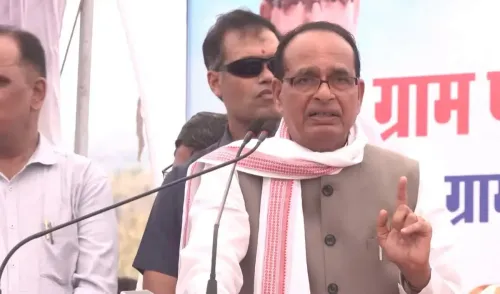
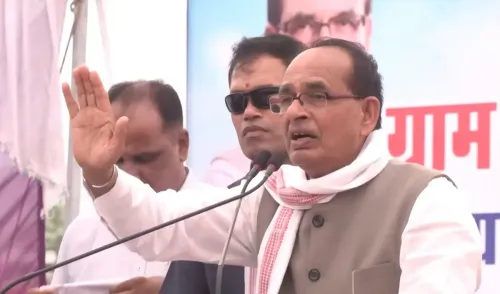
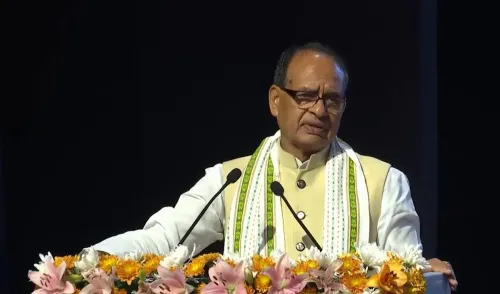
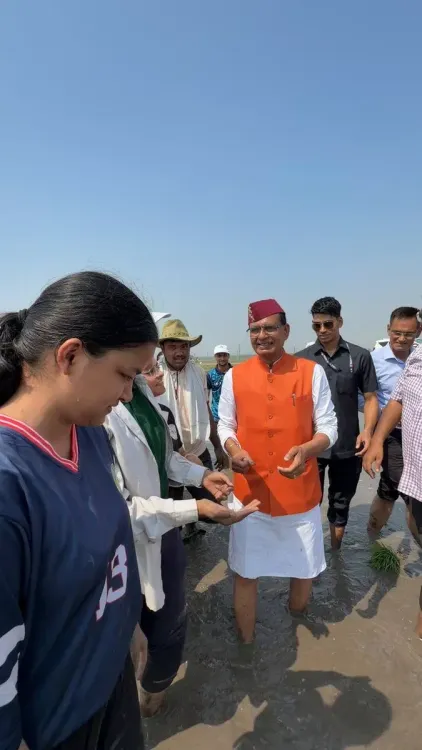
Union Agriculture Minister Shivraj Singh Chouhan on Friday, 26 June 2026, posted a pointed commitment on X, declaring that his ministry will protect soil health and increase organic carbon levels in India's farmlands — a signal of renewed policy focus on sustainable agriculture and soil restoration.
The minister's post — 'मिट्टी की सेहत बचाएँगे, जैविक कार्बन बढ़ाएँगे' ('We will save the health of the soil, we will increase organic carbon') — is brief but pointed, encapsulating a dual challenge that has long confronted Indian agriculture: reversing declining soil fertility and rebuilding the organic carbon content that determines long-term productivity.
Context
India's soils have faced sustained pressure from decades of intensive cultivation, excessive chemical fertiliser use, and inadequate organic matter replenishment. Organic carbon — a key indicator of soil vitality — has fallen to critically low levels in large swathes of agricultural land, particularly in the Indo-Gangetic plains and rain-fed regions of central and peninsular India. Low organic carbon reduces water retention, microbial activity, and crop yields, making soil restoration a foundational concern for food security.
Chouhan, a former four-term Chief Minister of Madhya Pradesh and a senior BJP leader, now heads the Union Ministry of Agriculture and Farmers Welfare and Rural Development — a portfolio that places soil health directly within his mandate.
Policy Backdrop
The government's engagement with soil health is not new. The Soil Health Card Scheme, launched in 2015, was designed to test soil samples from farms across the country and issue cards detailing nutrient status alongside fertiliser recommendations — helping farmers apply inputs more precisely and avoid over-use of chemicals. The scheme has since covered millions of farm holdings.
Parallel to this, the National Mission for Sustainable Agriculture (NMSA), initiated in 2011, has provided a framework for soil health management, water conservation, and the promotion of organic and natural farming practices. Both programmes directly address the organic carbon deficit that Chouhan referenced in his post.
In recent years, natural farming — which relies on bio-inputs such as cow dung, cow urine, and local microbial cultures rather than synthetic chemicals — has gained policy traction as a complementary strategy for rebuilding organic matter in degraded soils.
Stakeholders and Impact
Small and marginal farmers, who constitute the overwhelming majority of India's agricultural workforce, stand to benefit most from improved soil health. Degraded soils force higher input costs and deliver lower yields, compressing already thin farm margins. Raising organic carbon levels can reduce dependence on chemical fertilisers, lower input costs, and improve resilience to erratic rainfall — a growing concern as climate variability intensifies.
Agricultural communities in states with historically intensive cropping — including Punjab, Haryana, Uttar Pradesh, and Madhya Pradesh — are particularly exposed to soil degradation and stand to gain from any scaled-up intervention. For the ministry, soil health is also increasingly linked to India's broader commitments on climate adaptation and carbon sequestration in the agricultural sector.
What's Next
The minister's statement is likely to be followed by announcements integrating soil health data with state-level natural farming programmes, and potentially with emerging carbon credit frameworks that could reward farmers financially for sequestering carbon in their soils. Any new scheme or pilot programme linking soil organic carbon targets to farmer incentives would mark a significant policy step. Observers will watch for whether Chouhan's commitment translates into budgetary allocations, revised scheme guidelines, or new targets under the NMSA or the Soil Health Card Scheme in the months ahead.
Point of View
Raise organic carbon — is deceptively compact but politically loaded: it signals that the agriculture ministry intends to move beyond input-subsidy politics toward a productivity-and-sustainability framing ahead of what is likely to be a policy-heavy legislative season. The explicit mention of organic carbon is notable, as it aligns Indian farm policy with global soil-carbon discourse and opens the door to carbon credit mechanisms that could create new income streams for small farmers. For a minister with deep roots in Madhya Pradesh's agrarian belt, this also carries a domestic political logic: soil degradation is acutely felt in central India's rain-fed districts, and a credible soil-health push could resonate strongly with the rural voter base. The real test will be whether the commitment is backed by revised targets and funding under existing schemes or remains an aspirational statement.
NationPress
26 Jun 2026
Frequently Asked Questions
What did Shivraj Singh Chouhan say about soil health on 26 June 2026?
Union Agriculture Minister Shivraj Singh Chouhan posted on X pledging to protect soil health and increase organic carbon levels in India's farmlands, using the Hindi phrase 'मिट्टी की सेहत बचाएँगे, जैविक कार्बन बढ़ाएँगे' — meaning 'We will save the health of the soil, we will increase organic carbon.'
What is organic carbon in soil and why does it matter for Indian farmers?
Organic carbon is a key indicator of soil health, reflecting the amount of decomposed plant and animal matter present. Higher organic carbon improves water retention, microbial activity, and crop yields, while reducing dependence on chemical fertilisers — directly benefiting small farmers who face high input costs.
What is the Soil Health Card Scheme?
The Soil Health Card Scheme is a central government programme launched in 2015 that tests soil samples from farms and issues cards detailing nutrient status alongside fertiliser recommendations, helping farmers apply inputs more precisely and avoid over-use of chemicals.
What is the National Mission for Sustainable Agriculture?
The National Mission for Sustainable Agriculture (NMSA) was initiated in 2011 to promote soil health management, water conservation, and sustainable farming practices including organic carbon enhancement across India's diverse agro-climatic zones.
How does improving soil organic carbon help with climate change?
Increasing organic carbon in soils sequesters carbon dioxide from the atmosphere, helping mitigate climate change while simultaneously improving soil fertility and farm resilience to erratic rainfall — a dual benefit that has made soil carbon a focus of both agricultural and climate policy globally.