Shivraj Singh Chouhan Shares Peacock Encounter, Nature Reflection
Synopsis
Union Agriculture Minister Shivraj Singh Chouhan posted a peacock photograph on 25 July 2026 alongside a Hindi reflection on human-nature oneness, urging Indians to shed envy, connect with the natural world, and embrace love for all living beings.
Key Takeaways
Shivraj Singh Chouhan , Union Minister of Agriculture and Farmers Welfare, posted a personal nature reflection on 25 July 2026 .
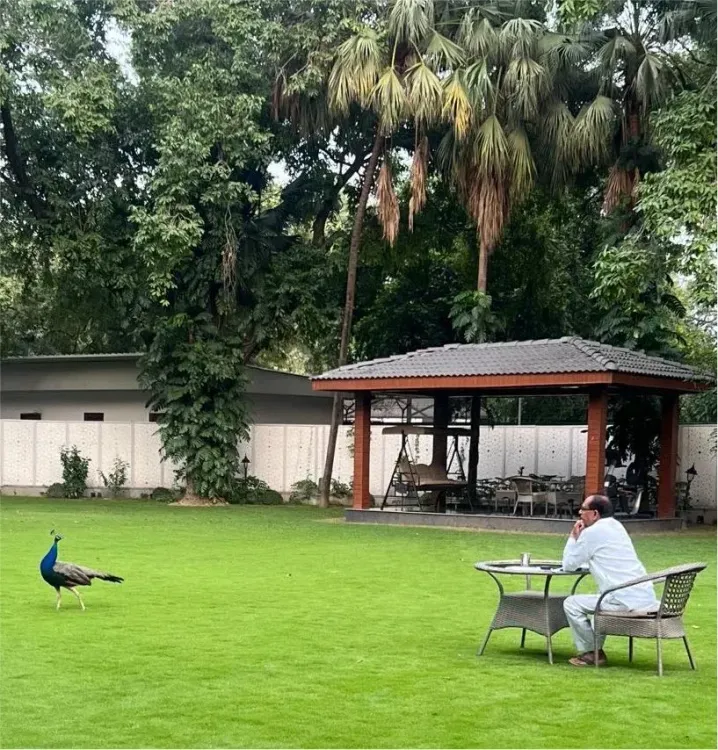
He shared a photograph of a peacock — India's national bird — and described a moment of felt oneness with the bird.
The message invoked the concept of ekatm (non-dual oneness), rooted in India's Advaitic philosophical tradition.
Chouhan called on citizens to 'forget jealousy and hatred' and 'love everyone,' framing connection with nature as the source of life's joy.
The post fits a broader pattern of BJP leaders linking cultural-spiritual values with ecological awareness during the monsoon season.
No specific policy announcement accompanied the post; observers await any follow-up from the Agriculture Ministry on biodiversity or organic farming schemes.
Union Agriculture Minister Shivraj Singh Chouhan shared a personal reflection on harmony with nature on Saturday, 25 July 2026, posting a photograph of a peacock alongside a contemplative message urging citizens to shed envy and embrace love for all living beings.
What the Minister Said
Writing in Hindi, Chouhan described a moment of quiet communion with a peacock he encountered, saying: 'हम जब प्रकृति की गोद में बैठते हैं, तो सारे भेद-भाव मिट जाते हैं' ('When we sit in the lap of nature, all differences dissolve'). He reflected that humans, trees, animals, and birds are all part of one consciousness — 'no one is other.'
Describing the peacock encounter, he wrote that it felt as though the two had 'become one' — 'एकात्म हो गए' — an expression drawn from the Advaitic philosophical tradition of non-dual oneness. He closed with a call to action: 'Let us connect with nature, forget jealousy and hatred, love everyone. This is the joy of life.'
Context
Shivraj Singh Chouhan has long combined political messaging with cultural and spiritual idiom, a style developed over his four terms as Chief Minister of Madhya Pradesh. His social media presence frequently blends personal anecdote with broader social appeals, reaching a large following across platforms.
The peacock — India's national bird — carries deep symbolic weight in Indian culture, associated with grace, biodiversity, and the monsoon season. A post featuring the bird in late July, the height of the southwest monsoon, resonates naturally with rural and agricultural audiences.
Policy Backdrop
Indian ministers periodically invoke traditional ideas of ecological harmony, linking cultural-spiritual values with contemporary policy priorities. The Ministry of Agriculture and Farmers Welfare has in recent years emphasised sustainable farming, organic agriculture, and biodiversity conservation under various central schemes.
Posts of this nature form part of a wider pattern among BJP leaders of connecting India's classical philosophical heritage — including concepts of Vasudhaiva Kutumbakam (the world is one family) and Advaita oneness — with present-day environmental messaging. The approach is aimed at reinforcing ecological awareness through a culturally resonant lens rather than purely technocratic communication.
Stakeholders and Impact
The message is directed at the general public, particularly rural citizens and farmers who live in close proximity to natural ecosystems. For farming communities, the monsoon season is a period of intense dependence on nature, making appeals to ecological kinship especially timely.
Environmental advocates and biodiversity groups have noted that high-visibility messaging from senior ministers can amplify grassroots awareness about wildlife and natural habitats, even when the communication is personal rather than policy-specific.
What's Next
It remains to be seen whether this personal reflection will be followed by formal ministry announcements linking the ecological theme to specific programmes — such as biodiversity conservation under the National Mission for Sustainable Agriculture or organic farming initiatives. Observers will watch for any ministerial communication that translates this cultural-spiritual framing into concrete policy action on sustainable rural development.
Point of View
The appeal to rural ecological sentiment is neither incidental nor apolitical. The framing of 'no one is other' subtly echoes BJP's civilisational unity messaging while sidestepping any divisive political register. Whether this remains a personal vignette or becomes the preamble to a ministry push on biodiversity or organic farming will determine its lasting policy significance.
NationPress
25 Jul 2026
Frequently Asked Questions
What did Shivraj Singh Chouhan post about nature?
Shivraj Singh Chouhan posted a photograph of a peacock on 25 July 2026 along with a Hindi message reflecting on human-nature oneness, saying all differences dissolve in nature's lap and urging people to love all living beings.
Why did Shivraj Singh Chouhan post about a peacock?
Chouhan described a personal encounter with a peacock and said he felt a sense of oneness — ekatm — with the bird, using the moment to call on citizens to connect with nature and shed envy and hatred.
What is the meaning of 'ekatm' used by Shivraj Singh Chouhan?
'Ekatm' is a Sanskrit term meaning non-dual oneness, drawn from India's Advaitic philosophical tradition, suggesting that all living beings share a single consciousness with no fundamental separation.
What is Shivraj Singh Chouhan's current role in 2026?
Shivraj Singh Chouhan is currently serving as India's Union Minister of Agriculture and Farmers Welfare and Rural Development, and is a senior leader of the BJP and former four-term Chief Minister of Madhya Pradesh.
Does Shivraj Singh Chouhan's nature post relate to any government scheme?
No specific scheme was announced alongside the post. However, the Agriculture Ministry has ongoing programmes on sustainable farming and biodiversity, and observers are watching for any follow-up policy communication linked to this ecological theme.