Smriti Irani Hails Sarnath's UNESCO World Heritage Listing
Synopsis
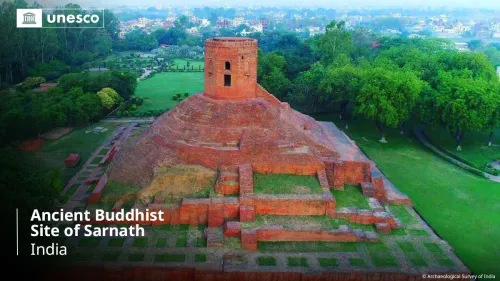
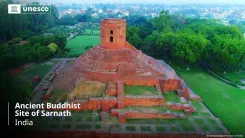
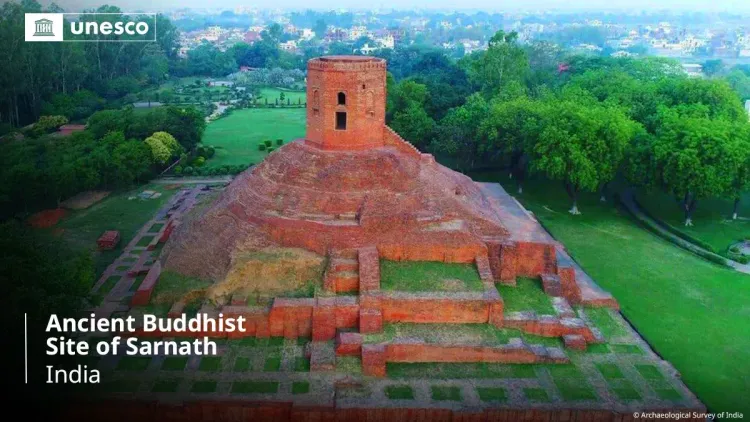
BJP leader Smriti Irani has welcomed the UNESCO World Heritage inscription of Sarnath, the ancient site near Varanasi where Lord Buddha delivered his first sermon. She called it a proud recognition of India's civilisational legacy and the enduring relevance of Buddha's teachings on peace and compassion.
Key Takeaways
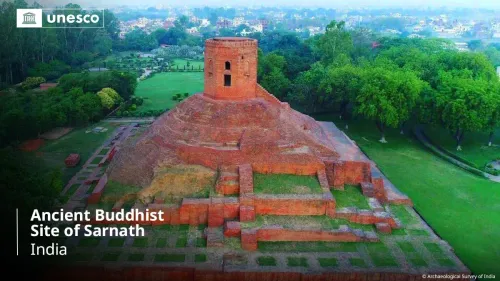
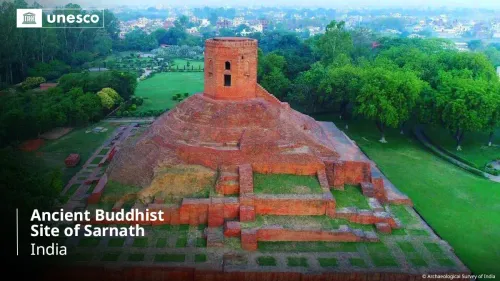
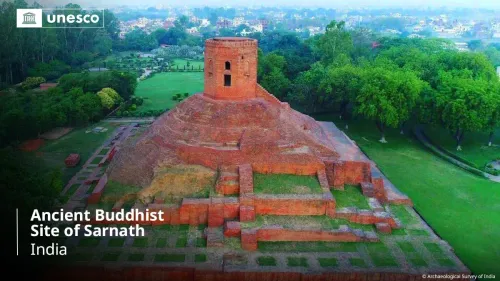
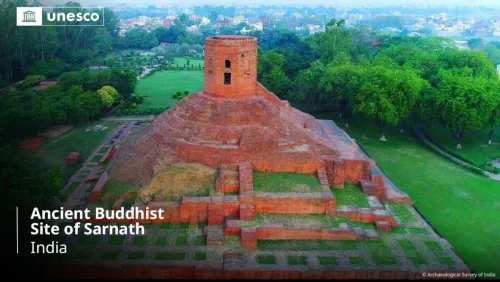
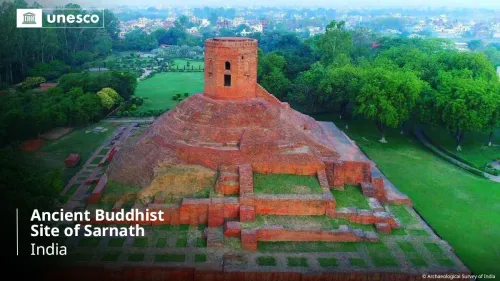
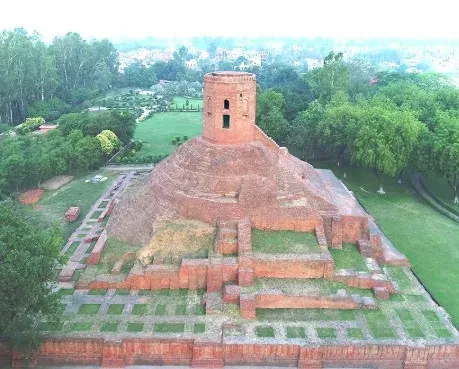
Sarnath , near Varanasi, Uttar Pradesh , has been inscribed on the UNESCO World Heritage List .
BJP leader Smriti Irani welcomed the listing on 25 July 2026 , calling it a tribute to India's civilisational legacy.
Sarnath is the site where Gautama Buddha delivered his first sermon, establishing the foundations of the Buddhist sangha.
The inscription follows India's long-standing strategy of nominating Buddhist and ancient sites to strengthen its global cultural standing.
The Mahabodhi Temple at Bodh Gaya was a precedent, having received UNESCO recognition in 2002 .
The listing is expected to boost heritage tourism and reinforce India's cultural diplomacy with Buddhist-majority nations in Asia.
BJP leader Smriti Irani on Saturday, 25 July 2026, welcomed the inscription of Sarnath on the UNESCO World Heritage List, calling it a tribute to the sacred site where Lord Buddha delivered his first sermon and set in motion a moral tradition that shaped civilisations across the world. The former Union Minister described the recognition as a proud acknowledgement of India's enduring civilisational legacy.
Context
Sarnath, located near Varanasi in Uttar Pradesh, is one of Buddhism's most sacred sites. It is here that Gautama Buddha is believed to have delivered his first discourse — the Dhammacakkappavattana Sutta (Setting the Wheel of Dharma in Motion) — after attaining enlightenment, thereby establishing the Buddhist sangha. Irani, in her post, described the site as 'the sacred land where Lord Buddha's message of Dharma first found expression and went on to shape the moral imagination of humanity.'
The inscription places Sarnath among the world's sites of outstanding universal cultural value, a designation that carries significant implications for heritage conservation, international tourism, and cultural diplomacy.
Policy Backdrop
India has steadily expanded its UNESCO World Heritage portfolio over the decades, with Buddhist sites forming a key strand of that effort. The Mahabodhi Temple at Bodh Gaya — another site of cardinal importance in Buddhist tradition — was inscribed in 2002, establishing a precedent for the recognition of Buddhist pilgrimage centres on the global heritage map.
Successive governments have pursued such inscriptions as instruments of cultural diplomacy, particularly with Buddhist-majority nations across South and Southeast Asia. Domestically, heritage listings typically trigger renewed focus on conservation infrastructure and tourism development, often channelled through schemes such as Swadesh Darshan and the Buddhist Circuit initiative under the Ministry of Tourism.
Stakeholders and Impact
The inscription is expected to benefit a wide range of stakeholders, from Buddhist pilgrims and heritage tourists to the local hospitality and transport sectors around Varanasi. Sarnath already draws visitors from Sri Lanka, Japan, Thailand, Myanmar, and other countries with deep Buddhist traditions, and a UNESCO listing typically amplifies international footfall significantly.
For India, the recognition also reinforces its positioning as the fountainhead of Buddhist philosophy at a time when it actively cultivates soft-power relationships with Buddhist-majority states in the Indo-Pacific region. Irani's framing — invoking Buddha's 'timeless teachings on peace, compassion and mindful living' — aligns with this broader diplomatic narrative.
What's Next
Attention will now turn to infrastructure and visitor-management plans at Sarnath, including potential upgrades to the site's conservation framework, museum facilities, and connectivity with Varanasi. Authorities are also expected to align the site's management plan with UNESCO's Outstanding Universal Value criteria to ensure compliance with the listing conditions.
The inscription may also prompt India to accelerate nominations of other significant Buddhist and ancient sites in its pipeline for the next UNESCO World Heritage Committee session, as the country continues to leverage its civilisational heritage as a pillar of both domestic pride and international engagement.
Point of View
One that BJP leaders like Smriti Irani are swift to frame within a civilisational narrative that has become central to the party's cultural politics. The move fits a deliberate pattern of leveraging international heritage recognition to reinforce India's identity as the cradle of Buddhism — a message calibrated as much for domestic audiences as for Buddhist-majority neighbours in the Indo-Pacific. Irani's invocation of 'peace, compassion and mindful living' signals an effort to project India's ancient traditions as globally relevant moral frameworks. The political dividend, however, will ultimately depend on whether the inscription translates into tangible conservation investment and inclusive tourism infrastructure at Sarnath.
NationPress
25 Jul 2026
Frequently Asked Questions
Why has Sarnath been given UNESCO World Heritage status?
Sarnath has been inscribed on the UNESCO World Heritage List for its outstanding universal cultural value as the site where Gautama Buddha delivered his first sermon, marking the birth of the Buddhist sangha and a pivotal moment in world religious history.
What did Smriti Irani say about Sarnath's UNESCO listing?
Smriti Irani described the inscription as 'a tribute to the sacred land where Lord Buddha's message of Dharma first found expression' and called it 'a proud recognition of India's enduring civilisational legacy.'
Where is Sarnath located?
Sarnath is an ancient site located near Varanasi in the state of Uttar Pradesh, India.
Which other Indian Buddhist sites are on the UNESCO World Heritage List?
The Mahabodhi Temple at Bodh Gaya in Bihar was inscribed on the UNESCO World Heritage List in 2002, making it one of the most prominent Buddhist sites to receive this recognition before Sarnath.
What impact will the UNESCO tag have on Sarnath tourism?
A UNESCO World Heritage inscription typically boosts international tourist arrivals significantly. For Sarnath, it is expected to increase footfall from Buddhist-majority countries in Asia and may trigger infrastructure upgrades under India's Swadesh Darshan and Buddhist Circuit schemes.