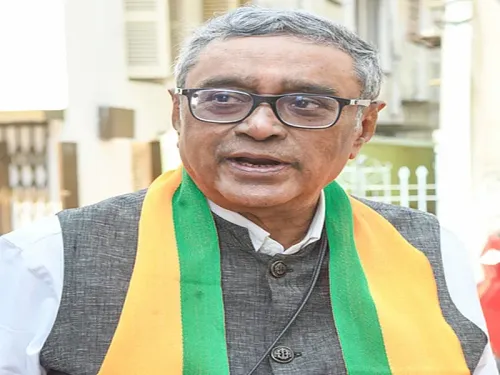
28 CAG reports tabled in Bengal Assembly, BJP flags TMC's constitutional lapse
Synopsis
West Bengal's new BJP government tabled 28 CAG reports in a single session — covering four years of TMC rule — and called the non-presentation a 'major constitutional lapse.' The reports reveal a state debt of over ₹8,00,000 crore and a stunning MSME data gap: 93 lakh claimed, only 99,000 actually functional.
Key Takeaways
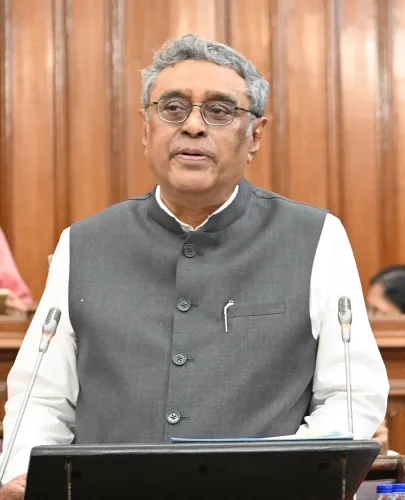
West Bengal Finance Minister Swapan Dasgupta tabled 28 CAG reports in the state Assembly on 25 July , covering the period 2021–2025 .
The reports were never presented by the previous Trinamool Congress (TMC) government — a move Dasgupta called a 'major constitutional lapse.' The reports cover Panchayati Raj, public health, tribal land management, Anganwadi/ICDS services, water pollution, and education, among other areas.
West Bengal's accumulated debt burden stands at more than ₹8,00,000 crore , which the BJP government says it has inherited.
The TMC government reportedly claimed 93 lakh MSMEs in the state; only 99,000 are actually functional, with 4.5 lakh PAN cards found non-existent.
Dasgupta has called for a special Assembly session to conduct detailed discussions on the tabled reports.
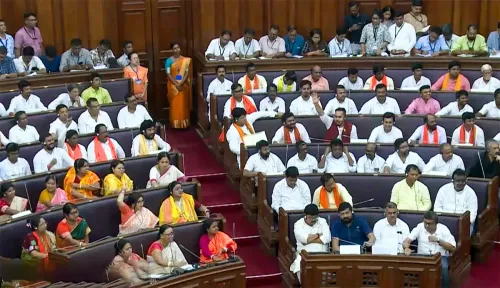
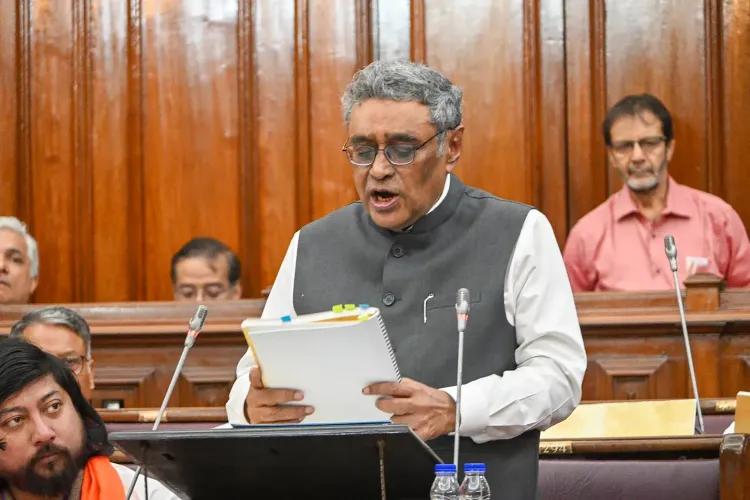
West Bengal Finance Minister Swapan Dasgupta on Saturday, 25 July tabled 28 Comptroller and Auditor General of India (CAG) reports in the state Legislative Assembly — reports covering state income and expenditure between 2021 and 2025 that the previous Mamata Banerjee-led All India Trinamool Congress (TMC) government had never placed before the House. The tabling, done on the final day of the extended budget session, marks a pointed political and constitutional statement by the new Bharatiya Janata Party (BJP) government in the state.
What Was Tabled and Why It Matters
The 28 CAG reports span critical areas of public governance, including Panchayati Raj institutions, public health infrastructure, land management in tribal areas, Anganwadi and ICDS services, water pollution prevention, and the state's education campaign. Multiple audit reports on public sector undertakings and the finance department were also placed on record.
Speaking on the floor of the House after tabling the documents, Dasgupta called the non-presentation a serious constitutional failure. 'The reports of the Comptroller and Auditor General of India have constitutional importance in the Constitution. It is the responsibility of all governments to table such reports on the floor of the House in the Legislative Assembly. I am surprised why these reports were not tabled for some known and unknown reasons during the last few years,' he said.
The Debt Burden Argument
Dasgupta linked the withheld audit findings directly to West Bengal's fiscal condition, stating that a reading of the 28 CAG reports would explain why the state is now carrying an accumulated debt burden of more than ₹8,00,000 crore — a liability he said the current BJP government has inherited. The Finance Minister indicated that detailed legislative discussions on the reports are forthcoming, and called for a dedicated special session of the Assembly to examine them.
'We would like to have an entire special session of the House in the near future when these CAG reports will be discussed. This is extremely crucial,' Dasgupta added.
MSME Data Discrepancy Highlighted
Dasgupta also used the occasion to flag what he described as a significant misrepresentation of the MSME sector under the previous TMC administration. According to him, the earlier government had claimed 93 lakh MSMEs in West Bengal. However, only 22 lakh MSMEs were found to be registered on the Udyam portal. Of those, 4.5 lakh PAN cards reportedly do not exist — and ultimately, only 99,000 MSMEs are actually functional in the state.
'This is why businessmen were deserting West Bengal,' Dasgupta said, framing the MSME data gap as emblematic of broader governance failures under the TMC's tenure.
Political Context
The BJP's decision to table all 28 reports at once — rather than staggered across sessions — appears calibrated for maximum political impact. CAG reports, mandated under Article 151 of the Constitution, must be laid before the state legislature; failure to do so is widely regarded as a breach of legislative accountability. This is not the first time a newly elected government in India has used inherited audit backlogs to frame the conduct of a predecessor, but the sheer volume of withheld reports — covering a four-year period — lends the charge unusual weight. The TMC, now in opposition in West Bengal, has not yet formally responded to the allegations as of the time of tabling.
Point of View
And a four-year gap is difficult to defend on procedural grounds alone. But the real test is what happens next: if the BJP's promised special session materialises and produces genuine legislative scrutiny, it sets a accountability benchmark; if the reports become a press-conference prop and gather dust, the move risks looking like theatre. The MSME data gap — 93 lakh claimed versus 99,000 functional — is the sharpest single data point here, and deserves independent verification before it hardens into political gospel.
NationPress
25 Jul 2026
Frequently Asked Questions
What are the 28 CAG reports tabled in the West Bengal Assembly?
They are Comptroller and Auditor General of India audit reports covering state income and expenditure from 2021 to 2025, which the previous TMC government never presented to the legislature. The reports span Panchayati Raj institutions, public health, tribal land management, Anganwadi and ICDS services, water pollution, education, public sector undertakings, and the state finance department.
Why were these CAG reports not tabled earlier?
Finance Minister Swapan Dasgupta said the previous Trinamool Congress government did not table the reports during its tenure, calling it a 'major constitutional lapse.' He said he was surprised the reports were withheld 'for some known and unknown reasons,' but did not provide a specific explanation on behalf of the TMC.
What is West Bengal's current debt burden according to the BJP government?
According to Finance Minister Dasgupta, West Bengal is carrying an accumulated debt of more than ₹8,00,000 crore, which the current BJP government says it has inherited from the previous TMC administration. He stated that reading the 28 CAG reports would make clear how the state reached this fiscal position.
What is the MSME discrepancy flagged by Finance Minister Dasgupta?
Dasgupta stated that the previous TMC government claimed 93 lakh MSMEs in West Bengal, but only 22 lakh were registered on the Udyam portal. Of those, 4.5 lakh PAN cards reportedly do not exist, leaving only 99,000 MSMEs actually functional in the state.
What happens next with the CAG reports in the West Bengal Assembly?
Finance Minister Dasgupta has called for a dedicated special session of the West Bengal Legislative Assembly to conduct detailed discussions on all 28 CAG reports. No date for the special session has been announced yet.