BJP's White Paper Exposes Key Failures of Trinamool Rule in Bengal

Synopsis
Home Minister Amit Shah has released a detailed report by the BJP, addressing critical issues stemming from 15 years of Trinamool Congress leadership in West Bengal. The paper sheds light on major concerns including infiltration, corruption, and deteriorating infrastructure.
Key Takeaways
Infiltration Systemic corruption Economic decline Safety concerns Collapse of social infrastructure
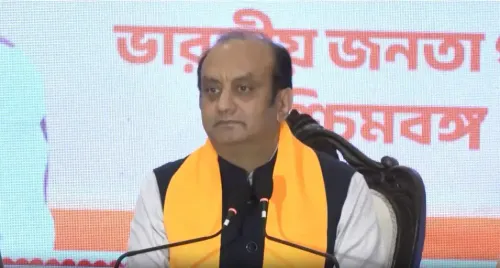
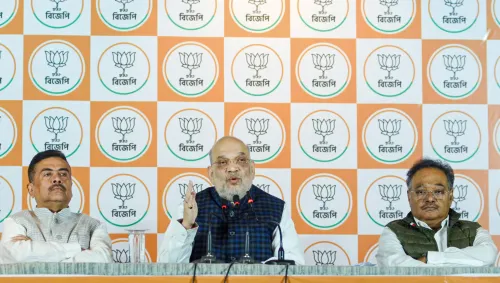
Kolkata, March 28 (NationPress) On Saturday, Home Minister Amit Shah unveiled the BJP's comprehensive 35-page 'white paper', scrutinizing the 15-year tenure of the Trinamool Congress in West Bengal. The document identifies five critical issues: “infiltration”, “systemic corruption and institutional breakdown”, “economic and industrial downturn”, “safety and rule of law”, and “deterioration of social infrastructure”.
Addressing the infiltration issue, the “white paper” asserts that a staggering 569 km of the 2,216.7 km international border with Bangladesh in West Bengal remains unfenced, allegedly due to the state's delays in land acquisition for barbed fencing, which has reportedly facilitated infiltration.
The document further accuses the Trinamool Congress of managing syndicates that issue fake identity cards to infiltrators, aiming to create “vote banks”, thus jeopardizing national security and demographic integrity.
In terms of “systemic corruption and institutional breakdown”, the report claims that widespread corruption and a dominant “cut-money” culture have severely hampered citizen services. It also highlights the denial of dearness allowance to nearly 20 lakh state government employees and the failure to implement the Seventh Pay Commission, leaving them dissatisfied.
Moreover, the BJP indicates that persistent obstruction of electoral roll updates and neglect of Supreme Court directives have exacerbated the state's situation.
The document cites over 300 political murders since 2016, alongside more than 13,000 attempted murders. It also mentions frequent communal tensions in various regions, contributing to a prevailing “climate of fear”.
Additionally, crimes against women in West Bengal have surged alarmingly, with 34,738 reported cases in 2023 alone. The report notes that the suspension of the Leader of the Opposition in the West Bengal Assembly and the silencing of Opposition MLAs have undermined democratic principles, leading to a suppression of democracy.
Under “economic and industrial downturn”, the paper underscores the exit of 6,688 companies and the closure of 18,450 MSMEs, which have resulted in significant capital flight during the Trinamool Congress' rule.
It further points to a concerning trend of youth migration from the state, with over 40 lakh young individuals reportedly forced to leave due to an alarming 47.6% postgraduate unemployment rate.
The report also highlights an agrarian crisis, pointing to distress in the potato and rice sectors, claims of extortion in fisheries and dairy, and neglect of approximately 5 lakh tea garden workers in north Bengal.
Regarding the “collapse of social infrastructure”, it notes the cancellation of 26,000 teaching and non-teaching jobs in state-run schools following a Supreme Court ruling that identified widespread irregularities in hiring.
It further alleges a decline in the healthcare sector, citing the state’s refusal to implement Ayushman Bharat and instances of fake medicine scandals, alongside claims that super-specialty hospitals lack essential facilities.
Urban decay is also evident in Kolkata, with failing infrastructure marked by illegal constructions, flyover collapses, and recurrent fire incidents.
Point of View
Focusing on governance and accountability.
NationPress
26 Sept 2026
Frequently Asked Questions
What are the main issues highlighted in the BJP's white paper?
The BJP's white paper identifies five key issues: infiltration, systemic corruption, economic decline, safety concerns, and the collapse of social infrastructure.
How many political murders have occurred since 2016 in West Bengal?
According to the document, there have been over 300 political murders in West Bengal since 2016.
What impact has the Trinamool Congress had on employment in West Bengal?
The report claims a significant economic decline, with over 40 lakh young people reportedly migrating due to a high postgraduate unemployment rate of 47.6%.
What are the allegations regarding women's safety in West Bengal?
The document reports an alarming increase in crimes against women, with 34,738 cases recorded in 2023 alone.
What does the white paper say about social infrastructure?
The paper notes significant cancellations of teaching jobs and a decline in healthcare services, highlighting severe issues in social infrastructure.