Shivraj Singh Chouhan: Women Farmers Key to Poverty-Free Villages
Synopsis
Union Agriculture Minister Shivraj Singh Chouhan has declared poverty-free villages — where every family has a source of income — as his core goal, emphasising that women farmers have a major role in achieving it. The statement aligns with long-standing federal missions like DAY-NRLM and the Mahila Kisan Sashaktikaran Pariyojana.
Key Takeaways
Shivraj Singh Chouhan declared on October 16, 2026 that his goal is a poverty-free village where every family has a source of income .
He explicitly identified women farmers as having a 'major role' in achieving that goal.
The Mahila Kisan Sashaktikaran Pariyojana (MKSP) under the Ministry of Rural Development focuses on capacity-building for women farmers through self-help groups.
The Deendayal Antyodaya Yojana–National Rural Livelihoods Mission (DAY-NRLM) , launched in 2011 , organises rural poor — primarily women — into self-help groups for livelihood promotion.
Chouhan holds the dual portfolios of Agriculture & Farmers Welfare and Rural Development , giving him rare simultaneous oversight of both farm and village-economy policy.
Potential scheme expansions and budget allocations for women farmer programmes in upcoming Union Budget discussions are a key area to watch.
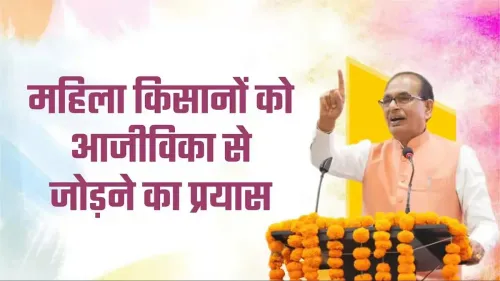
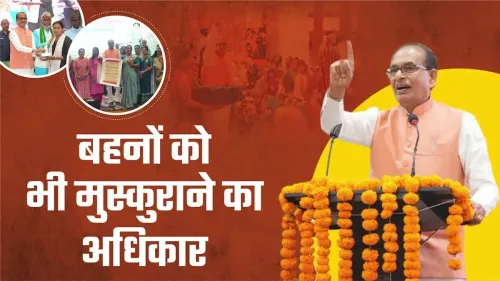
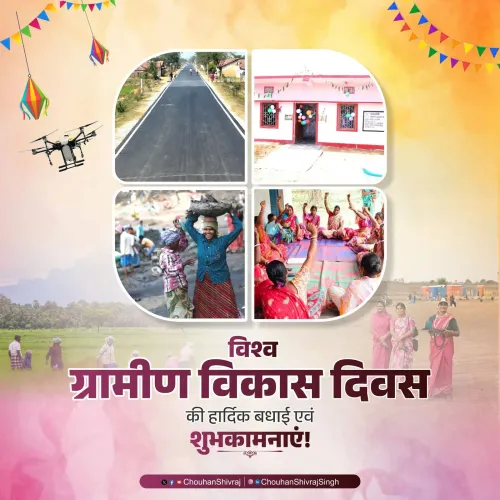
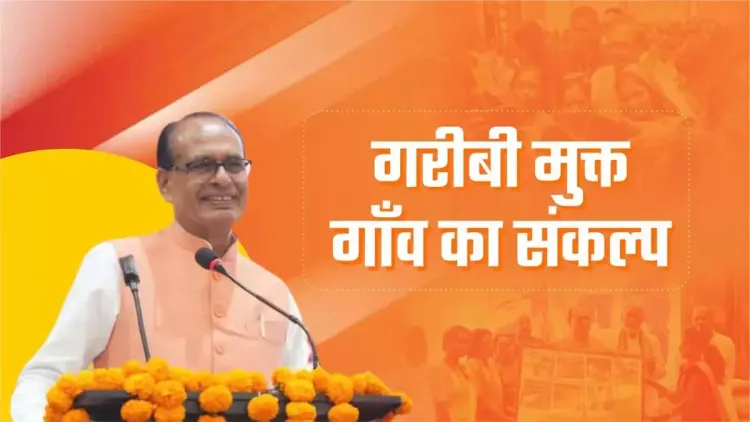
A village where every family has a source of income — that is the declared goal driving Union Agriculture Minister Shivraj Singh Chouhan's vision for rural India, and he is placing women farmers at the centre of achieving it. In a post on X on Friday, October 16, 2026, Chouhan framed the ambition plainly: poverty-free villages are the target, and women holding ploughs are the engine.
Posting in Hindi, Chouhan wrote: 'हमारा लक्ष्य गरीबी मुक्त गाँव है, जहाँ हर परिवार की आय का साधन हो। इसमें महिला किसानों की बड़ी भूमिका है।' ('Our goal is a poverty-free village, where every family has a means of income. Women farmers have a major role to play in this.')
The Architecture Behind the Ambition: DAY-NRLM and Mahila Kisan Sashaktikaran
Chouhan's statement does not emerge in a vacuum. It sits atop two decades of federal architecture built precisely around this idea. The Deendayal Antyodaya Yojana–National Rural Livelihoods Mission (DAY-NRLM), launched in 2011, has been the backbone of efforts to organise rural poor — overwhelmingly women — into self-help groups that unlock credit, training, and market access. Nested within it, the Mahila Kisan Sashaktikaran Pariyojana (MKSP), run by the Ministry of Rural Development, targets capacity-building for women farmers directly through those same self-help group networks.
Women already constitute a substantial share of India's agricultural workforce — doing the seeding, weeding, harvesting, and post-harvest work that rarely shows up in headline farm-income data. MKSP exists to convert that invisible labour into recognised, remunerated livelihood activity. Chouhan, who now holds the twin portfolios of Agriculture & Farmers Welfare and Rural Development, is one of the few ministers in recent memory to simultaneously steer both the farm-side and the village-economy side of this equation.
From Madhya Pradesh to the National Stage
As a four-term Chief Minister of Madhya Pradesh, Chouhan built a political identity closely tied to rural welfare — particularly through women-centred schemes like Ladli Behna at the state level. That track record now informs how he approaches the national portfolio. His framing — income security for every family, not just aggregate GDP growth — echoes a household-level poverty lens that rural development economists have long advocated over macro-level metrics alone.
The signal matters especially as the next Union Budget cycle approaches. Scheme expansions under MKSP, fresh targets for women farmer enrolment in self-help groups, and possible new allocations under DAY-NRLM are all live questions that will test whether this stated goal translates into rupees and results.
A poverty-free village is not a slogan — it is a balance sheet. And Chouhan is betting that women farmers are the ones who will tip it.
Point of View
He is drawing a direct line between the DAY-NRLM self-help group architecture and the older Antodaya poverty-elimination vocabulary that has long animated BJP's rural outreach. Holding both the Agriculture and Rural Development portfolios simultaneously gives Chouhan unusual institutional leverage to align farm-side and livelihood-side spending, a coordination gap that has historically weakened both missions. Whether this convergence produces new resource commitments or remains an aspirational frame will be the real test.
NationPress
16 Oct 2026
Frequently Asked Questions
What is Shivraj Singh Chouhan's goal for Indian villages?
Union Agriculture Minister Shivraj Singh Chouhan has stated his goal is a 'poverty-free village' where every family has a means of income, with women farmers playing a major role in achieving it.
What is the Mahila Kisan Sashaktikaran Pariyojana?
The Mahila Kisan Sashaktikaran Pariyojana (MKSP) is a scheme under India's Ministry of Rural Development focused on building the capacity of women farmers and supporting their agricultural livelihoods through self-help group networks.
What is DAY-NRLM and how does it help women farmers?
The Deendayal Antyodaya Yojana–National Rural Livelihoods Mission (DAY-NRLM), launched in 2011, organises rural poor — especially women — into self-help groups that provide access to credit, training, and market linkages to promote sustainable livelihoods.
What portfolios does Shivraj Singh Chouhan currently hold?
Shivraj Singh Chouhan currently serves as the Union Minister of Agriculture & Farmers Welfare and Rural Development, giving him oversight of both farm-policy and village-economy programmes.
Why are women farmers important to India's rural development?
Women constitute a significant share of India's agricultural workforce, performing much of the seeding, weeding, and harvesting work. Government schemes like MKSP aim to formally recognise and remunerate this contribution while expanding their economic participation through self-help groups.