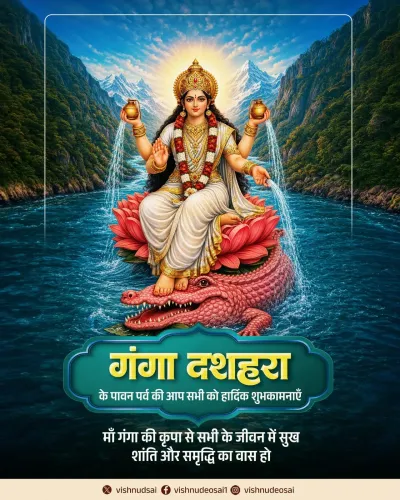
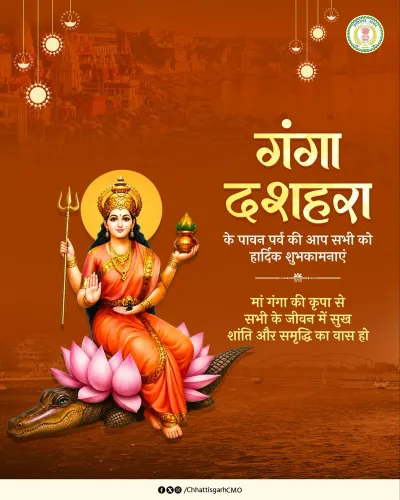
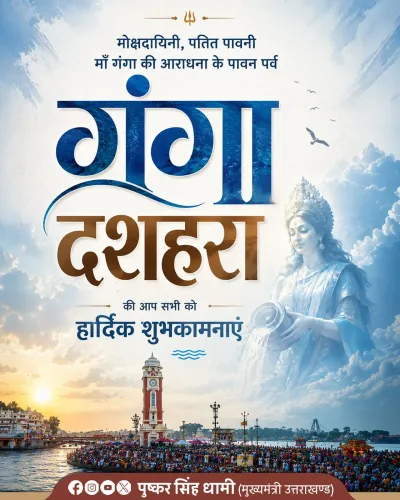
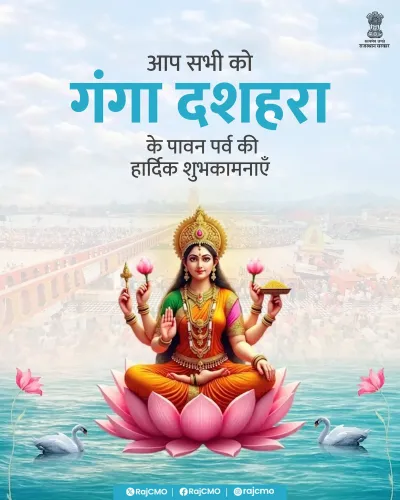
Shivraj Singh Chouhan Extends Ganga Dussehra Greetings
Synopsis
Union Agriculture Minister Shivraj Singh Chouhan greeted citizens on Ganga Dussehra, 25 May 2026, praying for prosperity and well-being in every home. The festival marks the mythological descent of the sacred Ganga and is observed with ritual bathing at ghats across northern India.
Key Takeaways
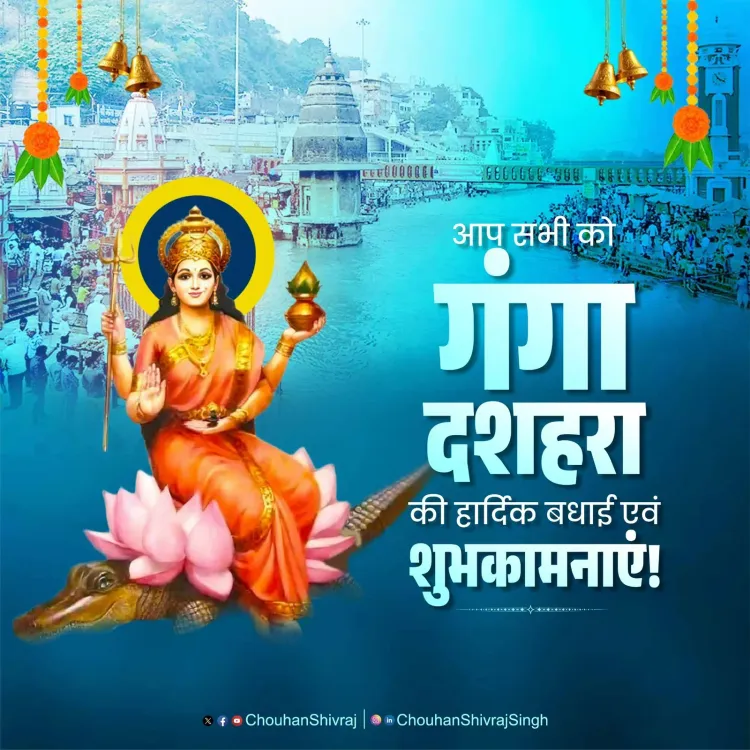
Union Agriculture Minister Shivraj Singh Chouhan extended greetings on Ganga Dussehra on 25 May 2026 via X.
He prayed for prosperity, grain, happiness and fulfilment of wishes in every household, signing off with Har Har Gange .
Ganga Dussehra marks the mythological descent of the river Ganga, observed on Jyeshtha Shukla Dashami with ritual bathing and prayers.
The central government's Namami Gange programme, with an outlay of over Rs 20,000 crore , has been the flagship river-conservation initiative since 2014-15 .
The Ganga basin supports agriculture, drinking water and livelihoods for millions across Uttar Pradesh , Bihar , Madhya Pradesh and West Bengal .
Union Agriculture Minister Shivraj Singh Chouhan extended warm greetings to citizens and devotees across India on the occasion of Ganga Dussehra on Monday, 25 May 2026, invoking the sacred river's blessings for prosperity and well-being in every household.
Context
In his post on X, the minister offered prayers at the feet of Maa Ganga (Mother Ganga), expressing the wish that 'har ghar-aangan dhan-dhanya aur sukh-samridhi se bhara rahe' — that every home and courtyard be filled with wealth, grain, happiness and prosperity. He concluded with the traditional chant 'Har Har Gange', a salutation widely used by devotees of the sacred river.
Ganga Dussehra is observed on Jyeshtha Shukla Dashami in the Hindu calendar and marks the mythological descent of the river Ganga from the heavens to earth. Devotees observe ritual bathing at ghats, offer prayers, and seek the river's blessings for the remission of sins and the welfare of their families.
Policy Backdrop
The cultural significance of the Ganga is closely intertwined with central government policy. The Namami Gange programme, approved by the Union Cabinet in 2014-15 with an outlay of over Rs 20,000 crore, remains the flagship initiative for pollution abatement, biodiversity conservation and sustainable development of the Ganga basin. It built on earlier efforts including the Ganga Action Plan Phase-I (launched 1986) and Phase-II (launched 1993).
Chouhan, in his role as Union Minister overseeing agriculture and rural development, represents a constituency that is deeply connected to the Ganga's health: the river basin supports irrigation and drinking water for millions of farmers and rural communities across several north Indian states.
Stakeholders and Impact
The Ganga basin is home to a vast population of Hindu devotees, riparian farmers and urban residents whose livelihoods and cultural identity are tied to the river. Ganga Dussehra draws large congregations at prominent ghats in cities such as Haridwar, Varanasi and Prayagraj, making it one of the more widely observed festivals in northern India.
For the agrarian communities that Chouhan's ministry serves, the river is not merely a religious symbol but a practical lifeline — its waters feed canal networks and groundwater tables that underpin agricultural output across Uttar Pradesh, Bihar, Madhya Pradesh and West Bengal.
What's Next
Observers will watch for the next annual progress report and budget allocation under the Namami Gange programme, as well as state-level observances of Ganga Dussehra in coming years. Senior leaders issuing greetings on the occasion also signals continued political acknowledgement of the river's centrality to India's cultural and ecological identity. The convergence of religious sentiment with river-conservation policy is expected to remain a recurring theme in government communication around the Ganga.
Point of View
The invocation of the river carries both devotional and policy resonance. The post fits a broader pattern in which the government frames Namami Gange not merely as an environmental programme but as an act of cultural and civilisational duty. Such messaging helps consolidate the BJP's identity among Hindu voters while keeping river-rejuvenation in public discourse ahead of future budget cycles.
NationPress
24 Sept 2026
Frequently Asked Questions
What is Ganga Dussehra and why is it celebrated?
Ganga Dussehra is an annual Hindu festival observed on Jyeshtha Shukla Dashami that marks the mythological descent of the river Ganga from the heavens to earth. Devotees take ritual dips at ghats and offer prayers, believing the river's waters on this day cleanse sins and bring blessings.
What did Shivraj Singh Chouhan say on Ganga Dussehra 2026?
Shivraj Singh Chouhan extended greetings to all citizens and devotees, praying that Maa Ganga's blessings remain on everyone, that every home be filled with prosperity and grain, and that all wishes be fulfilled. He signed off with the traditional salutation 'Har Har Gange'.
What is the Namami Gange programme?
Namami Gange is the central government's flagship integrated river-conservation programme launched in 2014-15 with a Union Cabinet-approved outlay of over Rs 20,000 crore. It aims at pollution abatement, biodiversity conservation and sustainable development of the Ganga basin.
Who is Shivraj Singh Chouhan?
Shivraj Singh Chouhan is a senior BJP leader who served four terms as Chief Minister of Madhya Pradesh. He currently serves as Union Minister of Agriculture and Farmers Welfare and Rural Development in the central government.
When is Ganga Dussehra in 2026?
In 2026, Ganga Dussehra fell on Monday, 25 May, corresponding to Jyeshtha Shukla Dashami in the Hindu calendar.