Siddaramaiah rules out contesting 2028 Karnataka polls
Synopsis
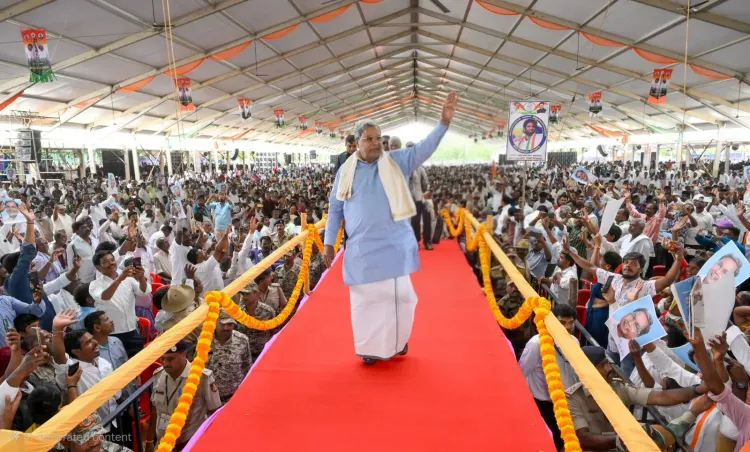
Karnataka Chief Minister Siddaramaiah, 79, declared at a private function in K.R. Pete, Mandya, that he will not contest the 2028 assembly elections, citing rampant money power and his age, while vowing to remain active in public life after 50 years in politics.
Key Takeaways
Siddaramaiah announced he will not contest the 2028 Karnataka Legislative Assembly elections .
He cited the 'pollution' of politics by money power, saying candidates are now expected to pay voters — a reversal of the grassroots support he received earlier in his career.
At 79 , he noted he will be 82 by the time of the next elections and does not expect to have the same health or energy.
By 2028 , Siddaramaiah will have completed 50 years in politics, having started as a taluk mandal member in 1978 .
He pledged to remain active in politics as a 'voice for the people' despite stepping away from electoral contests.
The announcement opens up succession questions for the Varuna constituency and the Congress party's Karnataka strategy ahead of 2028 .
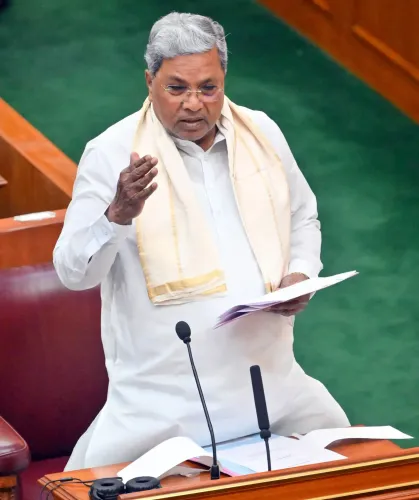
Karnataka Chief Minister Siddaramaiah on Saturday, 26 July 2026, declared that he will not contest the 2028 Karnataka Legislative Assembly elections, citing the growing influence of money power in politics and his advancing age, while pledging to remain active in public life. Speaking at a private function in K.R. Pete, Mandya district, the 79-year-old Congress veteran said the political arena had become too 'polluted' for honest politics to survive.
Context
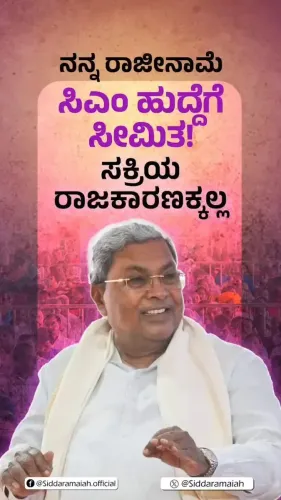
Addressing the gathering in Kannada, Siddaramaiah stated: 'ರಾಜಕೀಯ ಕ್ಷೇತ್ರ ಇಂದು ಕಲುಷಿತಗೊಂಡಿರುವುದರಿಂದ 2028ರ ವಿಧಾನಸಭಾ ಚುನಾವಣೆಯಲ್ಲಿ ನಾನು ಸ್ಪರ್ಧಿಸುವುದಿಲ್ಲ' ['Because the political field has become polluted today, I will not contest the 2028 assembly elections']. He noted that by the time the next elections arrive, he will be 82 years old and may not have the health or energy to campaign as he once did. He also acknowledged that voters from his longtime stronghold, Varuna constituency, have been urging him to contest again, but said he has made up his mind against it.
The Chief Minister drew a sharp contrast between elections past and present: 'Earlier, when I contested, the people of the constituency would themselves give money and ensure my victory. That situation no longer exists. Now, if you want to contest, you have to give money to voters.' He described this shift as evidence that 'honest politics has no place left' in today's environment.
Policy Backdrop
Siddaramaiah began his political career in 1978 as a taluk mandal member, and by 2028 will have completed 50 years in active politics. He has served as Chief Minister of Karnataka twice — first from 2013 to 2018, and again after the Indian National Congress won the 2023 assembly elections. His current government has approximately one and a half years remaining in its term. He has represented Varuna constituency in Mysuru district across multiple terms, building one of the most durable electoral bases in the state.
The announcement reflects a broader pattern among senior Indian politicians who step back from direct electoral contests while retaining influence within their parties — particularly when internal succession planning becomes necessary ahead of a major state election cycle.
Stakeholders and Impact
The declaration has immediate implications for the Indian National Congress in Karnataka, which will need to identify a successor candidate for the Varuna seat — a constituency closely associated with Siddaramaiah's political identity for decades. Voters in Varuna and the broader Mandya and Mysuru belt will closely watch how the party manages this transition. Congress's internal deliberations on the 2028 ticket allocation for Varuna are now likely to begin in earnest.
Siddaramaiah was emphatic that stepping away from elections does not mean stepping away from public life: 'For five decades, the people of this state have treated me as one of their own and nurtured me with love. I carry that debt. My remaining life will also be dedicated to public service.' He said he would continue to 'be a voice for the joys and sorrows of the people' while staying active in politics.
What's Next
With the Karnataka government's term set to end around early 2028, attention will now shift to Congress's succession strategy — both for the Chief Minister's post and for the Varuna assembly seat. Any formal party announcement on the Varuna candidature will be closely watched as a signal of the Congress high command's priorities in southern Karnataka. Siddaramaiah's continued presence as a party voice and mentor figure is expected to shape the Congress campaign narrative in the state even without his name on a ballot.
Point of View
He positions himself as a principled elder statesman rather than a leader being eased out. The timing, midway through his second term, is textbook succession management: it gives Congress space to groom a Varuna candidate without appearing to push him aside. For a party that has leaned heavily on his OBC identity and mass connect in southern Karnataka, the challenge will be finding a successor who can hold that coalition together without the same five-decade brand equity.
NationPress
26 Oct 2026
Frequently Asked Questions
Will Siddaramaiah contest the 2028 Karnataka elections?
No. Siddaramaiah has announced he will not contest the 2028 Karnataka Legislative Assembly elections, citing the growing influence of money power in politics and his age of 79, which will be 82 by the time of the next polls.
Why is Siddaramaiah not contesting future elections?
He cited two main reasons: the 'pollution' of politics by money power — where candidates are now expected to pay voters rather than earning grassroots support — and his advancing age and health, saying he will not have the same energy at 82 that he has today.
Will Siddaramaiah remain active in politics after stepping away from elections?
Yes. Siddaramaiah stated clearly that he will remain active in politics and continue to be 'a voice for the joys and sorrows of the people,' even though he will no longer contest elections.
How long has Siddaramaiah been in politics?
Siddaramaiah began his political career in 1978 as a taluk mandal member. By 2028, he will have completed 50 years in active politics.
Who will contest from Varuna constituency in 2028 after Siddaramaiah's announcement?
No successor has been named yet. Siddaramaiah's announcement opens up the Varuna seat, and the Indian National Congress is expected to begin internal deliberations on a replacement candidate for the 2028 assembly elections.