Dr. Jitendra Singh Hits Congress on Electoral Roll Revision Row
Synopsis
Union Minister Dr. Jitendra Singh addressed a BJP press conference in Bengaluru, defending the Election Commission's Special Intensive Revision of electoral rolls, disputing Congress's '13 crore deleted' claim, and noting that 10 of 12 such revisions occurred under Congress governments.
Key Takeaways
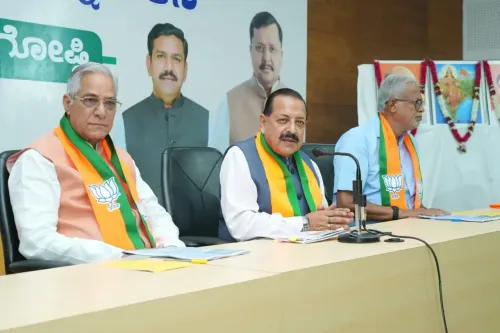
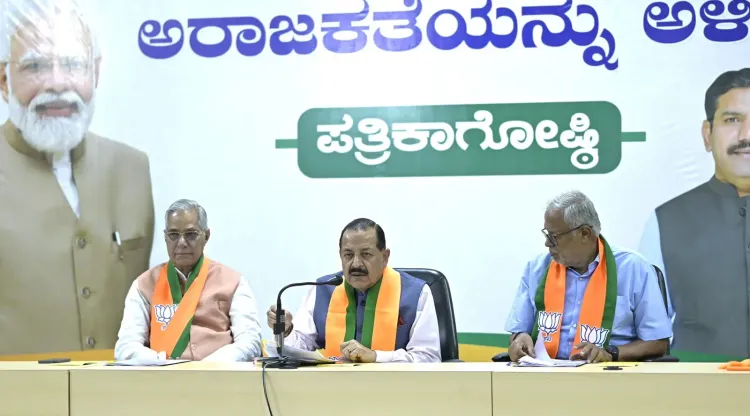
Jitendra Singh held a press conference at the Karnataka State BJP headquarters, Bengaluru on November 3, 2026 .
He defended the Special Intensive Revision (SIR) of electoral rolls as a constitutional obligation of the Election Commission of India , not a partisan exercise.
He disputed the Congress claim of '13 crore votes deleted' , clarifying that flagged entries are under verification — not final deletions.
He asserted that 10 of 12 intensive roll revisions were conducted when Congress governments were in power, alleging double standards.
He cited recent Karnataka Legislative Council election results — conducted via ballot paper — as evidence of Congress's political weakness in the state.
He called on Congress to stop 'politicising constitutional institutions' and respect the democratic process.
At the Karnataka State BJP headquarters in Bengaluru on Tuesday, November 3, 2026, Union Science and Technology Minister Dr. Jitendra Singh turned a press conference into a sharp counter-offensive — mounting a data-backed challenge to Congress's narrative on the Election Commission's Special Intensive Revision of electoral rolls.
The '13 Crore Deleted' Claim, Dissected
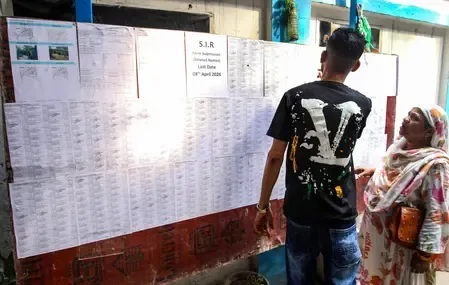
Congress has been amplifying a figure of '13 crore votes deleted' to cast the SIR as a voter-suppression exercise. Dr. Singh called that framing deliberately misleading, pointing out that flagged entries are not final deletions — they are subject to a verification process before any removal takes effect. The distinction is consequential: a name flagged for scrutiny and a name erased from the rolls are legally and procedurally different things, and conflating the two, he argued, is a calculated distortion.
Congress's Own Governments Ran Ten of Twelve Such Revisions
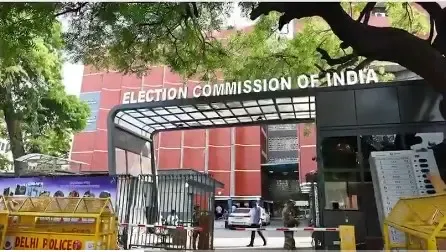
The minister's most pointed counter-punch was historical. He claimed that 10 of the 12 intensive electoral roll revisions on record were conducted when Congress governments were in power — framing the party's current outrage as a case of selective amnesia. The Election Commission of India, established under Article 324 of the Constitution and operating under the Representation of the People Act, 1950, has long held the mandate to periodically cleanse electoral rolls of inaccurate or ineligible entries. That mandate, Dr. Singh stressed, is the Commission's constitutional obligation — not a tool of any political party.
Karnataka Legislative Council Results as Political Proof
Dr. Singh folded recent political ground-level evidence into the argument: the results of the Karnataka Legislative Council elections, conducted via ballot paper, went against Congress. He presented this as proof that the opposition's grievance with election integrity is not borne out by actual electoral outcomes — and that voters in Karnataka have delivered their own verdict, independent of EVMs or roll management controversies.
A Constitutional Body in the Political Crossfire
The broader skirmish here is familiar but the stakes are real. Opposition parties in several states have, in recent cycles, challenged the SIR process, arguing that marginalised communities face disproportionate deletion risks. The ruling dispensation counters that accurate rolls are essential to democratic integrity and that opposing roll purification amounts to defending ghost entries. Dr. Singh's press conference — bilingual, in English and Kannada — was calibrated for both a national media audience and Karnataka's local political circuit.
The Election Commission's final decisions on flagged entries and any formal parliamentary response from the opposition will determine whether this debate stays in pressrooms or travels to the floor of the House.
Point of View
Framing institutional defence as a democratic value rather than a partisan reflex. By invoking the historical record of Congress-era intensive revisions, the BJP aims to neutralise the narrative of targeted voter suppression before it consolidates in public discourse. The Legislative Council result reference is a tactical insert — it redirects the debate from process grievances to electoral outcomes, implying that the opposition's integrity complaints are sour grapes. Whether the Election Commission's verification mechanism is robust enough to prevent erroneous deletions remains the unresolved policy question that will drive this debate forward.
NationPress
4 Nov 2026
Frequently Asked Questions
What is the Special Intensive Revision (SIR) of electoral rolls?
The Special Intensive Revision is a periodic exercise conducted by the Election Commission of India under the Representation of the People Act, 1950, to review, update, and correct electoral rolls — removing ineligible, duplicate, or deceased entries while adding eligible new voters.
Did Congress really support similar electoral roll revisions in the past?
Dr. Jitendra Singh claimed at his press conference that 10 of the 12 intensive electoral roll revisions on record were conducted when Congress governments were in power, arguing this makes the party's current opposition to the SIR contradictory.
Is it true that 13 crore votes have been deleted from electoral rolls?
Dr. Singh disputed this framing directly, clarifying that flagged entries are placed under verification and are not automatically or finally deleted — the '13 crore deleted' figure conflates flagged entries with confirmed removals, which he called deliberately misleading.
Why did Dr. Jitendra Singh mention Karnataka Legislative Council elections?
He cited the Karnataka Legislative Council election results — held via ballot paper rather than EVMs — as evidence that BJP can defeat Congress even in elections free from electronic voting machine controversy, countering opposition arguments about electoral manipulation.
What is the Election Commission's legal authority over electoral rolls?
The Election Commission of India derives its authority from Article 324 of the Constitution and the Representation of the People Act, 1950, which mandate it to maintain, supervise, and periodically revise electoral rolls to ensure their accuracy and credibility.