Abhishek Manu Singhvi Critiques BJP's Political Conduct Ahead of State Elections
Synopsis
In an exclusive interview, Congress's Abhishek Manu Singhvi condemns BJP's claims of electoral success, labeling their tactics as divisive and indecent. With alliances in focus, he urges collaboration for a stronger political front in upcoming elections.
Key Takeaways
Singhvi criticizes BJP's tactics as divisive and indecent.
He supports forming alliances for stronger political fronts.
Concerns over BJP's approach in Tamil Nadu highlighted.
Mamata Banerjee's leadership is recognized as influential in Bengal.
Defends Rahul Gandhi's active role against government misgovernance.
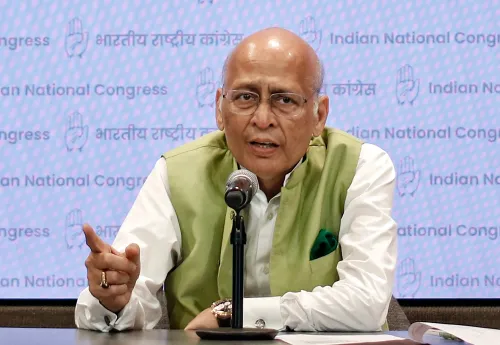
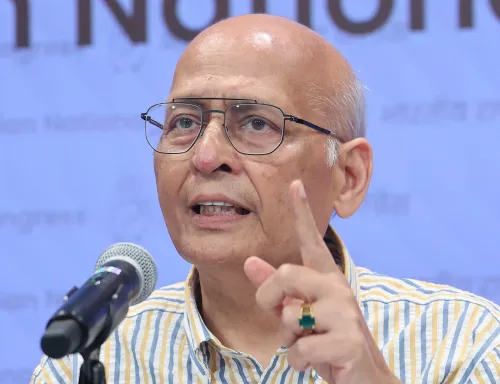
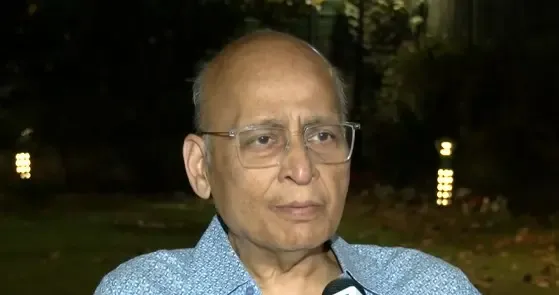
New Delhi, March 16 (NationPress) Congress Rajya Sabha member Abhishek Manu Singhvi on Monday refuted the assertions made by the Bharatiya Janata Party (BJP) regarding their anticipated victory in the forthcoming Assembly elections across four states. He criticized the party for engaging in what he termed "divisive politics" and resorting to "extreme levels of coarseness and indecency".
In an exclusive interview with IANS, Singhvi expressed his belief that the electorate in the states preparing for polls—namely, Assam, West Bengal, Kerala, and Tamil Nadu—will ultimately "reject" the BJP.
He mentioned that he feels Congress should consider forming an alliance with the Trinamool Congress in West Bengal.
Singhvi also discussed the Youth Congress's shirtless protest during the AI Impact Summit, commented on the discharge of Aam Aadmi Party (AAP) Chief Arvind Kejriwal in the Excise Policy case, and shared his views on Congress MP Shashi Tharoor and India's foreign policy amidst the ongoing conflict in West Asia.
IANS: Do you believe the BJP will truly make an impact in the upcoming Assembly elections in these five states?
Abhishek Manu Singhvi: In Kerala, while the BJP raises its voice, the outcomes are often contrary to their expectations.
In Tamil Nadu, despite the BJP's relentless efforts, they lack principled acceptance and exhibit a disregard for restraint. Their core agenda seems to revolve around the imposition of language, which fundamentally conflicts with the cultural values of Tamil Nadu. The time for (Chief Minister and DMK President M.K. Stalin) has indeed arrived; we acknowledge him as a leading figure in our alliance.
Turning to Assam, where the BJP's prospects are perceived as "brightest", I argue that this view is misguided. The BJP excels in divisive tactics, but their level of coarseness has reached alarming extremes. (Chief Minister) Himanta Biswa Sarma poses a significant threat to the party's future due to his extreme vulgarity, which the public is beginning to recognize as unacceptable. Gaurav Gogoi is a strong leader with a commendable political legacy in the area.
Moreover, the discerning populace in Assam understands that Sarma's rhetoric is solely divisive. His frequent references to the "Miya" community and aggressive posturing will ultimately lead to his downfall.
In Bengal, the leader who truly resonates with the people is Mamata Banerjee. Regardless of personal opinions about her, she embodies the essence of Bengal's culture and heritage. Expect a lot of noise and hype around this.
IANS: Do you think CM Mamata Banerjee can secure another victory in the Assembly elections? The BJP exudes confidence; what are your thoughts?
Abhishek Manu Singhvi: I believe the people of Bengal will not embrace the BJP... No politician is invincible. Mamata Banerjee retains a significant amount of strength, energy, and dynamism. She possesses direction and momentum, deeply understanding the people's pulse. Among India's political figures, especially women, none can compete with her in agitation politics. This atmosphere seems to be deliberately orchestrated.
IANS: Are there prospects for Congress and Trinamool Congress to collaborate for the West Bengal Assembly elections? Would such an alliance be advantageous?
Abhishek Manu Singhvi: This isn't a decision I can make; only a few individuals in our party hold that authority. Personally, I advocate for an alliance. However, if you take a solitary approach in Bengal, your party may grow stronger. The ultimate decision remains uncertain.
My perspective is that given the proximity of the elections, an alliance based on equitable seat-sharing is the only viable option available to us. However, this is strictly my personal view and requires formal endorsement.
IANS: Recently, Youth Congress activists made headlines by staging a protest at the AI Summit without their shirts. Do you find this appropriate?
Abhishek Manu Singhvi: While it's valid to express discontent, consider the narrative constructed around them, labeling them as "absurd individuals" lacking understanding. They executed a peaceful, non-violent protest in a public forum. The BJP implies they have no right to protest, yet they relentlessly pursue legal action against them—despite them being merely young men.
The BJP seems unable to tolerate dissent, resorting to vindictive methods. They faced considerable challenges securing bail. This behavior sends a clear message—intimidation and threats. They have silenced voices in Parliament and are now extending that suppression beyond its walls.
IANS: AAP leader Arvind Kejriwal has been discharged in the Excise Policy case. What are your thoughts on this?
Abhishek Manu Singhvi: In the past 5–7 years, I've represented leaders from various political parties. It's unfortunate that the blatant misuse of power is not limited to the Prevention of Money Laundering Act. The misuse of agencies like the Enforcement Directorate, the Central Bureau of Investigation, and the Income Tax Department has never been observed to this extent.
Furthermore, hypothetically, if there are 100 total PMLA cases, and let's say only ten are politically motivated, 9.5 of those will target the Opposition. Why? This question remains unanswered. Instead, the focus shifts to the 90 other cases, which are primarily business-related.
Regarding Arvind Kejriwal, I've also represented Manish Sisodia and Sanjay Singh. It's important to note two points about Kejriwal's situation. I lack the time to delve deeply, but the CBI had summoned him in 2021 or 2022 and did not call him again until 2024, when the ED arrested him. Why was there no urgency to arrest him previously?
IANS: Should Congress have backed Kejriwal?
Abhishek Manu Singhvi: Alliances vary based on contexts. Currently, they aren't allied, which is typical in politics. It's common to oppose a regional party at the state level while cooperating nationally. The Congress has experienced this numerous times, as have the Left parties. Similarly, the Janata Dal and BJP have contested against each other at the state level while collaborating nationally.
IANS: Congress MP Shashi Tharoor often presents views that diverge from the party's official stance. What are your thoughts?
Abhishek Manu Singhvi: I won't express an opinion on that... You should speak to Shashi Tharoor. You might also query those responsible for our organization, such as the General Secretary or the President of the Indian National Congress. I am neither part of the disciplinary committee nor someone who monitors others' comments. All I can say is that he is a strong, wise, and intellectual leader. Differences do arise. I recently met him, and it seems most communication gaps have been resolved. If we collaborate, he can be a tremendous asset in Kerala.
IANS: Two Indian vessels have successfully navigated the Strait of Hormuz. Do you consider this a diplomatic achievement for New Delhi?
Abhishek Manu Singhvi: I don't view this as a complete success. Where does the notion of victory come from? I see no point that signifies success. I stand firmly in support of acting in India's national interest. It's crucial to prioritize India's interests, even while acknowledging that national interest reigns supreme. Still, the actions taken raise questions.
First, there's no necessity to abandon our traditional diplomatic principles or longstanding policies. We could have upheld our traditional stance while safeguarding India's interests—there's no contradiction in doing both. Second, regarding the visit to Israel, either the ministry was aware of an impending attack or it wasn't. If not, that raises serious questions about the ministry's competence.
It took five days to sign the condolence book following (Iranian Supreme Leader Ayatollah Ali) Khamenei's assassination. If we were to present ourselves at the Security Council, people would certainly question what kind of "Vishwaguru" we claim to be. What sort of diplomacy allows for a blatant murder on another's territory while lacking the courage to condemn America or Israel?
IANS: Misleading statements concerning the Supreme Court and its judges frequently circulate on social media. How do you perceive this trend?
Abhishek Manu Singhvi: The Supreme Court exhibits a considerable degree of tolerance. I believe the Court shouldn’t classify every instance as contempt; doing so gives undue significance to such cases. Nonetheless, I condemn the degradation of discourse into an unrestrained free-for-all.
It is vital—indeed necessary—that discussions on social media, particularly about the Court, are conducted maturely and seriously. Those merely "playing games" are neither serious nor mature; they are simply sensationalists.
IANS: Recently, Home Minister Amit Shah remarked that Rahul Gandhi is often absent during critical legislative discussions.
Abhishek Manu Singhvi: This reflects a tendency from the ruling party to mock. You must have noticed the "Pappu" narrative they have promoted. Today, the most prominent voice against misgovernance and the government belongs to Rahul Gandhi. If his voice resonates so powerfully on pan-Indian platforms, how can one assert that he is absent?
When Rahul Gandhi speaks abroad, you accuse him of making erroneous statements. In Parliament, he is denied adequate speaking time. When he speaks outside Parliament, defamation cases are instituted against him. Yet, paradoxically, you are the very ones who claim he is absent.
Point of View
Emphasizing the need for unity among opposition parties. His insights into regional politics and the significance of alliances highlight the evolving dynamics in Indian politics, especially as elections approach.
NationPress
30 Sept 2026
Frequently Asked Questions
What are Abhishek Manu Singhvi's views on the BJP's claims of winning elections?
Singhvi dismisses the BJP's claims as unrealistic, criticizing their tactics as divisive and uncivil.
Does Singhvi support an alliance with the Trinamool Congress?
Yes, he advocates for an alliance to strengthen Congress's position in West Bengal.
What does Singhvi say about the BJP's approach in Tamil Nadu?
He asserts that the BJP lacks principled acceptance and is disregarding Tamil Nadu's cultural values.
How does Singhvi perceive the leadership of Mamata Banerjee?
He acknowledges her as a significant leader who resonates with the people of Bengal.
What are Singhvi's thoughts on Rahul Gandhi's presence in Parliament?
He defends Gandhi's voice against misgovernance and criticizes the ruling party's narrative about his absence.