Sitharaman: AI skilling making India top GCC destination
Synopsis
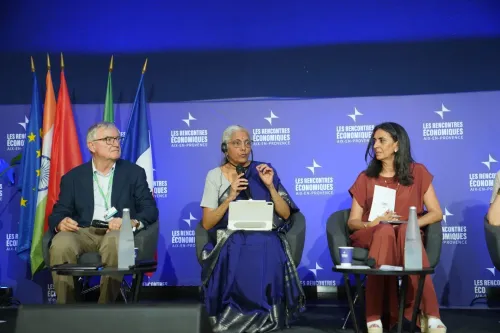
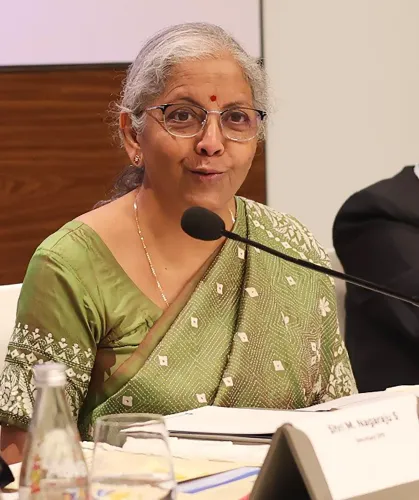
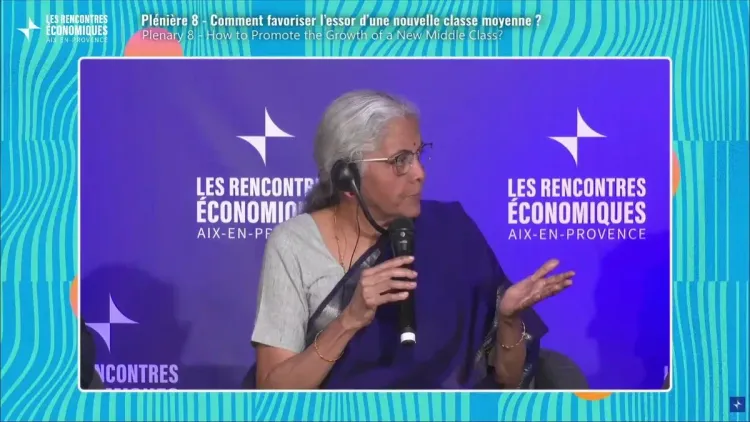
Finance Minister Nirmala Sitharaman, addressing Aix-Marseille University in France on 3 July 2026, said industry-backed AI skilling programmes are empowering India's middle class and making India the preferred destination for Global Capability Centres.
Key Takeaways
Nirmala Sitharaman spoke at Aix-Marseille University, France on 3 July 2026 on AI and India's talent ecosystem.
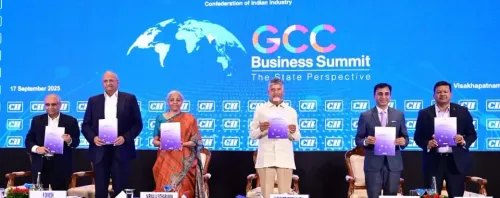
She said AI is creating new opportunities and that India's middle class is 'powering innovation.' India is being positioned as the preferred destination for Global Capability Centres (GCCs) run by multinational firms.
Industry-backed skilling programmes are cited as the mechanism for building AI-ready talent .
India's AI skilling push builds on the Skill India Mission (2015) and the National AI Strategy (2018) .
The remarks form part of India's broader technology and education outreach in Europe .
Union Finance Minister Nirmala Sitharaman on Friday, 3 July 2026, said artificial intelligence is creating new opportunities for India's middle class, speaking at Aix-Marseille University in France. She highlighted industry-backed skilling programmes and AI-ready talent as the twin forces positioning India as the preferred destination for Global Capability Centres (GCCs).
Context
Addressing the audience at Aix-Marseille University — one of France's largest public research universities — Sitharaman stated that 'AI is creating new opportunities' and that India's middle class is 'powering innovation.' Her remarks came during what appears to be part of a broader India-France engagement on technology and education cooperation. The setting underscored India's intent to project its AI and digital talent story directly to European academic and policy audiences.
Policy Backdrop
India's focus on AI-ready skilling has deep policy roots. The Skill India Mission, launched in 2015, set the template for large-scale vocational and digital workforce development. This was followed by the National Strategy for Artificial Intelligence — branded #AIForAll — released in 2018, which laid out a roadmap for responsible AI adoption and talent pipelines.
Global Capability Centres have been a consistent growth story for India since the early 2000s. Multinationals use these offshore hubs for R&D, IT, analytics, and other high-value global operations, drawn by India's cost advantages and large English-speaking workforce. Successive governments have positioned GCC expansion as a key driver of services exports and quality employment.
Stakeholders and Impact
The primary beneficiaries of this convergence — AI skilling plus GCC growth — are India's middle class, particularly professionals in technology, analytics, and engineering services. Multinational corporations gain access to a deep, cost-competitive talent pool, while India captures high-value services investment and export revenue.
Industry-backed skilling programmes, referenced by Sitharaman, signal a model where the private sector co-funds and co-designs curricula, aligning training directly with employer demand. This public-private approach has been a recurring feature of India's skilling architecture.
What's Next
Attention will now turn to whether Sitharaman's remarks translate into concrete announcements — particularly in the next Union Budget or Economic Survey — on AI skilling allocations or new GCC investment incentives. India's outreach in Europe, including France, is part of a longer arc of technology partnerships, and any bilateral follow-through on education or AI cooperation between the two countries will be closely watched. As GCC expansion continues, the scale and quality of India's AI talent pipeline will increasingly determine how competitive that advantage remains.
Point of View
Framing GCC growth not merely as corporate gain but as broad-based opportunity. This fits a consistent BJP-era messaging arc that links macro investment wins to household-level prosperity. The speech also signals that AI skilling, long a bureaucratic talking point, is now being deployed as a centrepiece of India's global competitiveness pitch.
NationPress
3 Jul 2026
Frequently Asked Questions
What did Nirmala Sitharaman say about AI in France?
Sitharaman said AI is creating new opportunities and that industry-backed skilling programmes are producing AI-ready talent, making India the preferred destination for Global Capability Centres. She made these remarks at Aix-Marseille University in France on 3 July 2026.
What are Global Capability Centres and why does India attract them?
Global Capability Centres are offshore hubs set up by multinational companies for R&D, IT, analytics and other high-value operations. India attracts them due to its large English-speaking workforce, cost advantages, and growing pool of technology talent.
What is India's policy on AI skilling?
India launched the Skill India Mission in 2015 and released its National Strategy for Artificial Intelligence in 2018 under the #AIForAll initiative. These frameworks aim to build a large, digitally skilled workforce aligned with emerging technology demands.
Why did Sitharaman speak at a French university?
The address is part of India's broader outreach to Europe on technology and education cooperation. France is a key partner in this effort, and speaking at a major French university allows India to project its AI and talent story to European academic and policy circles.
How does AI skilling benefit India's middle class?
AI-ready skilling opens access to high-quality jobs in GCCs and the broader technology sector, which are significant employers of India's middle-class professionals in engineering, analytics and IT services.