Sitharaman backs toys sector with DPI and innovation push
Synopsis
Finance Minister Nirmala Sitharaman told the Toy Association of India that platforms like UPI, ONDC, TReDS and the Account Aggregator framework, alongside schemes such as PM Vishwakarma and Skill India, are connecting toy artisans and women entrepreneurs to national markets as part of India's Viksit Bharat vision.
Key Takeaways
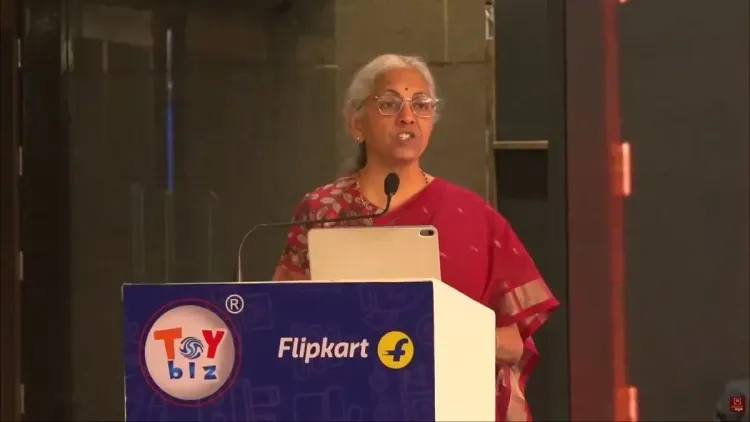
Finance Minister Nirmala Sitharaman addressed the Toy Association of India in New Delhi on 7 July 2026 , linking innovation and digital infrastructure to India's Viksit Bharat goal.
The e-Toycathon is being used to develop indigenous electronic toys, AR games , and coding kits as part of next-generation toy sector growth.
Digital Public Infrastructure tools — UPI , ONDC , TReDS , and the Account Aggregator framework — are identified as enablers for toy artisans and entrepreneurs to reach national markets.
Women entrepreneurs , PM Vishwakarma beneficiaries , and Skill India-trained artisans are highlighted as key partners in the sector's transformation.
The PM Vishwakarma scheme , announced in the 2023-24 Union Budget , provides credit, skill training, and market support to traditional craftspeople including toy artisans.
Progress on integrating toy clusters with ONDC and TReDS , and potential fresh Budget allocations for the sector, are the next milestones to watch.
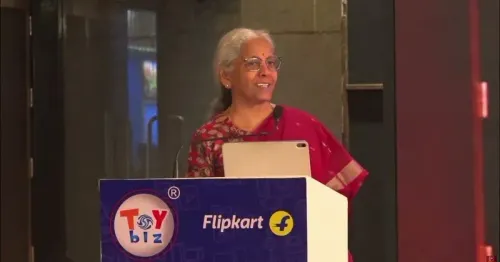
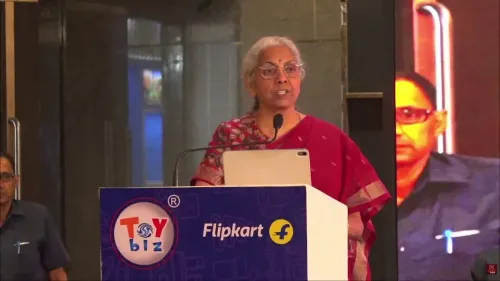
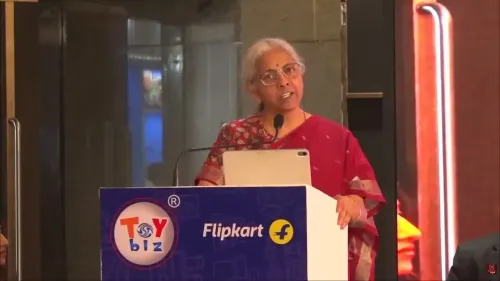
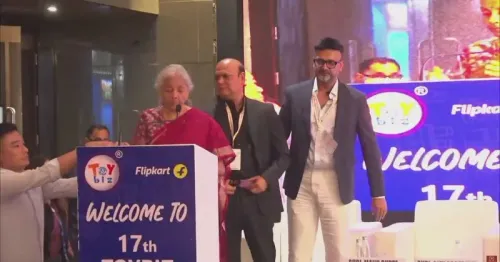
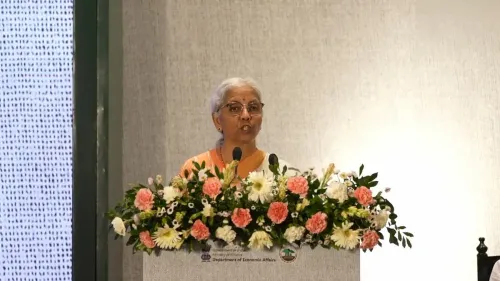
Union Finance Minister Nirmala Sitharaman on Tuesday, 7 July 2026, called for innovation and infrastructure to complement policy in building a Viksit Bharat, speaking at an event organised by the Toy Association of India in New Delhi. She highlighted government-backed initiatives — from the e-Toycathon to digital public infrastructure platforms — as tools to integrate toy artisans and entrepreneurs into national markets.
Context
Sitharaman's remarks, shared on her official X account, underlined that India's push for a self-reliant, innovation-led toy sector hinges on connecting grassroots artisans with digital tools. She specifically cited the e-Toycathon — a government-supported competition to develop indigenous electronic toys, Augmented Reality (AR) games, and coding kits — as a vehicle for nurturing next-generation products in the sector.
The Finance Minister noted that women entrepreneurs, PM Vishwakarma beneficiaries, and Skill India-trained artisans are 'key partners in this transformation', signalling that the government views the toy sector as a lever for inclusive economic growth, not just industrial output.
Policy Backdrop
The remarks draw on a layered policy architecture built over the past decade. The Skill India Mission, launched in 2015, has trained millions of Indians in manufacturing and services, including toy design and production. The PM Vishwakarma scheme, announced in the 2023-24 Union Budget, extends credit, skill training, and market support specifically to traditional craftspeople — a cohort that includes toy artisans.
On the digital side, UPI — rolled out in 2016 by the National Payments Corporation of India — enables seamless transactions for small sellers. The Open Network for Digital Commerce (ONDC), piloted in 2021, is designed to give micro-enterprises access to e-commerce without dependence on closed platforms. TReDS (Trade Receivables Discounting System) and the Account Aggregator framework further ease working-capital and credit access for small businesses. Sitharaman's address explicitly named all four as enablers for toy entrepreneurs reaching 'markets nationwide'.
Successive Union Budgets have also prioritised reducing India's import dependence in toys, encouraging domestic manufacturing and technology-embedded products as part of the broader Atmanirbhar Bharat agenda.
Stakeholders and Impact
The beneficiary landscape Sitharaman described is wide. PM Vishwakarma beneficiaries — traditional craftspeople who have received government-backed credit and training — stand to gain from smoother market linkages via ONDC and TReDS. Women-led micro-enterprises in the toy supply chain are positioned as central actors, not peripheral ones, in the sector's modernisation.
The Toy Association of India, which organised the event, represents manufacturers and artisans seeking both regulatory support and export opportunities. The Finance Minister's address at such an industry forum signals the government's intent to maintain high-level engagement with the sector's stakeholders as it scales up domestic production and innovation capacity.
What's Next
Attention will now turn to how quickly toy clusters across India are integrated with ONDC and TReDS platforms in practice, and whether the next Union Budget carries fresh allocations or regulatory updates for the sector. The Finance Minister's framing of innovation, infrastructure, and policy as a triad also sets expectations for any forthcoming announcements on e-Toycathon outcomes or expanded Skill India modules tailored to toy manufacturing. India's ability to convert this policy intent into measurable export growth and artisan income gains will be the ultimate test of the framework Sitharaman outlined.
Point of View
She signals that the government's toy policy is as much about social equity as industrial output. This fits a consistent pattern across recent Budgets of using sector-specific events to reinforce the government's narrative that digital infrastructure is a universal equaliser for micro-enterprises. The real test will be whether these linkages translate into measurable income gains for artisans rather than remaining aspirational talking points.
NationPress
7 Jul 2026
Frequently Asked Questions
What did Nirmala Sitharaman say about the toy sector?
Sitharaman said that for a Viksit Bharat, innovation and infrastructure must complement policy, and highlighted the e-Toycathon, UPI, ONDC, TReDS and the Account Aggregator framework as tools enabling toy artisans and entrepreneurs to access markets nationwide.
What is the e-Toycathon?
The e-Toycathon is a government-supported competition focused on developing indigenous electronic toys, Augmented Reality games, and coding kits to promote innovation in India's toy sector.
How does ONDC help toy artisans in India?
ONDC, the Open Network for Digital Commerce piloted in 2021, allows small sellers and toy artisans to access wider e-commerce marketplaces without depending on closed platforms, helping them reach buyers across the country.
What is the PM Vishwakarma scheme and who does it benefit?
PM Vishwakarma is a central government scheme announced in the 2023-24 Union Budget that provides credit, skill training, and market support to traditional artisans and craftspeople, including those in the toy sector.
What is TReDS and how does it support toy entrepreneurs?
TReDS, or Trade Receivables Discounting System, is a digital platform that helps small businesses and artisans access working capital by discounting their trade receivables, easing cash-flow constraints for toy entrepreneurs.