Sitharaman calls for universal insurance, AI skilling at HSBC event
Synopsis
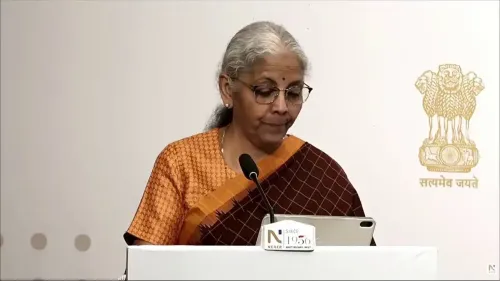
Union Finance Minister Nirmala Sitharaman, at HSBC India's Mumbai inclusion event on 2 November 2026, called for universal insurance coverage, AI-powered youth skilling, expanded credit access, and a stronger banking system as pillars of the Viksit Bharat 2047 vision.
Key Takeaways
'Insurance for All' is an active government goal, not an aspiration — Sitharaman said coverage must reach 'the last citizen who needs it.' The Finance Minister identified four priorities : universal insurance, access to credit, AI-enabled youth skilling, and a resilient banking system.
All four priorities are framed within the Viksit Bharat 2047 vision, first outlined by PM Modi in his 2023 Independence Day address.
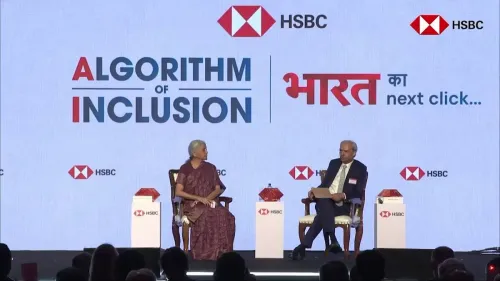
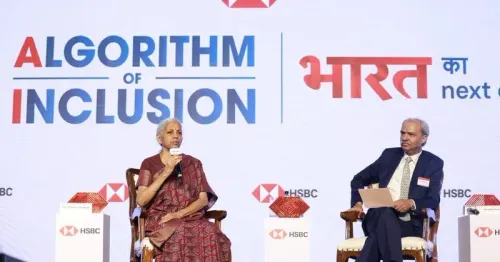
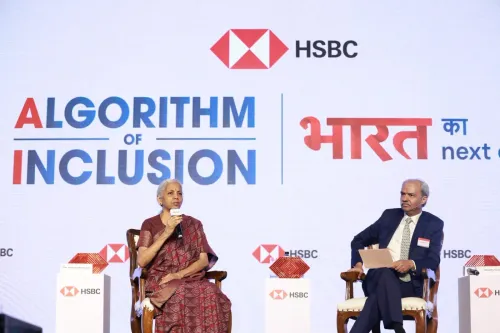
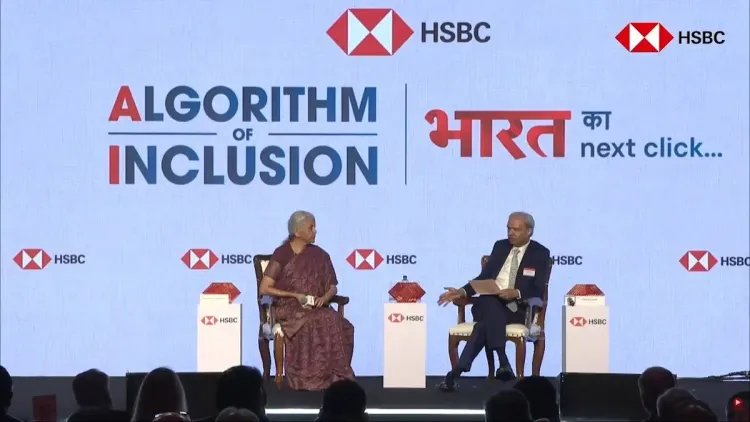
The remarks were delivered at HSBC India 's 'Algorithm of Inclusion — Bharat ka Next Click ' event in Mumbai on 2 November 2026 .
Financial inclusion policy has evolved since Pradhan Mantri Jan Dhan Yojana (2014) — the current focus shifts from account-opening to genuine insurance and credit depth.
Industry observers watch such ministerial statements as previews of upcoming Union Budget priorities and IRDAI regulatory direction.
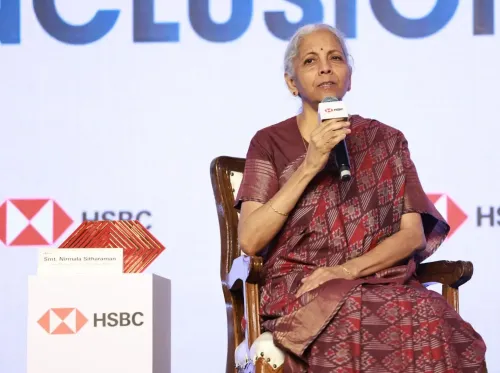
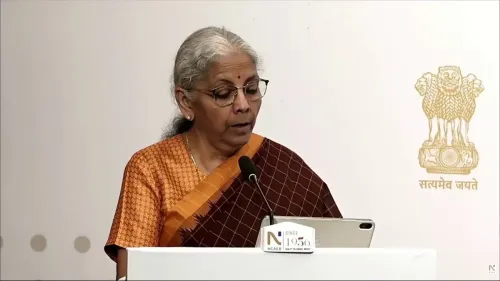
Insurance must reach every last Indian citizen who needs it — that was the unambiguous message Union Finance Minister Nirmala Sitharaman delivered at HSBC India's 'Algorithm of Inclusion — Bharat ka Next Click' event in Mumbai, Maharashtra on Monday, 2 November 2026, laying out a four-pillar agenda for the financial sector's role in building a developed India.
'Insurance for All' — from slogan to structural mandate
'Insurance for All' is 'already a goal for the Government of India,' Sitharaman said, adding that insurance must 'deepen and reach the last citizen who needs coverage.' The framing is deliberate: this is not an aspirational wish but an active policy target, one that tracks directly from the Insurance Regulatory and Development Authority of India (IRDAI)'s push to raise insurance penetration — still stubbornly low relative to India's economic size — through expanded product access, simplified onboarding, and targeted outreach to underserved districts.
The backstory runs through a decade of financial inclusion architecture. Pradhan Mantri Jan Dhan Yojana, launched in 2014, seeded hundreds of millions of bank accounts and bundled basic insurance with them. What Sitharaman signalled on Monday is the next phase: moving beyond account-holding to genuine coverage depth, where citizens can actually claim against risks — health, crop failure, life — without falling through administrative gaps.
AI-driven skilling and the credit access gap
The Finance Minister did not stop at insurance. She flagged three more pillars: access to credit, AI-enabled skilling of youth, and a stronger banking system — all framed as equally important priorities for Viksit Bharat, the government's landmark vision to transform India into a developed economy by 2047. The Viksit Bharat framework, first articulated by Prime Minister Narendra Modi in his Independence Day address in 2023, has since anchored nearly every major sectoral roadmap from New Delhi.
The reference to AI-enabled skilling is the sharpest new signal here. Linking artificial intelligence directly to youth employment readiness — at a financial-sector event, in the presence of a global bank — places technology at the centre of the inclusion conversation, not just as a back-office efficiency tool but as a front-line instrument for economic mobility.
Why a banking event becomes a policy preview
Remarks by the Finance Minister at industry forums of this scale carry real forward weight. Statements here typically foreshadow themes in the next Union Budget speech or upcoming IRDAI regulatory guidance. The conjunction of insurance deepening, credit access, AI skilling, and banking resilience — delivered in one breath — suggests these will travel together as a coherent package into Budget discussions for 2027-28, rather than as isolated departmental line items.
For the financial sector, the instruction is clear: inclusion is no longer a corporate social responsibility footnote. It is the operating thesis. Every lender, insurer, and fintech in the room heard the same four priorities from the woman who sets the fiscal agenda.
India's financial architecture has never been more ambitious in its reach — and the Finance Minister just made plain that ambition has a deadline: 2047.
Point of View
More demanding phase — one demanding actual coverage, credit, and skill-led employability. The explicit invocation of AI-enabled skilling alongside insurance is notable: it collapses the traditional divide between the Finance Ministry's banking remit and the skills-economy agenda, suggesting a more integrated sectoral push. With the next Union Budget cycle beginning to take shape, the Mumbai remarks effectively put insurers, lenders, and fintechs on notice that inclusion performance will be a regulatory and fiscal priority — not a voluntary target.
NationPress
2 Nov 2026
Frequently Asked Questions
What is India's 'Insurance for All' goal?
'Insurance for All' is a government of India target to extend insurance coverage to every citizen who needs it, deepening penetration beyond urban and semi-urban populations to the last mile. Finance Minister Nirmala Sitharaman reiterated this as an active policy goal on 2 November 2026.
What is Viksit Bharat and when is the deadline?
Viksit Bharat is India's vision to become a fully developed economy by 2047 , the centenary of independence. Prime Minister Modi introduced the framework in his Independence Day address in 2023, and it now anchors major financial, infrastructure, and human capital policy goals.
What did Nirmala Sitharaman say at the HSBC event in Mumbai?
Sitharaman outlined four financial-sector priorities: universal insurance coverage, access to credit, AI-enabled skilling of youth, and strengthening the banking system. She described all four as equally important to achieving the Viksit Bharat 2047 vision.
How does AI-enabled skilling connect to financial inclusion?
Sitharaman's framing places AI-powered training tools as a front-line instrument for economic mobility, not just a back-office efficiency gain. Equipping youth with AI-relevant skills is seen as directly expanding their ability to participate in and benefit from a deeper financial ecosystem.
What should we watch for after Sitharaman's Mumbai remarks?
Analysts will track IRDAI regulatory updates on insurance penetration targets and references to these four priorities in the upcoming Union Budget speech, as ministerial statements at industry forums of this scale typically preview budgetary and regulatory direction.