Sitharaman writes on ODOP: crafts need markets, not just subsidies
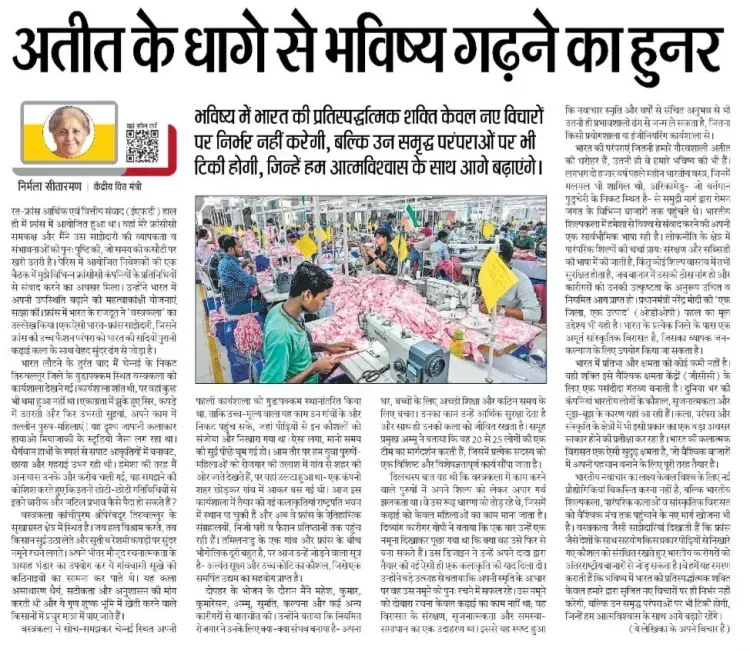
Synopsis
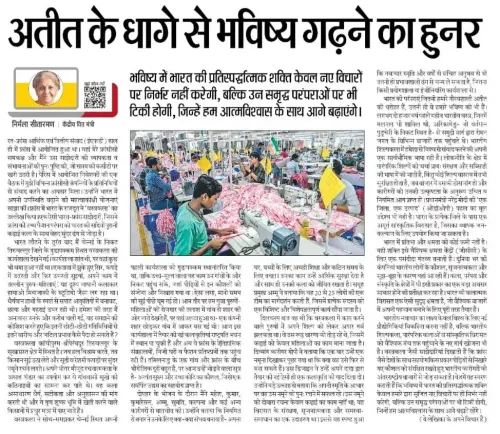
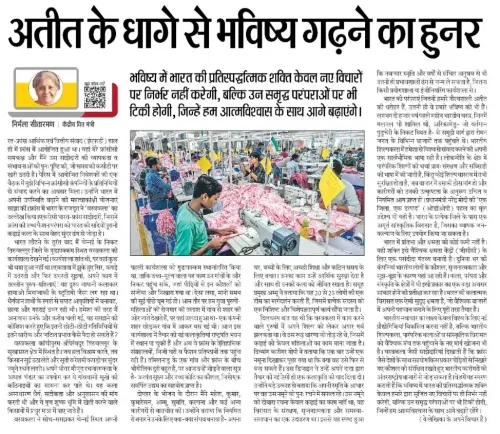
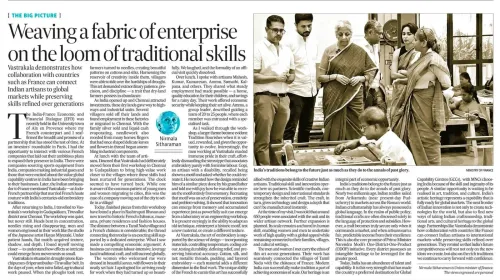
Union Finance Minister Nirmala Sitharaman argued in a 20 July 2026 Hindi-language column that traditional crafts are genuinely protected only through market demand and fair artisan income, positioning PM Modi's One District, One Product initiative as the policy solution to subsidy-dependent craft preservation.
Key Takeaways
Nirmala Sitharaman authored an opinion piece in Live Hindustan on 20 July 2026 on traditional crafts and public policy.
She argues that crafts are truly secure only when artisans earn fair, regular income driven by market demand , not subsidies alone.
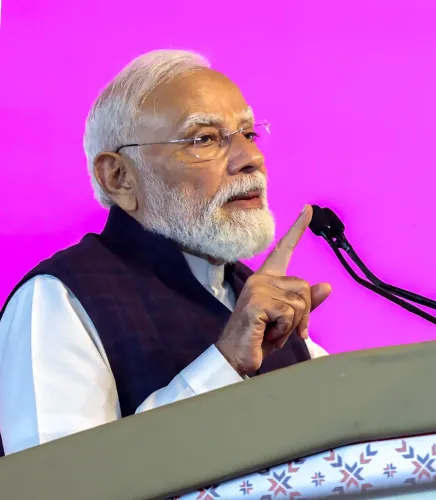
The column centres on PM Narendra Modi 's One District, One Product (ODOP) initiative as the model for demand-driven craft protection.
ODOP was first launched by Uttar Pradesh in 2018 and was scaled nationally, linked to the PMFME scheme in 2020 .
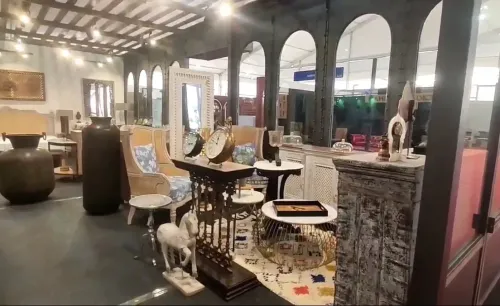
Sitharaman notes that every Indian district holds an intangible cultural heritage that can be leveraged for broad public welfare.
The column signals a policy philosophy shift: from subsidy-centric artisan support to export linkages and e-commerce-driven income generation.
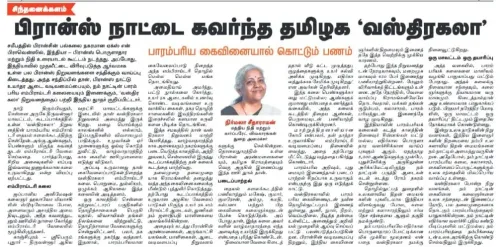
Union Finance Minister Nirmala Sitharaman on Monday, 20 July 2026, authored an opinion piece arguing that traditional crafts are truly protected only when they command strong market demand and provide artisans with fair, regular income — not merely through conservation schemes or subsidies. The column, published in the Hindi daily Live Hindustan, centres on Prime Minister Narendra Modi's One District, One Product (ODOP) initiative as the policy embodiment of this principle.
Context
Sharing the article on X, Sitharaman quoted its core argument in Hindi: 'लोकनीति के क्षेत्र में पारंपरिक शिल्पों की चर्चा प्रायः संरक्षण और सब्सिडी की भाषा में की जाती है' — 'In the realm of public policy, traditional crafts are usually discussed in the language of conservation and subsidy.' She goes on to assert that a craft is truly secure only when there is solid market demand for it and artisans receive income commensurate with their excellence.
The post identifies ODOP as the Modi government's answer to this gap, describing it as an initiative whose 'core objective is exactly this.' Sitharaman also notes that every district in India possesses an intangible cultural heritage that can be harnessed for broad public welfare.
Policy Backdrop
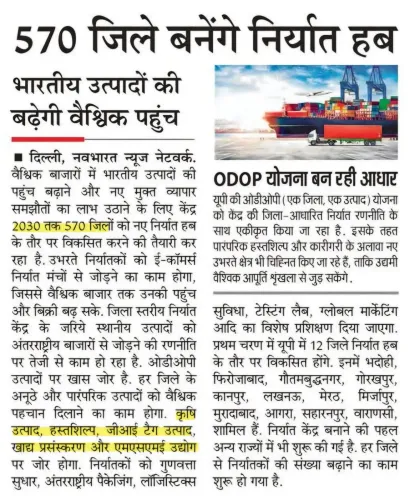
ODOP was first launched by the Uttar Pradesh government in 2018 to map and brand products unique to each district. The Central government subsequently scaled it nationally and linked it to the PM Formalisation of Micro Food Processing Enterprises (PMFME) scheme in 2020, embedding it within the broader Atmanirbhar Bharat framework.
The initiative builds on earlier programmes such as Geographical Indication (GI) tagging and handicraft cluster development, while aligning with NITI Aayog's district-level growth priorities. The shift it represents — from subsidy-centric artisan support to demand-driven income generation and export linkages — is a defining feature of economic policy since 2014.
Stakeholders and Impact
The primary beneficiaries of the ODOP framework are traditional artisans and district-level micro, small, and medium enterprises (MSMEs), whose livelihoods depend on sustained commercial interest in craft products rather than periodic government grants. Sitharaman's column frames this as a matter of dignified, merit-based income rather than welfare dependency.
By publishing the argument in a widely-read Hindi-language platform, the Finance Minister is also signalling the government's intent to take this message directly to vernacular audiences — the communities most closely tied to craft traditions and ODOP's target districts.
What's Next
Attention will now turn to whether upcoming state budgets deepen ODOP integration and whether the Central government issues new guidelines linking the scheme to export incentives or e-commerce platforms. Sitharaman's public articulation of the market-demand philosophy may also foreshadow announcements in the next Union Budget or in MSME policy circulars. The column reinforces a policy direction that treats cultural heritage not as a museum piece, but as a living economic asset capable of generating livelihoods at scale.
Point of View
A move consistent with the BJP government's Atmanirbhar Bharat positioning. Publishing in a Hindi-language platform is itself a strategic choice, reaching the vernacular belt most directly affected by ODOP outcomes. The timing, mid-2026, may be laying intellectual groundwork for MSME or export policy announcements ahead of the next budget cycle. The piece also subtly elevates ODOP from a state-level UP scheme to a flagship national philosophy, reinforcing Modi's brand equity on cultural-economic convergence.
NationPress
20 Oct 2026
Frequently Asked Questions
What is the One District One Product (ODOP) scheme in India?
ODOP is a Central government initiative that identifies one distinctive product per district to promote local economic development and cultural preservation. It was first launched by Uttar Pradesh in 2018 and scaled nationally, with linkages to the PMFME scheme from 2020.
What did Nirmala Sitharaman write about traditional crafts?
In a 20 July 2026 column, Sitharaman argued that traditional crafts are truly protected only when they have solid market demand and artisans receive fair, regular income — not merely through conservation schemes or subsidies.
Where was Nirmala Sitharaman's article on ODOP published?
The article was published in Live Hindustan, a Hindi-language daily, on 20 July 2026.
How does ODOP help Indian artisans?
ODOP helps artisans by branding and promoting their district-specific products, connecting them to broader markets, export linkages, and e-commerce platforms, moving support away from subsidy dependency toward sustainable income generation.
What is the connection between ODOP and Atmanirbhar Bharat?
ODOP was integrated into the Atmanirbhar Bharat framework, reflecting the government's broader policy of combining cultural heritage promotion with market mechanisms to generate self-reliant livelihoods at the district level.