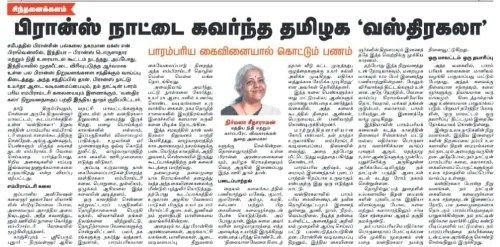
Sitharaman highlights firm that moved to village, exports art to France
Synopsis
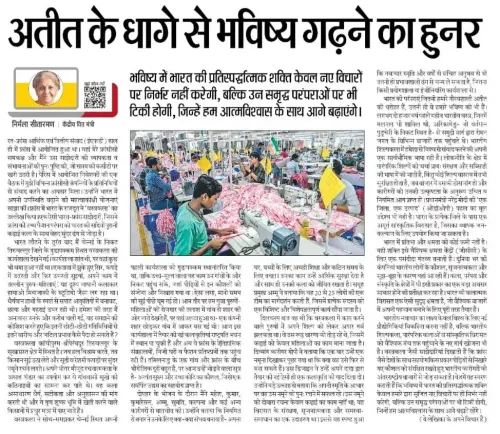
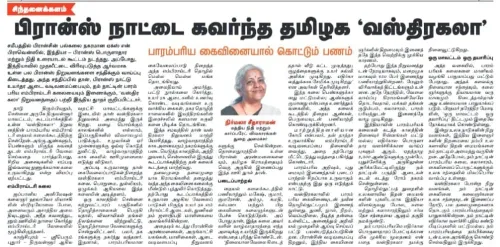
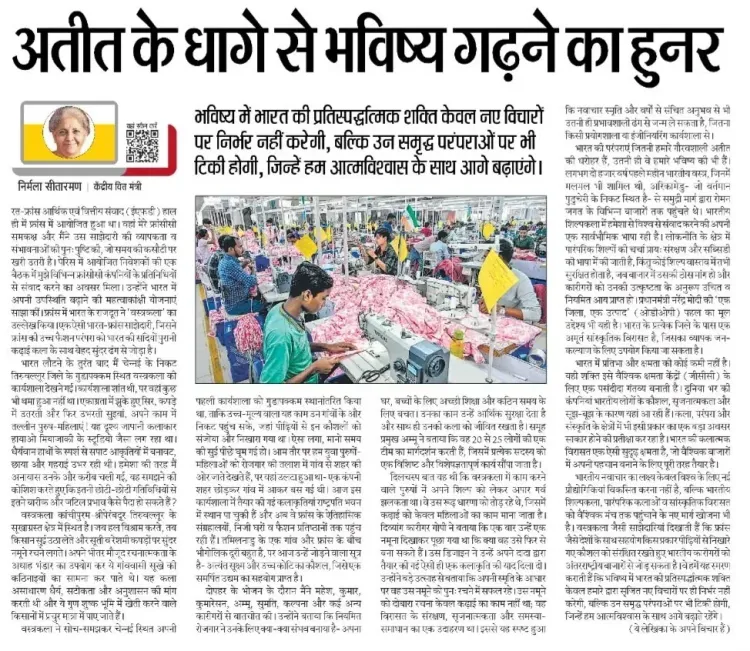
Finance Minister Nirmala Sitharaman authored an article on 20 July 2026 spotlighting a company that relocated from city to village, whose artisanal works now grace Rashtrapati Bhavan and are exported to historic museums and fashion houses in France — illustrating India's rural enterprise push.
Key Takeaways
Union Finance Minister Nirmala Sitharaman authored an article published on 20 July 2026 on rural enterprise and reverse migration.
A company relocated from city to village, reversing the typical rural-urban employment migration pattern.
Artworks from the village workshop have been placed in Rashtrapati Bhavan , the President of India's official residence.
The products are now reaching historic museums, private homes, and fashion establishments in France .
The case aligns with national schemes including Make in India , ODOP , and the Atmanirbhar Bharat framework targeting rural craft value chains.
Upcoming handicraft export data and the next Union Budget may reflect policy moves inspired by such village-enterprise models.
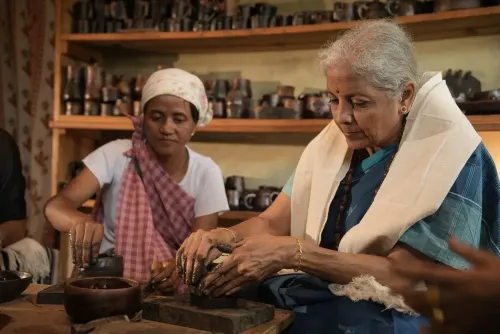
Union Finance Minister Nirmala Sitharaman on Monday, 20 July 2026, shared an article she authored describing a rare reversal of the rural-to-urban migration pattern: a company that left the city and set up its workshop in a village, producing artisanal works that have since reached Rashtrapati Bhavan and are now finding buyers in France.
Context
Writing in a Hindi-language publication, Sitharaman observed: 'आम तौर पर हम युवा पुरुषों-महिलाओं को रोजगार की तलाश में गांव से शहर की ओर जाते देखते हैं, पर यहां उलटा हुआ था' ('Usually we see young men and women moving from village to city in search of employment, but here the reverse happened'). She noted that a company chose to leave urban centres and settle in a village, turning that decision into a model for rural enterprise.
The artworks produced at this village workshop have secured a place in Rashtrapati Bhavan — the official residence of the President of India, which periodically showcases and gifts domestically crafted products — and are now reaching historic museums, private homes, and fashion establishments in France.
Policy Backdrop
The episode Sitharaman describes sits squarely within a decade-long policy push to decentralise manufacturing and link traditional crafts with premium markets. Make in India, launched in September 2014, sought to encourage manufacturing and job creation beyond metropolitan corridors. The One District One Product (ODOP) scheme, first rolled out in Uttar Pradesh in 2018 and later expanded nationally, was designed precisely to promote district-specific crafts and reduce the pressure of out-migration from rural areas.
The broader Atmanirbhar Bharat framework has reinforced these efforts by emphasising local value chains and self-reliance in the handicraft and MSME sectors. Placements in state institutions such as Rashtrapati Bhavan and access to European buyers represent the kind of market linkage that policymakers have long sought to create for rural artisans.
Stakeholders and Impact
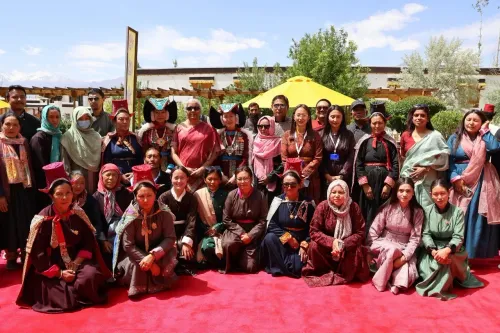
Rural artisans and village-based MSMEs are the primary beneficiaries of the model Sitharaman highlights. When a company relocates to a village, it brings with it capital, design expertise, and market connections that individual artisans typically lack, potentially raising both the quality and the export-readiness of locally produced goods.
The French market connection — spanning historic museums, private residences, and fashion establishments — signals that Indian village crafts can compete in premium international segments, a point that carries weight for trade negotiators and MSME policymakers alike. Rashtrapati Bhavan's endorsement further adds institutional credibility that can ease entry into other high-value markets.
What's Next
Upcoming handicraft export data will be watched for signs of whether models like the one Sitharaman describes are translating into measurable trade gains. Any rural enterprise incentives announced in the next Union Budget or MSME policy update may draw on such examples to justify continued or expanded support for village-based manufacturing clusters.
As India seeks to deepen its handicraft export footprint in Europe and beyond, the Finance Minister's public advocacy for village enterprise models suggests this theme is likely to remain prominent in both policy discourse and the government's communication strategy.
Point of View
Positioning Indian village crafts as globally competitive. By anchoring the piece in a concrete reversal of rural-urban migration, the Finance Minister sidesteps abstract data in favour of a storytelling approach that resonates with both vernacular audiences and international investors. This pattern of senior economic ministers writing in Hindi-language outlets also reflects a sustained effort to communicate economic policy directly to non-English-speaking constituencies.
NationPress
20 Oct 2026
Frequently Asked Questions
What did Nirmala Sitharaman write about on 20 July 2026?
She authored an article describing a company that moved from a city to a village to produce artisanal works, which have since been displayed at Rashtrapati Bhavan and are now being exported to museums, private homes, and fashion establishments in France.
Which Indian government schemes support village-based artisan enterprises?
Key schemes include Make in India (launched 2014), One District One Product (ODOP, rolled out from Uttar Pradesh in 2018 and later expanded nationally), and the broader Atmanirbhar Bharat framework, all aimed at decentralising manufacturing and linking crafts to premium markets.
Why is Rashtrapati Bhavan significant for Indian handicrafts?
Rashtrapati Bhavan, the official residence of the President of India, periodically displays and gifts domestically crafted products, providing artisans with a prestigious institutional endorsement that can open doors to high-value domestic and export markets.
What is the significance of Indian village crafts being exported to France?
France is home to some of the world's most discerning buyers of luxury and heritage goods; export placements in French museums, private homes, and fashion establishments signal that Indian village-made artisanal products can compete in premium international segments.
What is the reverse migration trend Sitharaman mentioned?
Sitharaman highlighted an unusual case where, instead of workers leaving villages for cities, a company itself relocated from an urban centre to a village to set up its production workshop, bringing employment and market access to rural artisans.