Sitharaman: GST taxpayer base grew 2.75x in 9 years
Synopsis
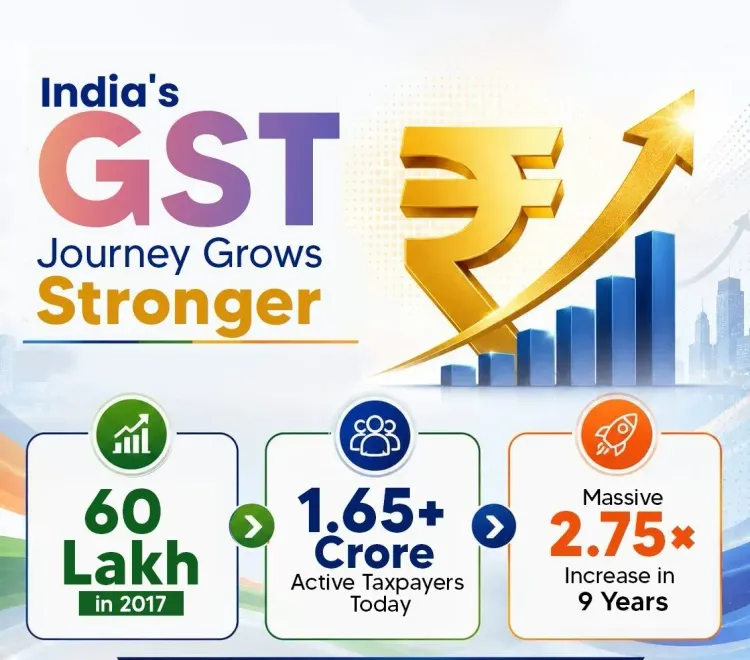
On GST's ninth anniversary, Finance Minister Nirmala Sitharaman announced that registered taxpayers have grown 2.75 times — from 60 lakh in 2017 to over 1.65 crore — citing the surge as evidence of deepening trust and formalisation in India's indirect tax system.
Key Takeaways
Registered GST taxpayers have grown from 60 lakh in 2017 to over 1.65 crore in 2026 , a 2.75-times increase over nine years.
GST was launched on 1 July 2017 , replacing central excise, service tax, and state VAT with a unified indirect tax regime.
Finance Minister Nirmala Sitharaman attributed the growth to 'growing trust, wider participation and stronger confidence' in the GST framework.
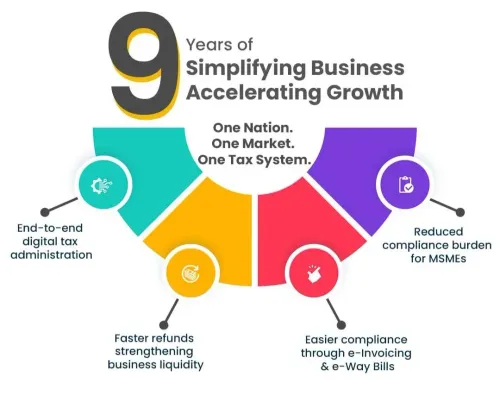
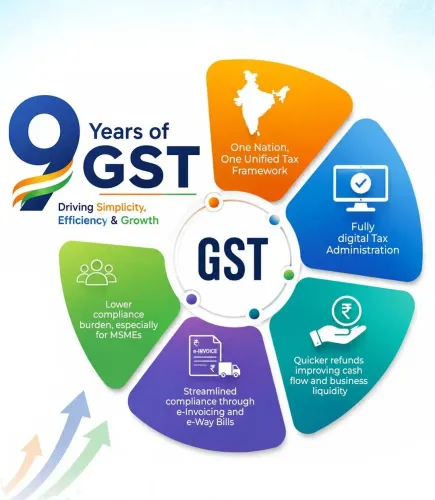
Compliance tools such as e-invoicing and simplified return filing have been key drivers of taxpayer base expansion.
The next GST Council meeting is expected to take up rate rationalisation, a long-pending reform for the four-slab structure.
Union Finance Minister Nirmala Sitharaman on Wednesday, 1 July 2026 marked the ninth anniversary of the Goods and Services Tax by highlighting a sharp expansion in India's registered taxpayer base — from 60 lakh in 2017 to over 1.65 crore today, a 2.75-times increase she attributed to growing trust and wider participation in the GST framework.
Context
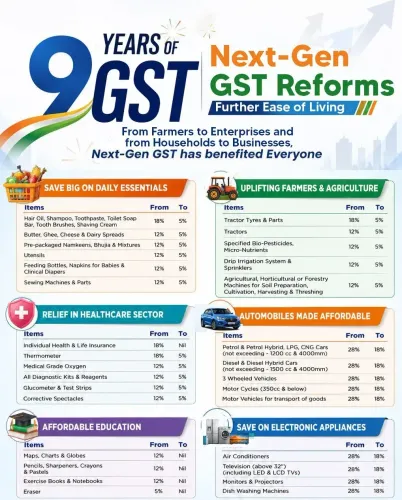
GST was rolled out on 1 July 2017, replacing a fragmented web of central levies — including central excise and service tax — as well as state-level VAT, into a single, unified indirect tax regime. The ninth anniversary, marked under the hashtag #9YearsOfGST, has prompted the government to highlight compliance and formalisation milestones achieved since the launch.
In her post, Sitharaman wrote that the growth 'reflects growing trust, wider participation and stronger confidence in India's GST framework' — framing the taxpayer expansion as a measure of institutional credibility rather than mere administrative enforcement.
Policy Backdrop
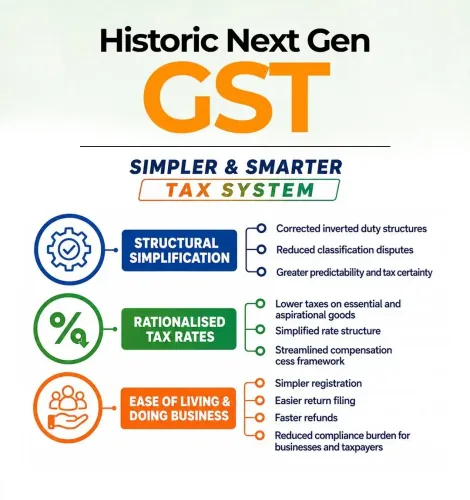
The surge in registrations fits into a broader post-2016 formalisation drive that successive governments have pursued, which also encompassed demonetisation and a push toward digital payments. Within the GST architecture itself, the GST Council has progressively tightened compliance through the introduction of e-invoicing mandates and simplified return-filing mechanisms, both of which lowered the barrier for small businesses to enter the formal tax net.
Government data has consistently cited rising registration numbers as evidence of reduced tax evasion and improved compliance culture. The jump from 60 lakh to over 1.65 crore registered taxpayers over nine years represents the addition of more than a crore businesses and individuals into the formal indirect-tax system.
Stakeholders and Impact
The primary beneficiaries of a wider tax base are businesses that now operate within a more level, formalised marketplace, as well as state governments that receive a larger GST revenue pool to share. Registered taxpayers gain access to input tax credit, reducing their effective cost of doing business and incentivising compliance over evasion.
For the Central government, a broader base translates into more stable indirect-tax revenues, reducing dependence on borrowing to meet fiscal targets. Smaller enterprises that have entered the GST net — many for the first time — also gain formal financial identities, improving their access to institutional credit.
What's Next
Attention now turns to the next GST Council meeting, where deliberations on rate rationalisation are expected to feature prominently. Analysts and industry bodies have long called for a consolidation of the four-slab rate structure, and the ninth-anniversary milestone could lend political momentum to those discussions.
The government is also expected to table provisions affecting indirect taxes in the upcoming Finance Bill, making the trajectory of GST reform a key legislative watch-point for businesses and tax practitioners in the months ahead.
Point of View
If sustained under scrutiny, would represent one of the more tangible structural legacies of the post-2016 reform wave. However, the milestone also implicitly raises the stakes for the next GST Council meeting: a larger taxpayer base makes rate rationalisation both more politically feasible and more economically consequential. The government's willingness to act on rate simplification will be the real test of whether the formalisation gains translate into lasting fiscal architecture.
NationPress
1 Jul 2026
Frequently Asked Questions
How many taxpayers are registered under GST in India in 2026?
According to Finance Minister Nirmala Sitharaman, over 1.65 crore taxpayers are registered under GST as of July 2026, up from 60 lakh at the time of GST's launch in 2017.
When was GST launched in India?
GST was launched on 1 July 2017 , replacing multiple central and state indirect taxes — including central excise, service tax, and VAT — with a single unified tax regime.
What is the significance of #9YearsOfGST?
#9YearsOfGST marks the ninth anniversary of India's Goods and Services Tax on 1 July 2026. The government has used the occasion to highlight compliance milestones, including a 2.75-times growth in registered taxpayers.
Why has GST taxpayer registration grown so much?
The government attributes the growth to measures such as e-invoicing mandates, simplified return filing, and a broader formalisation drive that has brought more businesses into the formal indirect-tax net since 2017.
What are the next big changes expected in GST?
The next GST Council meeting is expected to deliberate on rate rationalisation — a potential consolidation of the current four-slab structure — along with provisions in the upcoming Finance Bill affecting indirect taxes.