CM Yogi Credits Modi for UP's School Chalo Abhiyan Launch
Synopsis
Uttar Pradesh Chief Minister Yogi Adityanath on 1 July 2026 credited Prime Minister Narendra Modi's guidance for the 2017 launch of the School Chalo Abhiyan in UP, saying clear government intent and education policy drove positive results from the statewide enrollment campaign.
Key Takeaways
CM Yogi Adityanath credited PM Narendra Modi's guidance for the launch of the School Chalo Abhiyan in Uttar Pradesh in 2017 .
The campaign is a statewide school-enrollment drive targeting out-of-school children, particularly in rural households.
It was built on the foundation of the national Right to Education Act (2009) and the earlier Sarva Shiksha Abhiyan (2001) .
CM Yogi attributed the campaign's positive results to 'clean intent' and a 'clear policy for education improvement.' The renewed emphasis in July 2026 coincides with the start of the academic year and signals continued political priority for the initiative.
Release of UDISE+ enrollment data and state education budget figures will be key metrics to watch going forward.
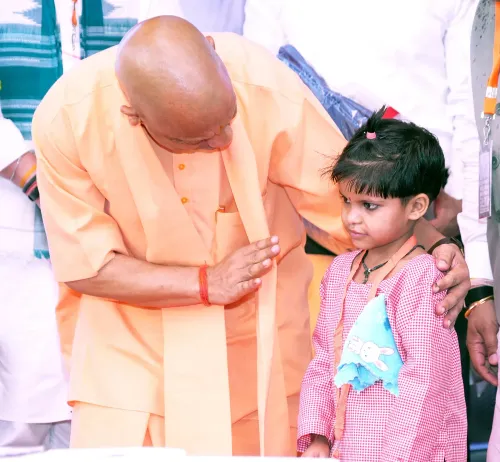
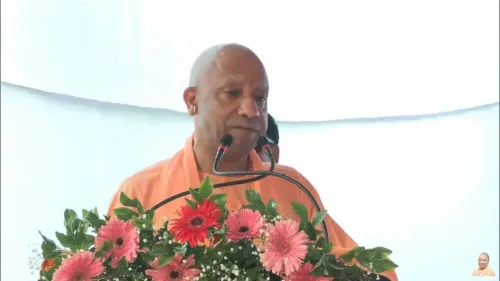
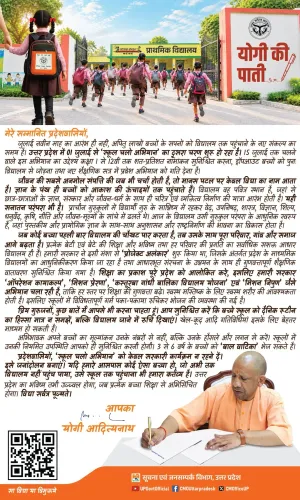
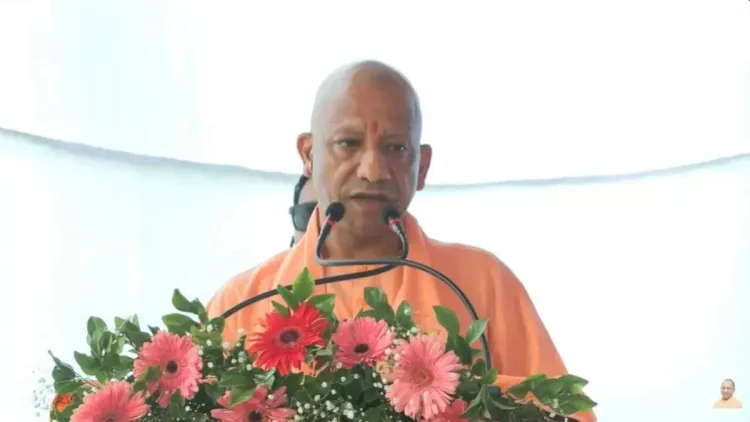
Uttar Pradesh Chief Minister Yogi Adityanath on Wednesday, 1 July 2026, credited Prime Minister Narendra Modi's guidance as the driving force behind the School Chalo Abhiyan, the statewide school-enrollment campaign launched in Uttar Pradesh in 2017, saying the initiative yielded positive results because the government's intent was clear and its education-improvement policy was well-defined.
Context
In his post on X, CM Yogi wrote: 'हम लोगों ने वर्ष 2017 में आदरणीय प्रधानमंत्री श्री @narendramodi जी के मार्गदर्शन और प्रेरणा से प्रदेश में 'स्कूल चलो अभियान' प्रारंभ किया।' — 'In the year 2017, inspired and guided by the honourable Prime Minister Shri Narendra Modi, we launched the School Chalo Abhiyan in the state.' He added that 'results were good because the government's intent was clean and the policy for education improvement was clear.'
The post, accompanied by a video, positions the campaign as a direct outcome of the BJP government's post-2017 election mandate in Uttar Pradesh, India's most populous state, where out-of-school children and low enrollment rates had long been a structural challenge.
Policy Backdrop
The School Chalo Abhiyan was conceived as a localised enrollment drive to translate the mandate of the national Right to Education Act (2009) — which guarantees free and compulsory education for children aged 6 to 14 — into measurable on-ground outcomes at the district and village level.
It built on the architecture of the Sarva Shiksha Abhiyan, India's flagship universal elementary education programme launched in 2001, while adding a state-specific mobilisation layer involving teachers, local bodies, and community volunteers. The pattern of adapting central education priorities into targeted state campaigns has been a recurring feature of BJP-governed states since 2014.
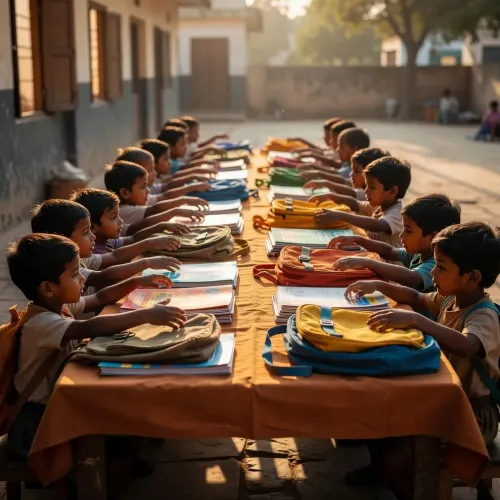
The campaign has been relaunched annually at the start of the academic year, typically in June or July, with district-level rallies and door-to-door outreach to bring children — particularly girls and children from marginalised communities in rural households — back into classrooms.
Stakeholders and Impact
The primary beneficiaries of the School Chalo Abhiyan are school-age children in Uttar Pradesh's rural and semi-urban districts, where first-generation learners and seasonal migration have historically depressed enrollment figures. Parents and local community leaders are also key stakeholders, as the campaign relies on social mobilisation rather than administrative coercion.
Teachers and school management committees bear the operational load of the drive, conducting household surveys and coordinating with gram panchayats to identify out-of-school children. The campaign's credibility is closely tied to whether enrollment gains translate into sustained attendance and learning outcomes — a metric that independent education surveys continue to track across Uttar Pradesh.
What's Next
The government's renewed emphasis on the School Chalo Abhiyan at the start of the 2026 academic cycle signals continued political investment in the initiative as a flagship education-access programme. Observers will watch for the release of the latest UDISE+ enrollment data, which provides the most granular state-wise picture of how campaigns like this translate into actual school registration numbers.
State education budget allocations for the coming fiscal year will also be a key indicator of whether the rhetorical commitment to education improvement is matched by infrastructure spending — particularly on teacher recruitment, classroom construction, and mid-day meal quality in Uttar Pradesh's government primary schools.
Point of View
The Chief Minister reinforces the BJP's standard playbook of presenting state and central leadership as a unified, hierarchical team. The timing at the start of the academic year serves a dual function: it is both a mobilisation signal to the administrative machinery and a public-relations reminder of the party's education credentials ahead of any forthcoming electoral cycle. The reference to 'clean intent' is a pointed contrast — implicit but unmistakable — with the governance record of predecessor governments in Uttar Pradesh.
NationPress
1 Jul 2026
Frequently Asked Questions
What is School Chalo Abhiyan in Uttar Pradesh?
School Chalo Abhiyan is a statewide school-enrollment campaign launched in Uttar Pradesh in 2017 to bring out-of-school children, especially in rural areas, back into government primary schools. It is relaunched annually at the start of the academic year.
When was School Chalo Abhiyan started in UP?
The School Chalo Abhiyan was started in Uttar Pradesh in 2017, following the BJP's election victory, under the guidance of Prime Minister Narendra Modi and the leadership of Chief Minister Yogi Adityanath.
What did CM Yogi say about School Chalo Abhiyan?
CM Yogi Adityanath said the campaign yielded positive results because the government's intent was clean and its policy for education improvement was clear, crediting PM Modi's guidance for inspiring the initiative.
How does School Chalo Abhiyan relate to the Right to Education Act?
School Chalo Abhiyan operationalises the Right to Education Act (2009), which mandates free and compulsory education for children aged 6 to 14, by adding a state-level mobilisation drive to translate that legal mandate into actual enrollment in Uttar Pradesh.
What is UDISE+ and why does it matter for UP schools?
UDISE+ is the Unified District Information System for Education Plus, India's official database for school enrollment and infrastructure data. Its latest figures for Uttar Pradesh will indicate whether campaigns like School Chalo Abhiyan have produced lasting gains in student registration.