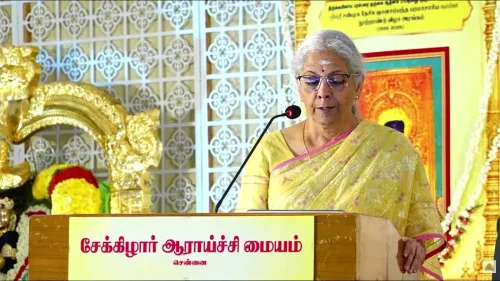
Sitharaman Highlights Thirumurai's Living Musical Heritage
Synopsis
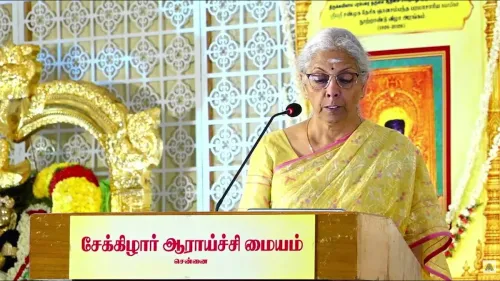
Union Finance Minister Nirmala Sitharaman, speaking in Chennai, highlighted the ancient instruments — Yazh, Udukkai and Kottu — that have accompanied the Thirumurai hymns, calling them evidence of a continuous musical heritage spanning over a thousand years.
Key Takeaways
Union Finance Minister Nirmala Sitharaman spoke in Chennai about the musical tradition embedded in the Thirumurais , the canonical Tamil Shaiva devotional corpus.
She named three instruments — the Yazh (string), Udukkai (percussion), and Kottu — as documented accompaniments to the hymns.
The Thirumurais span roughly the 6th to 12th centuries CE , representing over a thousand years of continuous musical and literary tradition.
Sitharaman described the evidence for this instrumental heritage as 'abundant', framing it as a living, unbroken lineage rather than a historical relic.
The remarks are part of a longer thread, suggesting a broader address on Tamil classical heritage delivered in Chennai.
A thousand years of unbroken song — and Union Finance Minister Nirmala Sitharaman wants India to hear it clearly. Speaking in Chennai, Sitharaman drew attention to the rich instrumental tradition that has accompanied the Thirumurais, the canonical corpus of Tamil Shaiva devotional hymns, underscoring their place as one of the subcontinent's oldest continuous musical lineages.
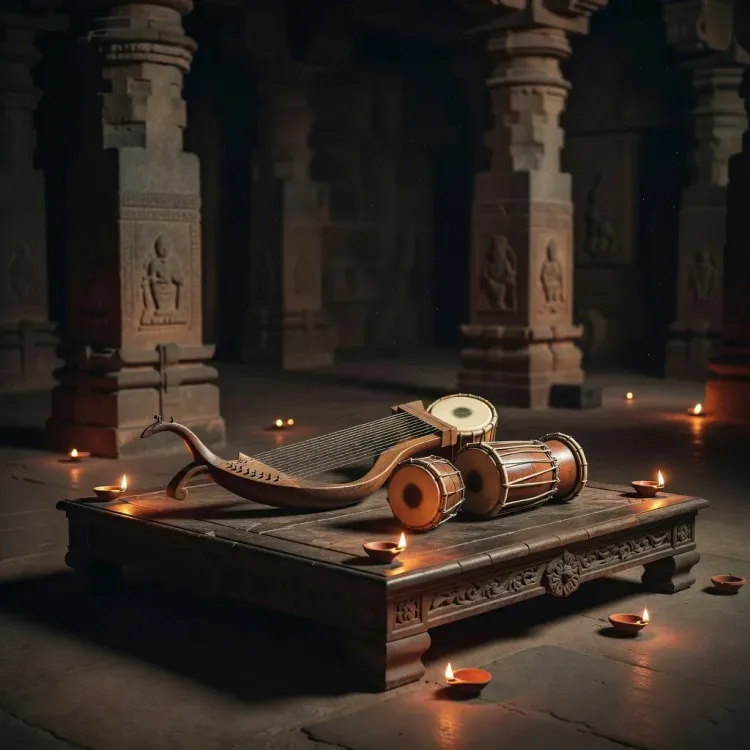
In her remarks, Sitharaman pointed to 'abundant evidence' of the musical instruments that once — and still — give the Thirumurais their sonic identity. She named the Yazh, a harp-like string instrument of ancient Tamil provenance; the Udukkai, a small hand-held percussion drum; and the Kottu, among others. Together, these instruments did not merely accompany the hymns — they were woven into the very fabric of Shaiva devotional practice across Tamil Nadu.
What the Thirumurais Carry Across Centuries
The Thirumurais are a twelve-volume collection of Tamil Shaiva hymns composed by poet-saints — the Nayanmars — spanning roughly the 6th to 12th centuries CE. They are among the most studied and performed texts in the Carnatic and Tamil devotional traditions. What makes Sitharaman's point striking is not just the antiquity of the corpus, but its continuity: these hymns were not archived and forgotten. They were sung, instrumentally accompanied, and transmitted across more than a millennium of living practice. Chennai, as the nerve centre of Carnatic music and Tamil literary culture, is a fitting stage for such a declaration. The city's sabhas, temples, and music academies have long served as custodians of exactly this kind of heritage — the kind that breathes rather than sits in glass cases.Sitharaman's Voice in the Tamil Classical Conversation
Public figures from Tamil Nadu have frequently invoked the Thirumurai corpus when speaking to audiences in the state, but a Union Finance Minister making the case in Chennai carries particular weight. It signals that the conversation around India's classical heritage is not confined to culture ministries or academic conferences — it is entering the political mainstream, framed as a matter of national pride and civilisational continuity. The post is part of a thread (marked 2/n), suggesting Sitharaman's remarks on Tamil musical heritage were part of a longer address or series of observations. The full arc of that thread is worth watching for further specifics on the event and any policy or institutional announcements it may accompany. A heritage that has outlasted empires, absorbed centuries of change, and kept its instruments alive — that is the argument Sitharaman is making. And in Chennai, it lands on home ground.Point of View
She signals a shift from ceremonial acknowledgement to substantive engagement with the Tamil intellectual tradition. For the BJP, such positioning in Chennai is part of a longer arc of cultural outreach in a state where the party has historically struggled. The framing of Thirumurai as a 'continuous' heritage — alive, not archived — also feeds into a broader national narrative about India's unbroken civilisational thread.
NationPress
1 Aug 2026
Frequently Asked Questions
What are the Thirumurais?
The Thirumurais are a twelve-volume collection of Tamil Shaiva devotional hymns composed by poet-saints known as the Nayanmars, spanning roughly the 6th to 12th centuries CE. They are among the most important texts in Tamil devotional and classical music traditions.
What instruments did Nirmala Sitharaman mention in her Chennai speech?
Sitharaman named the Yazh (an ancient Tamil harp-like string instrument), the Udukkai (a small hand-held percussion drum), and the Kottu as instruments that historically accompanied the Thirumurai hymns.
What is the Yazh instrument?
The Yazh is an ancient Tamil string instrument, similar in form to a harp, that features prominently in early Tamil literary and musical records. It is one of the oldest documented instruments in the Tamil classical tradition.
Why did Sitharaman speak about Tamil heritage in Chennai?
Chennai is the cultural capital of Tamil Nadu and the centre of Carnatic music and Tamil literary life, making it a natural venue for remarks on classical heritage. The speech appears to be part of a longer address, details of which are in the broader thread.
How old is the musical tradition associated with the Thirumurais?
The Thirumurai corpus spans over a thousand years, from roughly the 6th to the 12th century CE, and its associated instrumental and vocal traditions have been continuously performed and transmitted since then.