Sitharaman Inaugurates Aayakar Sindhu Tax Complex in Mumbai
Synopsis
Union Finance Minister Nirmala Sitharaman inaugurated the Aayakar Sindhu Office Complex at Nariman Point, Mumbai, on 26 July 2026, calling on IRS, CBDT and CBIC officers to uphold integrity as a national duty, not merely a professional obligation.
Key Takeaways
Union Finance Minister Nirmala Sitharaman inaugurated the Aayakar Sindhu Office Complex at Nariman Point, Mumbai on 26 July 2026 .
The minister framed integrity in tax administration as a homage to soldiers who protect the nation's borders.
Officers of the Indian Revenue Service (IRS) , CBDT and CBIC were urged to treat their roles as a responsibility to the nation, not merely a job.
The inauguration continues a pattern of pairing office modernisation projects with strong ministerial emphasis on transparency and reduced discretion in tax matters.
CBDT and CBIC were restructured in 2018 post-GST rollout; Faceless Assessment was launched in 2020 to reduce physical interface between taxpayers and officers.
Further regional tax complex inaugurations and integrity-focused circulars from CBDT or CBIC are expected to follow.
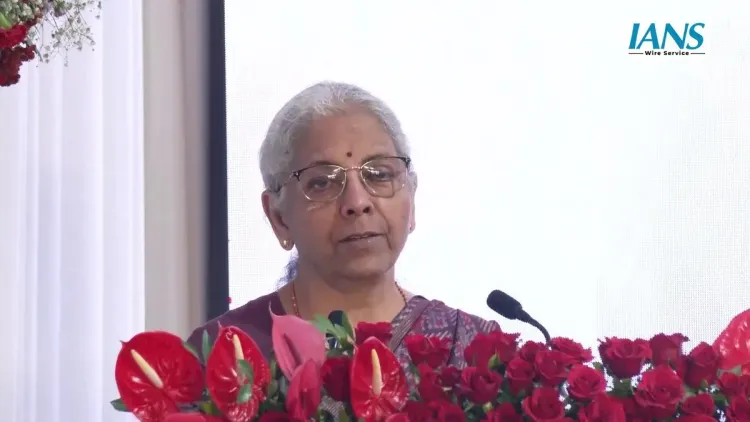
Union Finance Minister Nirmala Sitharaman inaugurated the 'Aayakar Sindhu' Office Complex at Nariman Point, Mumbai, on Sunday, 26 July 2026, calling on officers of the Indian Revenue Service, CBDT and CBIC to treat their work as a national responsibility rather than a routine job.
Context
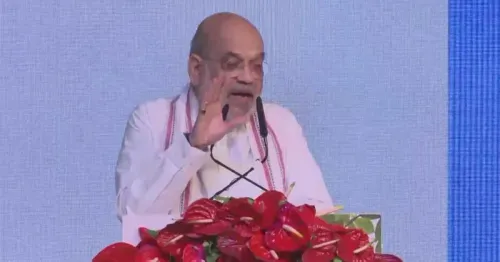
Addressing the gathering at the newly inaugurated complex, Sitharaman invoked the image of soldiers guarding the nation's borders to frame the moral stakes of tax administration. 'A homage we can pay to our soldiers, who protect every inch of our nation, is to serve with integrity,' she said, urging officers to let integrity guide both their service and the manner in which they discharge their duties.
Standing at Veer Nariman Point, the minister underlined that positions in the IRS, CBDT and CBIC carry a responsibility to the nation that goes beyond a professional designation. The inauguration of a dedicated office complex in one of South Mumbai's most prominent business districts signals continued investment in the physical and institutional infrastructure of India's tax machinery.
Policy Backdrop
The Central Board of Direct Taxes (CBDT) and the Central Board of Indirect Taxes and Customs (CBIC) were restructured and renamed in 2018 as part of a broader modernisation drive following the rollout of the Goods and Services Tax (GST). The two bodies together administer the full spectrum of India's tax law through officers drawn from the Indian Revenue Service (IRS).
In 2020, the government launched the Faceless Assessment and Faceless Appeal schemes for direct taxes nationwide, aiming to eliminate physical interface between taxpayers and assessing officers and to reduce the scope for discretionary decision-making. The emphasis on integrity at the Aayakar Sindhu inauguration sits within this longer arc of reforms designed to make tax administration more transparent and accountable.
Successive Union Budgets have paired large-scale office modernisation projects with administrative directives emphasising digitisation, reduced discretion and officer accountability — a pattern that the minister's remarks at Nariman Point reinforce.
Stakeholders and Impact
IRS officers posted across CBDT and CBIC are the primary audience for the minister's message. The Aayakar Sindhu complex will consolidate tax administration functions at a single, purpose-built facility in Nariman Point, which already houses several central government offices and is a hub for financial institutions and corporate headquarters.
For taxpayers and businesses operating in Mumbai, a modernised and co-located revenue office is expected to improve service delivery and reduce procedural delays. The minister's explicit linkage of revenue collection with national security also reinforces the government's broader messaging that honest tax compliance and efficient administration are civic duties with consequences for public welfare and defence spending.
What's Next
The inauguration of the Aayakar Sindhu complex is likely to be followed by similar regional tax office modernisation projects in other major cities as the government continues to upgrade the physical infrastructure of its revenue services. Watch for follow-up circulars from CBDT or CBIC on integrity training modules and conduct frameworks for officers, which typically accompany high-profile ministerial addresses of this nature.
With the Union Budget cycle and ongoing GST rationalisation efforts keeping tax administration in the spotlight, Sitharaman's emphasis on duty and integrity is expected to set the tone for internal reform communications within the revenue services in the months ahead.
Point of View
Not bureaucratic routine — a framing that has underpinned reforms from GST to faceless assessment. By invoking the soldier metaphor at a revenue office inauguration, the minister signals that the integrity push is as much about culture change within the IRS cadre as it is about structural reform. The choice of Nariman Point — Mumbai's financial nerve centre — as the location also carries symbolic weight, placing the tax apparatus squarely within India's commercial heartland. This positions the inauguration not just as a real-estate milestone but as a statement about the government's expectations of its revenue officers ahead of what is likely to be a demanding compliance cycle.
NationPress
26 Jul 2026
Frequently Asked Questions
What is the Aayakar Sindhu Office Complex?
The Aayakar Sindhu Office Complex is a newly inaugurated central government tax administration facility located at Nariman Point in South Mumbai, designed to consolidate the offices of income-tax and indirect-tax authorities under one roof.
What did Nirmala Sitharaman say at the Nariman Point inauguration?
Finance Minister Nirmala Sitharaman said that service in the IRS, CBDT and CBIC is 'not merely a job, but a responsibility to the nation,' and called integrity the guiding principle for all revenue officers, drawing a parallel with soldiers who protect the country's borders.
What is the difference between CBDT and CBIC?
The Central Board of Direct Taxes (CBDT) administers direct taxes such as income tax, while the Central Board of Indirect Taxes and Customs (CBIC) oversees GST, customs duty and central excise. Both are statutory bodies under the Ministry of Finance and are staffed by Indian Revenue Service officers.
Why is Nariman Point significant for government offices?
Nariman Point is a prominent business district in South Mumbai that houses several central government offices alongside major financial institutions and corporate headquarters, making it a strategic location for tax administration functions.
What reforms have been made to India's tax administration in recent years?
Key reforms include the restructuring and renaming of CBDT and CBIC in 2018 following the GST rollout, and the nationwide launch of Faceless Assessment and Faceless Appeal schemes in 2020 to reduce physical interface between taxpayers and officers and improve transparency.