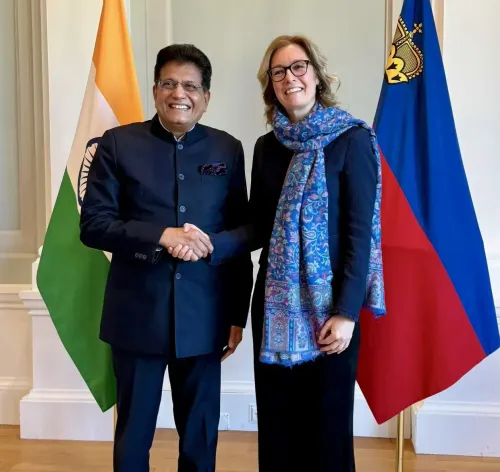
Sitharaman meets Liechtenstein royals to boost EFTA trade and investment ties
Synopsis
Finance Minister Nirmala Sitharaman's meeting with Liechtenstein's Hereditary Prince and Princess is more than a diplomatic courtesy call — it signals India's intent to activate the $100 billion EFTA investment pledge that came into force just over a year ago. With one million jobs on the line and sensitive sectors like pharma and dairy still ring-fenced, the real test is whether this State Visit marks the start of concrete capital flows or remains goodwill on paper.
Key Takeaways
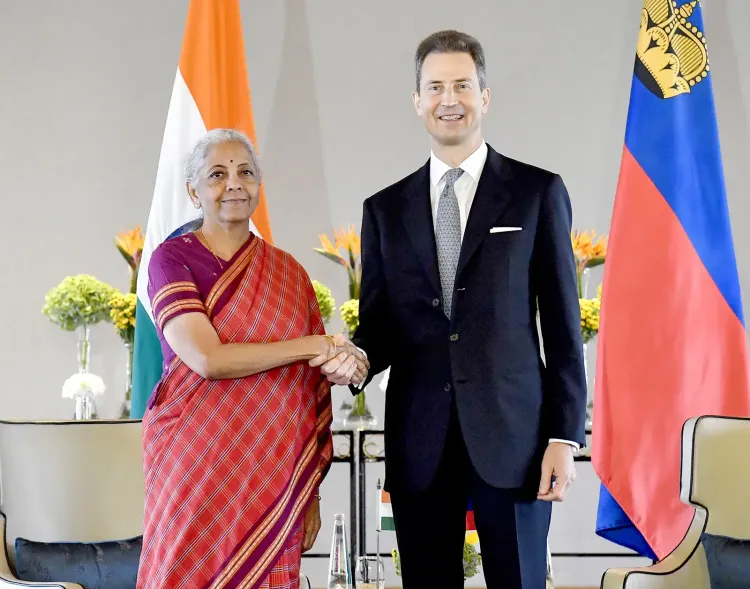
Finance Minister Nirmala Sitharaman met Hereditary Prince Alois and Hereditary Princess Sophie of Liechtenstein in New Delhi on 27 October 2026 .
Both sides agreed to deepen ties through investment, trade, and collaboration in advanced engineering , infrastructure , and innovation .
The India-EFTA TEPA became operational on 1 October 2025 , committing a $100 billion investment over 15 years and targeting one million direct jobs in India.
EFTA offers 92.2% of tariff lines covering 99.6% of India's exports; India offers 82.7% covering 95.3% of EFTA exports.
Sensitive sectors including dairy , soya , coal , and gold duties remain protected under the agreement.
The deal includes mutual recognition of professional services and patent safeguard provisions for the pharma sector.
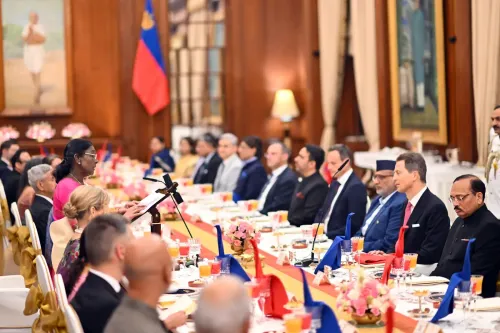
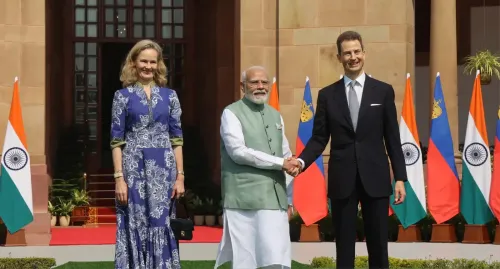
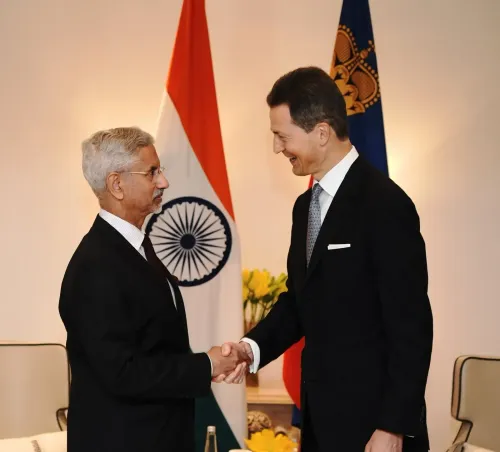
Finance Minister Nirmala Sitharaman on Tuesday, 27 October 2026, held talks in New Delhi with Hereditary Prince Alois and Hereditary Princess Sophie of Liechtenstein, exploring deeper bilateral collaboration in advanced engineering, infrastructure, and innovation. The meeting comes as the two nations look to build on the momentum of the landmark India-European Free Trade Association (EFTA) Trade and Economic Partnership Agreement (TEPA), which became operational on 1 October 2025.
What the Two Sides Agreed
Both delegations agreed that bilateral ties would be further strengthened through expanded opportunities for investment, trade, and economic cooperation, according to an official statement. The Hereditary Prince and Princess are currently on a State Visit to India, underscoring the diplomatic weight attached to the engagement. Leaders exchanged views on areas of mutual interest and identified advanced engineering, infrastructure, and innovation as priority sectors for potential collaboration.
The EFTA-India TEPA Framework
The backdrop to Tuesday's talks is the EFTA TEPA, covering the four-nation bloc of Liechtenstein, Switzerland, Norway, and Iceland. Under the agreement, the European bloc has committed an investment of $100 billion over 15 years, projected to facilitate one million direct jobs in India. EFTA is offering 92.2% of its tariff lines, covering 99.6% of India's exports to the region, including 100% of non-agricultural products and concessions on select processed agricultural goods.
India's Market Access Offer and Sensitive Sectors
India, in turn, is offering 82.7% of its tariff lines, covering 95.3% of EFTA exports. The effective duty on gold remains untouched under the deal. Sectors linked to the Production-Linked Incentive (PLI) scheme — including pharma, medical devices, and processed food — have been treated with sensitivity, while dairy, soya, coal, and sensitive agricultural products remain on the exclusion list. For Indian consumers, the pact has reduced tariffs on specific EFTA goods such as Swiss watches, whisky, and chocolates.
Services, IP Rights, and Sustainability Clauses
Beyond goods, the agreement includes provisions for mutual recognition of services, allowing professionals in fields like nursing, chartered accountancy, and architecture to work in EFTA countries. It also addresses intellectual property rights, with particular focus on India's concerns around patent safeguards — notably the evergreening of patents in pharmaceutical products. A sustainability clause covering labour rights, environmental protection, and human rights is embedded in the pact. This aligns with India's broader strategy of diversifying trade partnerships and positioning itself as a stable, rules-based destination for global investment. Notably, this is among the first high-level bilateral engagements under the TEPA framework since it became operational last year.
What Comes Next
With the TEPA framework now live and a State Visit lending diplomatic impetus, both sides are expected to identify specific project-level collaborations in the months ahead. Industry observers will watch closely whether the $100 billion investment commitment translates into verifiable capital flows — a critical test for the agreement's real-world impact.
Point of View
Dairy, and PLI-linked pharma reflects the political economy of domestic constituencies that any government must manage. The mutual recognition of professional services is underreported but potentially significant: opening EFTA markets to Indian nurses and chartered accountants could matter as much to households as tariff cuts on Swiss watches. The real accountability question is whether an independent tracking mechanism for the one-million-jobs commitment exists — without one, the headline figure risks becoming aspirational rather than contractual.
NationPress
27 Oct 2026
Frequently Asked Questions
What did Nirmala Sitharaman discuss with Liechtenstein's Hereditary Prince Alois?
Finance Minister Nirmala Sitharaman met Hereditary Prince Alois and Hereditary Princess Sophie of Liechtenstein in New Delhi on 27 October 2026 to explore collaboration in advanced engineering, infrastructure, and innovation. Both sides agreed to strengthen bilateral ties through expanded investment, trade, and economic cooperation.
What is the India-EFTA TEPA and when did it come into effect?
The India-European Free Trade Association (EFTA) Trade and Economic Partnership Agreement (TEPA) is a trade pact between India and the four-nation EFTA bloc — Liechtenstein, Switzerland, Norway, and Iceland. It became operational on 1 October 2025, committing a $100 billion investment over 15 years and targeting one million direct jobs in India.
What sectors are excluded from the India-EFTA trade deal?
Dairy, soya, coal, and sensitive agricultural products are kept on the exclusion list. The effective duty on gold also remains untouched, and sectors linked to the PLI scheme — such as pharma, medical devices, and processed food — have been treated with special sensitivity.
How does the EFTA deal benefit Indian professionals working abroad?
The agreement includes mutual recognition of services provisions, allowing Indian professionals in fields such as nursing, chartered accountancy, and architecture to work in EFTA member countries. This opens up a new avenue for skilled Indian workers beyond the goods trade.
What IP protections does the India-EFTA TEPA include for the pharma sector?
The agreement addresses intellectual property rights with a specific focus on India's concerns about patent evergreening in pharmaceutical products. The provisions aim to prevent prolonged monopoly extensions on existing drugs, balancing innovation incentives with access to affordable medicines.