President Murmu hosts Liechtenstein's Prince Alois, backs India-EFTA TEPA
Synopsis
Liechtenstein's first-ever state visit to India is more than a diplomatic courtesy call — it is a signal that TEPA, now operational for just over a year, is being activated at the highest political level. With a $100 billion investment target and one million jobs on the line, President Murmu's banquet for Prince Alois marks the shift from treaty-signing to delivery mode.
Key Takeaways
President Droupadi Murmu hosted Hereditary Prince Alois of Liechtenstein at Rashtrapati Bhavan on 27 October 2026 — Liechtenstein's first state visit to India.
The India-EFTA TEPA , signed in March 2024 and in force since October 2025 , targets $100 billion in investments and one million direct jobs in India over 15 years .
Key sectors for collaboration include advanced manufacturing , precision industry , medical technology , AI , and financial services .
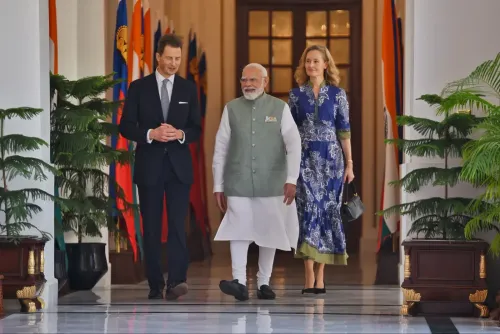
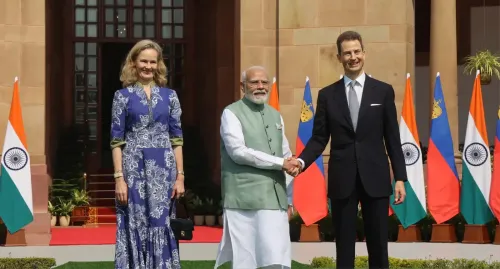
Prime Minister Narendra Modi also welcomed Prince Alois during the ceremonial reception at Rashtrapati Bhavan.
This is Prince Alois's second visit to India in 2026 , after attending the AI Impact Summit in February .
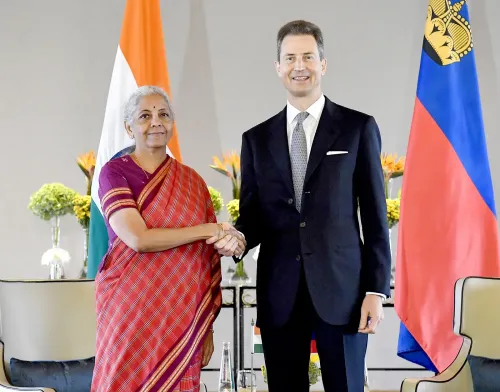
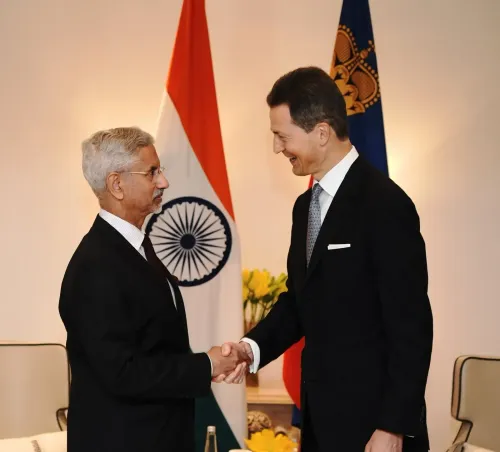
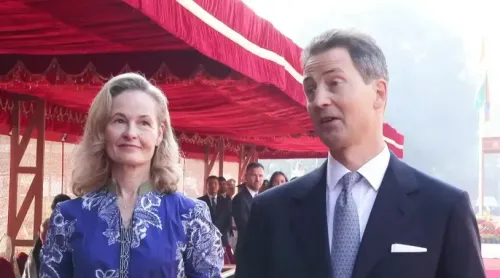
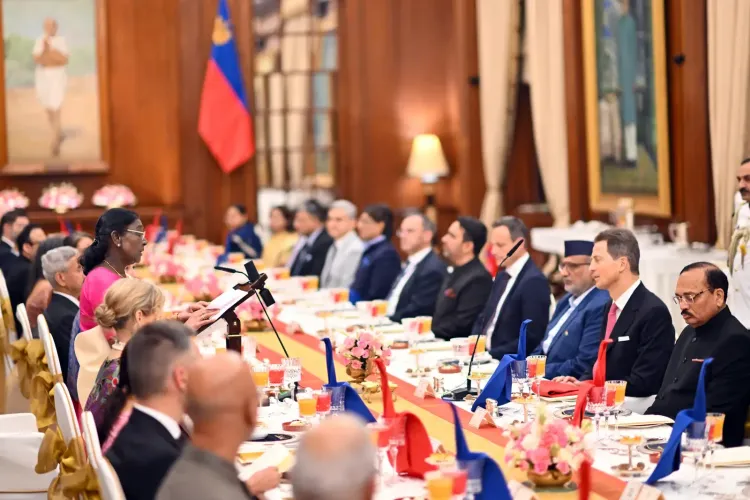
President Droupadi Murmu on Tuesday, 27 October 2026, received Hereditary Prince Alois and Hereditary Princess Sophie of Liechtenstein at Rashtrapati Bhavan, hosting a state banquet in their honour and emphasising that the India-EFTA Trade and Economic Partnership Agreement (TEPA) could combine the strengths of both nations to forge a mutually beneficial partnership. This marks Liechtenstein's first-ever state visit to India.
What TEPA Means for Both Nations
Signed in March 2024 and in force since October 2025, TEPA carries a shared objective of mobilising $100 billion in investments into India over 15 years and facilitating the creation of one million direct jobs in the country by EFTA member nations. President Murmu noted that the agreement creates a framework to blend Liechtenstein's expertise in advanced manufacturing, innovation, and financial services with India's skilled workforce, manufacturing capacity, and rapidly growing market. According to a Joint Statement issued during the visit, the two sides agreed that close bilateral cooperation can bring immense benefits to their peoples.
Key Sectors Identified for Deeper Collaboration
The Joint Statement identified several high-value sectors for enhanced bilateral engagement — advanced manufacturing, machinery and machine tools, precision industry, medical technology, space-related industries, clean technologies, artificial intelligence, and financial services. These are areas where Liechtenstein's specialised capabilities are seen as complementing India's scale and expanding market opportunities. Notably, this alignment mirrors the broader thrust of India's industrial policy, which has increasingly sought niche European technology partnerships alongside larger trade agreements.
Prince Alois on the Historic Visit
Earlier in the day, Prince Alois received a ceremonial welcome at the forecourt of Rashtrapati Bhavan, with both President Murmu and Prime Minister Narendra Modi extending a warm reception. Speaking to reporters, Prince Alois called the visit 'a significant milestone' in strengthening bilateral ties. 'I am very honoured to be in India on the occasion of Liechtenstein's first state visit to this remarkable country,' he said, adding, 'We are determined to build on this momentum and strengthen our ties with India even further.' This is Prince Alois's second visit to India in 2026, having previously attended the AI Impact Summit in New Delhi in February.
Background and Broader Context
TEPA is the first free trade agreement India has signed with a bloc of developed European economies, covering the four EFTA nations — Switzerland, Norway, Iceland, and Liechtenstein. Its entry into force in October 2025 marked a policy landmark after years of stalled EU-India FTA negotiations. Liechtenstein, though among the world's smallest countries by area, ranks among the highest in per-capita income and is home to globally competitive firms in precision manufacturing and financial services — sectors that dovetail with India's push to upgrade its industrial base. The state visit signals both sides' intent to translate the legal framework of TEPA into tangible investment and job-creation outcomes.
What Comes Next
With TEPA now operational for just over a year, the focus shifts to implementation — attracting committed investment flows and tracking job creation benchmarks. Industry watchers will monitor whether bilateral trade in the identified sectors accelerates in the near term. The momentum built through high-level diplomatic engagement, including this state visit, is expected to be tested against concrete investment announcements in the months ahead.
Point of View
000 people would seem outsized — until you read the investment numbers. TEPA's $100 billion, 15-year commitment is the most ambitious investment pledge attached to any Indian trade agreement, and Liechtenstein's niche strengths in precision manufacturing and financial services are precisely the gaps India's industrial upgrading agenda needs to fill. What mainstream coverage underplays is the implementation risk: the $100 billion figure is a mobilisation target spread across four EFTA nations, not a Liechtenstein-specific commitment, and the one-million-jobs benchmark has no independent verification mechanism announced so far. High-level diplomatic warmth is necessary but not sufficient — the real test will be whether sectoral roadmaps and investment pipelines materialise before the political window closes.
NationPress
27 Oct 2026
Frequently Asked Questions
What is the India-EFTA TEPA and when did it come into force?
The India-EFTA Trade and Economic Partnership Agreement (TEPA) is a trade and investment pact between India and the four EFTA nations — Switzerland, Norway, Iceland, and Liechtenstein. It was signed in March 2024 and entered into force in October 2025, making it the first free trade agreement India has concluded with a group of developed European economies.
What are the investment and jobs targets under TEPA?
TEPA carries a shared objective of mobilising $100 billion in investments into India over 15 years and facilitating the creation of one million direct jobs in the country by EFTA member nations. These targets were reaffirmed in the Joint Statement issued during Prince Alois's state visit on 27 October 2026.
Which sectors did India and Liechtenstein identify for deeper collaboration?
The two sides identified advanced manufacturing, machinery and machine tools, precision industry, medical technology, space-related industries, clean technologies, artificial intelligence, and financial services as priority areas. Liechtenstein's specialised capabilities in these fields are seen as complementing India's manufacturing scale and market growth.
Why is Liechtenstein's state visit to India significant?
It is Liechtenstein's first-ever state visit to India, underscoring the diplomatic weight both sides are attaching to their bilateral relationship under TEPA. Prince Alois described the visit as 'a significant milestone' and said Liechtenstein is determined to strengthen ties with India further.
How many times has Prince Alois visited India in 2026?
This is Prince Alois's second visit to India in 2026. He had previously attended the AI Impact Summit in New Delhi in February 2026 before making this first official state visit in October.