FM Sitharaman Hails Modi as India's Longest-Serving Elected PM
Synopsis
Finance Minister Nirmala Sitharaman on 10 June 2026 marked PM Narendra Modi completing 4,399 days as Prime Minister — making him India's longest-serving elected PM — crediting the NDA's Antyodaya and 'Sabka Saath' governance philosophy for sustained electoral mandates and last-mile welfare delivery.
Key Takeaways
Nirmala Sitharaman posted in Tamil on 10 June 2026 to mark PM Modi's record tenure milestone.
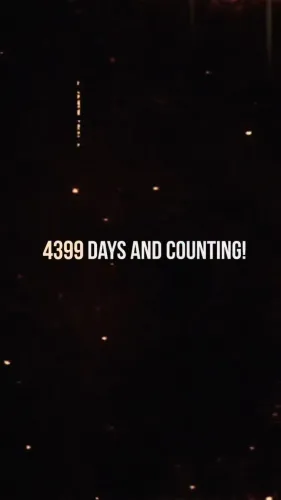
PM Narendra Modi has completed 4,399 days in office, becoming India's longest-serving elected Prime Minister.
The tribute centres on the governance philosophy of Antyodaya and the four-pillar slogan 'Sabka Saath, Sabka Vikas, Sabka Vishwas, Sabka Prayas' .
Sitharaman credited the NDA government's 'bold reforms' at 'unprecedented speed and scale' for repeated public mandates.
The Finance Minister framed the milestone within India's stated goal of becoming a Viksit Bharat (developed India).
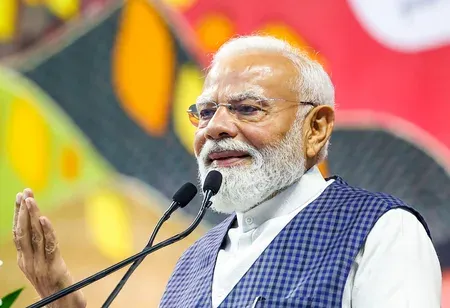
Union Finance Minister Nirmala Sitharaman on Wednesday, 10 June 2026 took to X to mark what she described as a historic milestone: Prime Minister Narendra Modi becoming the longest-serving elected Prime Minister in India's history, having completed 4,399 days in office.
Context
Posting in Tamil, Sitharaman wrote: 'இன்று, பாரதப் பிரதமர் திரு @narendramodi அவர்கள், இந்தியாவில் மிக நீண்ட காலம் பணியாற்றிய தேர்ந்தெடுக்கப்பட்ட பிரதமர் என்ற சாதனையைப் படைத்துள்ளார்' ('Today, Prime Minister Narendra Modi has achieved the distinction of being the longest-serving elected Prime Minister in India'). She noted that over 4,399 days, the Prime Minister's Office had provided 'firm and strong leadership' through several challenging periods faced by the nation.
Modi first took oath as Prime Minister on 26 May 2014 following the BJP-led National Democratic Alliance (NDA) victory in the general elections, and has since led the government through successive electoral mandates.
Policy Backdrop
At the heart of Sitharaman's tribute is the governance philosophy of 'Antyodaya' — the prioritisation of the poorest citizen — alongside the four-pillar slogan 'Sabka Saath, Sabka Vikas, Sabka Vishwas, Sabka Prayas', which translates to 'Together with all, development for all, trust of all, effort of all.' This framework, formally articulated in the 2014 BJP manifesto, has underpinned the NDA government's welfare delivery architecture for over a decade.
Sitharaman emphasised that the principle ensures development benefits reach every citizen 'no matter how far they live from a national or state capital,' and recognises that every citizen contributes to nation-building. The Finance Minister's framing links record tenure directly to the consistency of this inclusive-growth model.
Stakeholders and Impact
The NDA government's reform agenda, which Sitharaman described as executed at 'unprecedented speed and scale,' has touched hundreds of millions of welfare beneficiaries across programmes spanning rural housing, direct benefit transfers, health insurance, and infrastructure. The repeated electoral mandates — most recently the 2024 general election — are cited by the government as public validation of this continuity.
For ordinary citizens, particularly those in remote areas, the Antyodaya framework has been the stated rationale for last-mile delivery of central schemes. Senior BJP leaders such as Sitharaman using Tamil — a regional language — to mark the milestone also signals an outreach to southern Indian constituencies where the party has been expanding its footprint.
What's Next
With India on what Sitharaman called a 'determined march towards a developed Bharat' (Viksit Bharat), attention will now turn to forthcoming Union Budget presentations and parliamentary sessions, where the government is expected to deepen welfare scheme expansions. State assembly elections and the 2029 general election will serve as the next major tests of whether the public endorsement underpinning this milestone translates into continued political continuity for the NDA coalition.
Point of View
Reinforces the NDA's governance narrative of continuity and inclusive growth, and signals reach into southern India where the BJP has long sought deeper roots. By anchoring the tribute in policy vocabulary — Antyodaya, Sabka Saath — rather than personal praise alone, the Finance Minister frames longevity as an outcome of a validated governance model rather than mere incumbency. This is consistent with the BJP's broader strategy of converting electoral durability into a proof-of-concept for its reform agenda. The milestone will likely be amplified across party platforms ahead of state elections and used as a benchmark in the lead-up to 2029.
NationPress
26 Oct 2026
Frequently Asked Questions
Who is India's longest-serving elected Prime Minister?
As of 10 June 2026 , Prime Minister Narendra Modi holds the distinction of being India's longest-serving elected Prime Minister, having completed 4,399 days in office since first taking oath on 26 May 2014 .
What is 'Sabka Saath, Sabka Vikas, Sabka Vishwas, Sabka Prayas'?
It is the four-pillar governance slogan of the NDA government , translating to 'Together with all, development for all, trust of all, effort of all.' It was formally articulated in the 2014 BJP manifesto and has guided the government's welfare and reform agenda since.
What is Antyodaya and why did Sitharaman mention it?
Antyodaya is a development philosophy prioritising the upliftment of the poorest citizens and ensuring last-mile delivery of welfare benefits. Sitharaman cited it as the 'core' of Modi's governance journey to explain why development reaches citizens regardless of how remote their location.
Why did Nirmala Sitharaman post in Tamil about Modi's milestone?
Sitharaman chose Tamil — one of India's classical languages and the primary language of Tamil Nadu — to mark the milestone, a move that signals political outreach to southern India, where the BJP has been working to expand its electoral presence.
What comes next after Modi's record tenure milestone?
Attention shifts to upcoming Union Budget sessions and welfare scheme expansions, with state assembly elections and the 2029 general election serving as the next major tests of public endorsement for the NDA's governance model.