Sitharaman hails Modi as India's longest-serving elected PM
Synopsis
Finance Minister Nirmala Sitharaman on 10 June 2026 hailed PM Narendra Modi for completing 4,399 days as Prime Minister — a record for India's longest-serving elected PM — citing Antyodaya, bold reforms, and the Viksit Bharat vision as hallmarks of his tenure.
Key Takeaways
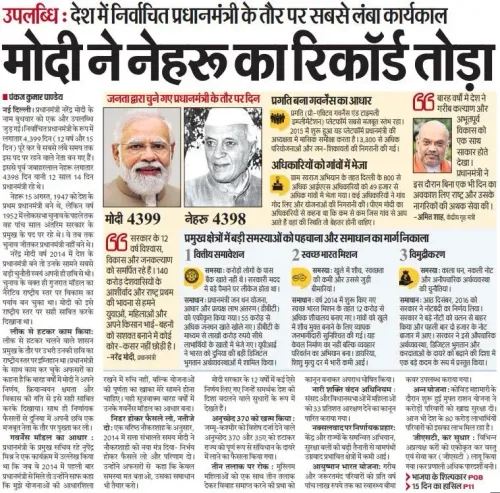
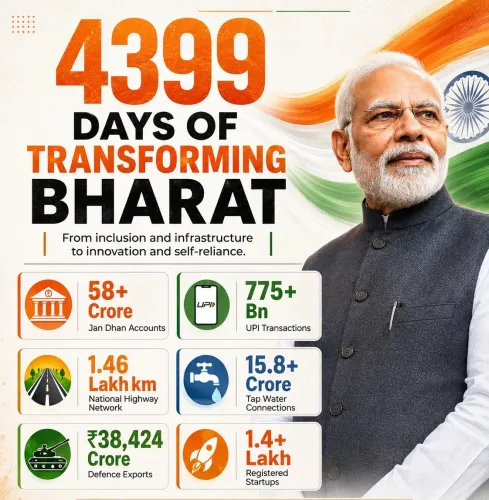
PM Narendra Modi has completed 4,399 days in office as of 10 June 2026 , becoming India's longest-serving elected Prime Minister.
Union Finance Minister Nirmala Sitharaman posted the tribute in Hindi on X, describing the milestone as 'historic.' Modi has led the NDA to three consecutive electoral mandates — in 2014 , 2019 , and 2024 .
The philosophy of Antyodaya and the slogan 'Sabka Saath, Sabka Vikas, Sabka Vishwas, Sabka Prayas' are cited as the guiding principles of his tenure.
The milestone is framed within the government's Viksit Bharat vision — a developed India by 2047 .
Flagship welfare schemes including PM Awas Yojana and Ujjwala Yojana were launched between 2015 and 2016 under this governance philosophy.
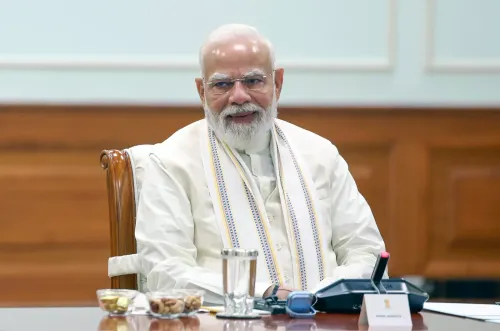
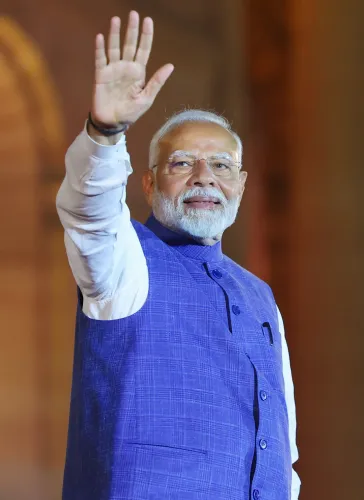
Union Finance Minister Nirmala Sitharaman on Wednesday, 10 June 2026 took to X to mark what she described as a historic milestone — Prime Minister Narendra Modi becoming India's longest-serving elected Prime Minister, having completed 4,399 days in office since first being sworn in on 26 May 2014.
Context
Sitharaman's post, written in Hindi, celebrated the tenure record with a direct tribute to the Prime Minister's leadership. Translated, the post reads: 'Aaj, maanniya Pradhan Mantri Shri Narendra Modi ne Bharat ke sabse lambe samay tak seva karne wale nirvachit Pradhan Mantri ke roop mein ek kirtiman sthapit kiya hai' — 'Today, the honourable Prime Minister Shri Narendra Modi has set a record as India's longest-serving elected Prime Minister.' She noted that over the past 4,399 days, the Prime Minister has provided 'decisive and strong leadership' through several challenging moments faced by the country.
Modi was first sworn in on 26 May 2014 following the BJP-led National Democratic Alliance (NDA)'s landslide victory in the Lok Sabha elections. He was re-elected in May 2019, becoming the first non-Congress Prime Minister to win a second consecutive majority mandate. A third consecutive term followed in June 2024, cementing the NDA's uninterrupted run at the Centre.
Policy Backdrop
At the core of Sitharaman's tribute is the philosophy of Antyodaya — the upliftment of the last person in the queue — which she described as the bedrock of Modi's governance. The guiding principle of 'Sabka Saath, Sabka Vikas, Sabka Vishwas, Sabka Prayas' ('Together with all, development for all, trust of all, efforts of all') has been invoked to frame welfare delivery as reaching every citizen 'no matter how far they live from national or state capitals.'
Under this framework, flagship schemes such as PM Awas Yojana (housing for all) and Ujjwala Yojana (LPG connections for rural households) were launched between 2015 and 2016. Structural reforms including the Goods and Services Tax (GST) and the Insolvency and Bankruptcy Code were also enacted during this period, reshaping India's economic architecture.
Sitharaman linked the tenure milestone to the government's overarching national goal of Viksit Bharat — a developed India by 2047 — a vision articulated since 2022 across Independence Day addresses and policy documents. She wrote that 'this is a historic milestone as we move forward with firm resolve towards Viksit Bharat.'
Stakeholders and Impact
The tribute from a senior Cabinet colleague and one of the BJP's most prominent faces carries political weight, reinforcing the party's narrative of continuity and decisive governance ahead of the 2029 general elections. Sitharaman, who has presented multiple Union Budgets under Modi's tenure, is among the most visible architects of the government's economic agenda.
For last-mile households — the primary intended beneficiaries of Antyodaya-linked schemes — the milestone is being framed by the government as validation that sustained political leadership translates into expanded welfare delivery. NDA coalition partners are also likely to amplify the milestone as a symbol of the alliance's stability and electoral durability.
What's Next
The milestone is expected to prompt further commemorative statements from Cabinet ministers and NDA allies in the coming days. Parliamentary references and formal motions acknowledging the tenure record are possible when the House is next in session. More substantively, the government is likely to use the occasion to accelerate communication around Viksit Bharat indicators, benchmarking progress on infrastructure, welfare, and economic growth as the countdown to 2029 begins.
Point of View
The post signals that the party intends to campaign on continuity and delivery ahead of 2029. The emphasis on repeated mandates subtly rebuts opposition arguments about democratic backsliding, positioning longevity as a product of public trust rather than incumbency advantage. The timing, mid-term in the third consecutive government, also serves to pre-empt any mid-tenure fatigue narrative.
NationPress
25 Oct 2026
Frequently Asked Questions
How many days has Narendra Modi served as Prime Minister of India?
According to Finance Minister Nirmala Sitharaman's post on 10 June 2026, PM Narendra Modi has completed 4,399 days as Prime Minister, making him India's longest-serving elected Prime Minister.
When did Narendra Modi first become Prime Minister of India?
Narendra Modi was first sworn in as Prime Minister of India on 26 May 2014 after the BJP-led NDA won the Lok Sabha elections.
How many times has Narendra Modi been elected as Prime Minister?
Narendra Modi has been elected Prime Minister three times — in 2014, 2019, and 2024 — each time leading the NDA coalition to a parliamentary majority.
What is Antyodaya and why is it important to Modi's governance?
Antyodaya is a philosophy of uplifting the poorest and most marginalised citizens first. It underpins flagship welfare schemes such as PM Awas Yojana and Ujjwala Yojana launched between 2015 and 2016 under the Modi government.
What is Viksit Bharat and when was it announced?
Viksit Bharat — meaning 'Developed India' — is the Modi government's national vision to make India a fully developed nation by 2047. It was formally articulated from 2022 onward through Independence Day addresses and NITI Aayog policy documents.