Sitharaman Marks Modi's 4,399 Days as PM, Cites Viksit Bharat
Synopsis
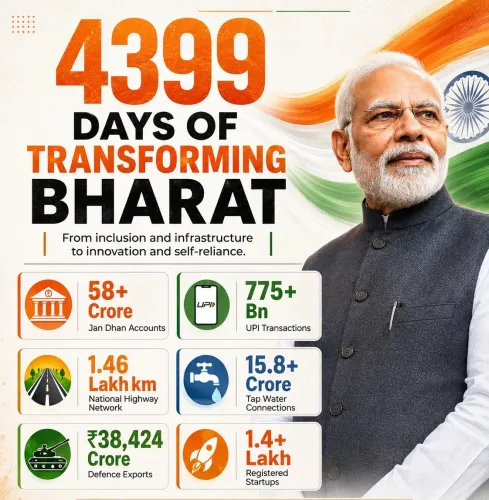
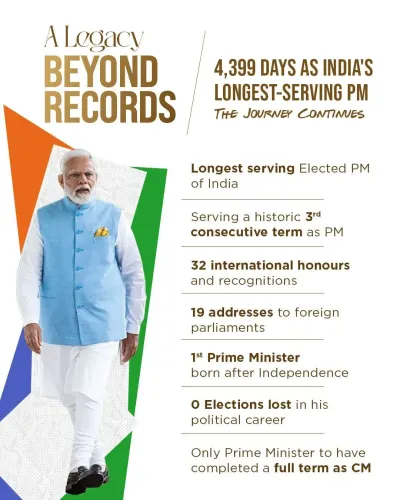
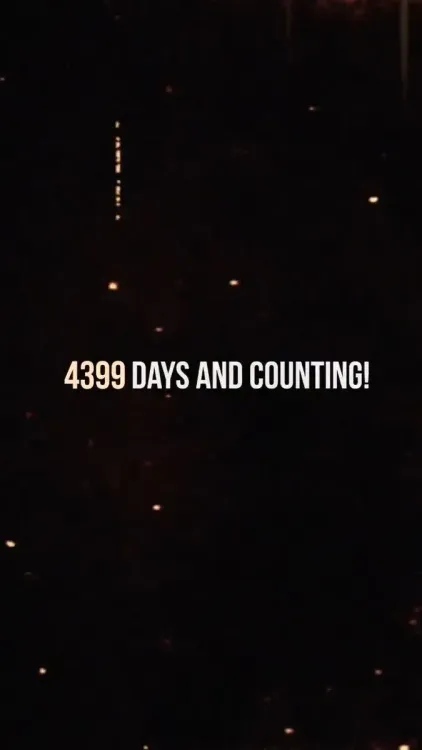
Union Finance Minister Nirmala Sitharaman on June 10, 2026, marked Prime Minister Narendra Modi's 4,399 days in office, hailing his record tenure as a driver of India's Viksit Bharat ambitions for 2047.
Key Takeaways
Nirmala Sitharaman posted on June 10, 2026 marking PM Modi 's 4,399 days of continuous service as Prime Minister.
The post invoked the Viksit Bharat vision, framing Modi's tenure as central to India's goal of becoming a developed economy by 2047 .
Modi has served three consecutive terms since first being sworn in on 26 May 2014 , re-elected in 2019 and again in 2024 .
The Viksit Bharat@2047 vision was formally articulated in Modi's 2022 Independence Day address and has featured in successive Union Budgets.
The tribute underscores the BJP -led government's emphasis on policy continuity across digital infrastructure, manufacturing and welfare delivery.
Union Finance Minister Nirmala Sitharaman on Wednesday, June 10, 2026, took to X to mark Prime Minister Narendra Modi's 4,399 days in office, calling his tenure a journey that continues to inspire India's march toward becoming a developed nation.
Context
Sitharaman's post, tagged with the hashtag #LongestServingElectedPMModi, described the Prime Minister's record as one of 'service and resolve,' adding that 'his journey continues to inspire our nation's march towards becoming Viksit Bharat.' The tribute comes as Modi's government presses ahead with long-term development goals framed around the centenary of India's Independence in 2047.
Narendra Modi was first sworn in as Prime Minister on 26 May 2014 after the BJP-led NDA secured a Lok Sabha majority. He was re-elected for a second term in May 2019 and began a third consecutive term in June 2024 following the general elections that year.
Policy Backdrop
The Viksit Bharat@2047 vision — formally articulated by Modi in his 2022 Independence Day address — envisions India as a fully developed economy by the centenary of Independence, anchored in sustained growth, technology adoption and social inclusion. The vision has been a recurring theme in successive Union Budgets presented by Sitharaman herself.
Modi's three consecutive terms mark an extended period of policy continuity, with successive governments maintaining focus on digital public infrastructure, manufacturing incentives under schemes such as PLI (Production-Linked Incentive), and welfare delivery platforms reaching hundreds of millions of citizens.
Stakeholders and Impact
The milestone is significant for the Bharatiya Janata Party, which has won three consecutive general elections under Modi's leadership since 2014 — an outcome that has reshaped Indian electoral politics toward stable single-party majorities. For policy implementers and citizens alike, the continuity in leadership has meant sustained momentum on flagship programmes spanning infrastructure, direct benefit transfers and external affairs.
Senior Cabinet colleagues, including Sitharaman as a key economic architect of the government, have been consistent voices in framing Modi's tenure as foundational to the 2047 development agenda. Her post underscores the alignment between the Finance Ministry's budgetary priorities and the broader national vision the Prime Minister has championed.
What's Next
With the Viksit Bharat@2047 roadmap now a central organising framework for government policy, upcoming parliamentary sessions and NITI Aayog reports are expected to track progress against specific development milestones. The Union Budget cycle will continue to serve as the primary instrument through which the government signals its pace of execution on the 2047 targets — making Sitharaman's role as Finance Minister integral to translating the vision into measurable outcomes.
Point of View
Using a milestone day-count to reinforce the BJP's core electoral narrative of strong, stable and uninterrupted leadership under Modi. By tying the milestone explicitly to Viksit Bharat, she connects a symbolic tribute to a concrete policy horizon, signalling that the government views its longevity not as an end in itself but as instrumental to a generational development project. The framing also serves an internal party function, cementing Modi's stature ahead of future electoral cycles. It reflects a broader pattern in which senior Cabinet ministers publicly curate the Prime Minister's legacy as an ongoing, forward-looking story rather than a retrospective one.
NationPress
26 Oct 2026
Frequently Asked Questions
How many days has Narendra Modi served as Prime Minister?
As of June 10, 2026 , Finance Minister Nirmala Sitharaman cited 4,399 days of service for PM Narendra Modi , who first took office on 26 May 2014 .
What is Viksit Bharat and what does it mean?
Viksit Bharat (Developed India) is the government's vision to make India a fully developed economy by 2047 , the centenary of Independence, through growth, technology and social inclusion. It was formally articulated by PM Modi in his 2022 Independence Day address.
Why is Modi called the longest serving elected PM of India?
Narendra Modi has served three consecutive terms since 2014 , making his continuous elected tenure the longest of any Prime Minister since India's Independence, surpassing earlier records of non-consecutive or shorter-term tenures.
What did Nirmala Sitharaman post about Modi on June 10 2026?
Nirmala Sitharaman posted on X that PM Modi had completed 4,399 days of 'service and resolve,' adding that his journey continues to inspire the nation's march toward Viksit Bharat .
How many terms has Narendra Modi served as Prime Minister?
Narendra Modi has served three terms as Prime Minister — beginning in May 2014 , re-elected in May 2019 , and beginning a third term in June 2024 following the general elections.