Sitharaman Hails Modi's Transformative Governance, Viksit Bharat Push
Synopsis
Union Finance Minister Nirmala Sitharaman on June 10, 2026 lauded PM Narendra Modi's leadership, citing financial inclusion, digital empowerment and infrastructure as pillars of India's growth under the Viksit Bharat vision, marking his milestone as India's longest-serving elected Prime Minister.
Key Takeaways
Finance Minister Nirmala Sitharaman posted on June 10, 2026 praising PM Narendra Modi 's governance record under the hashtag #LongestServingElectedPMModi .
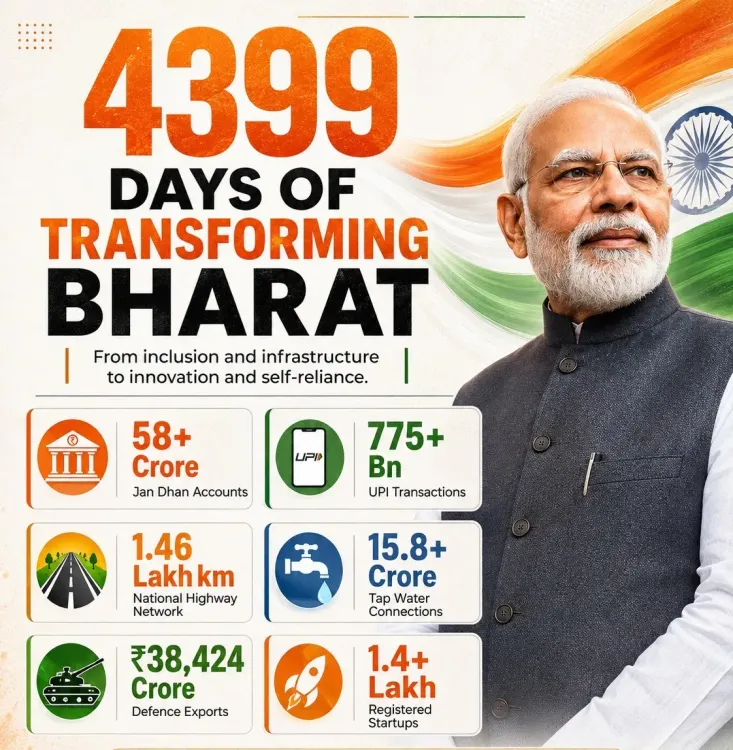
She cited four pillars of progress: financial inclusion, digital empowerment, world-class infrastructure, and innovation.
The Pradhan Mantri Jan Dhan Yojana (launched August 2014 ) and Digital India (launched July 2015 ) are key policy anchors behind these claims.
The PM GatiShakti National Master Plan ( October 2021 ) underpins the infrastructure push referenced in the post.
The Viksit Bharat @2047 vision, first articulated by Modi in his 2023 Independence Day address, frames the long-term development goal.
The Union Budget 2027-28 is expected to carry updated Viksit Bharat milestones and fresh scheme allocations.
Union Finance Minister Nirmala Sitharaman on Wednesday, June 10, 2026, praised Prime Minister Narendra Modi's leadership, highlighting India's strides in financial inclusion, digital empowerment, infrastructure and innovation as the nation moves toward the Viksit Bharat vision. The post, shared on X under the hashtag #LongestServingElectedPMModi, marks a moment of political recognition for the Prime Minister's tenure.
Context
Sitharaman's post credits Modi's leadership with giving India's growth story 'massive momentum,' pointing to four pillars: financial inclusion, digital empowerment, world-class infrastructure, and innovation. The tribute coincides with the hashtag celebrating Modi's status as the longest-serving elected Prime Minister of India, a milestone that has drawn acknowledgement from senior BJP leaders and cabinet colleagues.
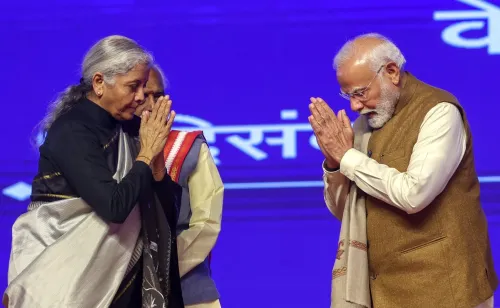
The Finance Minister wrote: 'We, as a nation, have witnessed dedicated leadership and transformative governance as we move towards becoming a Viksit Bharat.' The post was accompanied by two images, reinforcing the celebratory and institutional character of the message.
Policy Backdrop
The pillars Sitharaman invokes have concrete policy anchors. The Pradhan Mantri Jan Dhan Yojana, launched in August 2014, extended banking access, insurance and credit to previously unbanked households, forming the bedrock of the government's financial inclusion drive. The Digital India programme, rolled out in July 2015, built the digital public infrastructure that now underpins everything from direct benefit transfers to UPI-based payments.
On the infrastructure front, the PM GatiShakti National Master Plan, announced in October 2021, sought to integrate planning across roads, railways, ports and logistics corridors. Together, these initiatives represent a sustained, multi-year effort to raise India's per-capita income and global competitiveness ahead of the 2047 centenary of independence — the horizon set by the Viksit Bharat @2047 vision, which PM Modi first outlined in his 2023 Independence Day address.
Stakeholders and Impact
The beneficiaries of the policies Sitharaman references span a wide cross-section of the economy. Indian households — particularly in rural and semi-urban areas — have been the primary targets of financial inclusion and digital access schemes. MSMEs and tech startups have drawn on the digital public goods stack, including Aadhaar, UPI and the Open Network for Digital Commerce, to scale operations and reach new markets.
Infrastructure investment, channelled through successive Union Budgets, has aimed to reduce logistics costs and improve connectivity for goods and people alike. The Finance Ministry, which Sitharaman has headed since 2019, has been the central institutional actor in allocating resources across all these domains.
What's Next
Attention will now turn to the Union Budget 2027-28, where updated Viksit Bharat milestones and fresh scheme allocations are expected to signal the government's priorities for the next phase of India's development journey. Parliamentary debates on the next generation of digital regulations and infrastructure financing will also test the durability of the policy consensus that Sitharaman's post implicitly celebrates.
As India's growth narrative becomes an increasingly prominent part of the ruling party's political messaging, the Finance Minister's endorsement of Modi's governance record underscores the BJP's intent to contest the 2047 vision on both economic and electoral terrain.
Point of View
Digital infrastructure, physical connectivity — she frames Modi's tenure not merely as longevity but as purposeful transformation. The invocation of Viksit Bharat signals that the government intends to keep the 2047 horizon as the organising frame for both policy and politics. Senior cabinet members publicly amplifying such milestones also reflects a party strategy of consolidating the Prime Minister's brand as the government's most durable electoral asset.
NationPress
25 Oct 2026
Frequently Asked Questions
Why is Nirmala Sitharaman praising PM Modi on June 10 2026?
Sitharaman's post coincides with the hashtag #LongestServingElectedPMModi, marking Narendra Modi's milestone as India's longest-serving elected Prime Minister, and uses the occasion to highlight governance achievements in financial inclusion, digital empowerment and infrastructure.
What is Viksit Bharat and when was it announced?
Viksit Bharat @2047 is the government's vision to make India a developed economy by the centenary of its independence. PM Modi first outlined the vision in his Independence Day address in 2023.
What is the Pradhan Mantri Jan Dhan Yojana mentioned in the context?
Pradhan Mantri Jan Dhan Yojana is a financial inclusion scheme launched in August 2014 that provides bank accounts, insurance and credit access to previously unbanked Indian households.
What is PM GatiShakti?
PM GatiShakti is a National Master Plan announced in October 2021 to integrate infrastructure planning across roads, railways, ports and logistics corridors in order to reduce costs and improve connectivity.
How long has Nirmala Sitharaman been Finance Minister?
Nirmala Sitharaman has served as Union Finance Minister since 2019, overseeing fiscal policy, successive Union Budgets and financial sector initiatives during that period.