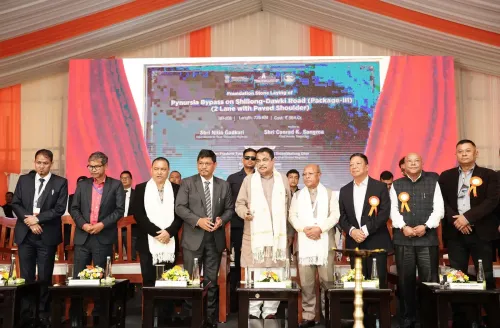
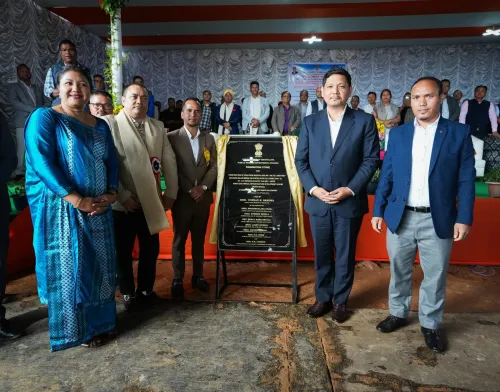
Sitharaman Inaugurates NDB-Funded Road in Meghalaya
Synopsis
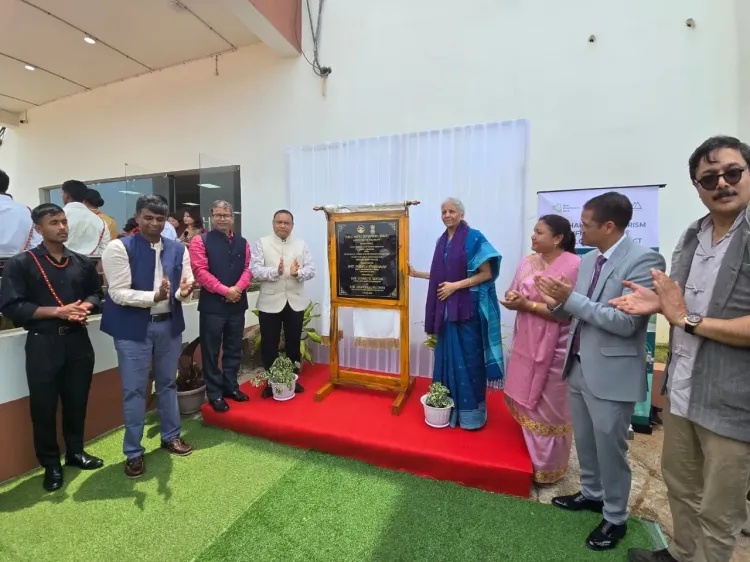
Union Finance Minister Nirmala Sitharaman inaugurated the Jowai-Nartiang-Kdiap-Khanduli Road in Meghalaya on 20 June 2026. Funded by the New Development Bank at over ₹59 crore, the project aims to boost connectivity, market access, and livelihoods in West Jaintia Hills district.
Key Takeaways
Union Finance Minister Nirmala Sitharaman inaugurated the Jowai-Nartiang-Kdiap-Khanduli (JNKK) Road in Meghalaya on 20 June 2026 .
The project was funded by the New Development Bank (NDB) , a BRICS-founded multilateral lender, at an estimated cost of over ₹59 crore .
The road serves West Jaintia Hills district , improving connectivity for residents with limited access to markets and essential services.
The inauguration aligns with India's Act East Policy and broader efforts to integrate Northeastern states through infrastructure investment.
The NDB has been a financing partner for Indian infrastructure since India's founding membership in 2014 .
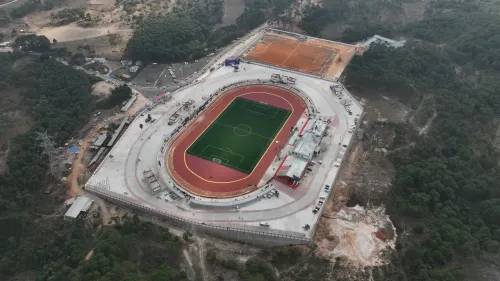
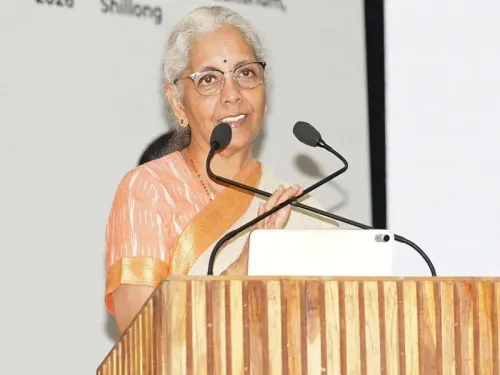
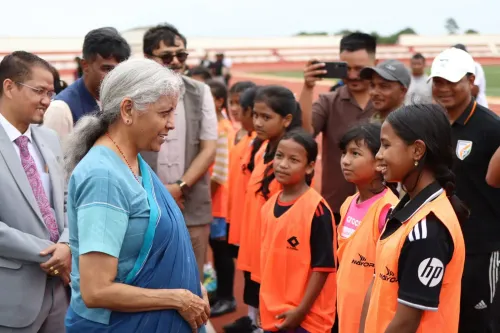
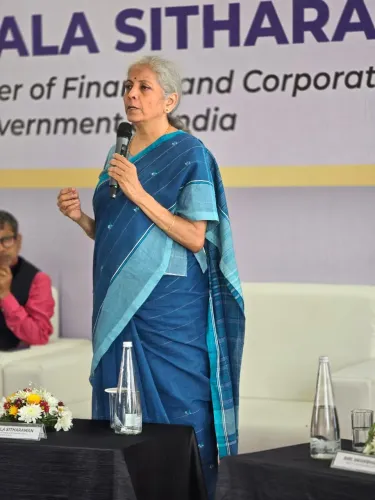
Union Finance Minister Nirmala Sitharaman on Saturday, 20 June 2026 inaugurated the Jowai-Nartiang-Kdiap-Khanduli (JNKK) Road at Wahiajer Football Stadium in Meghalaya, marking the completion of a connectivity project backed by multilateral financing for the state's hilly interior.
Context
The JNKK Road passes through West Jaintia Hills district, a region characterised by rugged terrain and historically limited road access. The project was funded by the New Development Bank (NDB) — the multilateral lender founded by BRICS nations in 2014 — at an estimated cost of over ₹59 crore. The inauguration took place at Wahiajer Football Stadium in the presence of local stakeholders.
Sitharaman, who oversees India's engagement with the NDB in her capacity as Finance Minister, inaugurated the road personally, underscoring the central government's interest in showcasing multilateral-funded outcomes in the Northeast.
Policy Backdrop
India has been a founding member of the New Development Bank since 2014, enabling the country to access BRICS-backed financing for domestic infrastructure. The NDB has progressively expanded its India portfolio, with road and transport projects in underserved states forming a significant share of disbursements.
The broader policy framework includes the central government's Act East Policy, which prioritises physical and economic integration of the Northeastern states with mainland India and with Southeast Asian markets. Road upgrades in states like Meghalaya are considered foundational to that strategy, complementing programmes such as Bharatmala and the North East Road Sector Development Scheme, launched in 2015 to upgrade state highways and district roads with central and external funding.
Stakeholders and Impact
Residents of West Jaintia Hills — including farmers, traders, and communities dependent on daily market access — stand to benefit most directly. The district's predominantly tribal population has long faced constraints in transporting agricultural produce and accessing government services owing to poor road conditions.
The new road is expected to reduce travel time between Jowai, the district headquarters, and interior settlements, improving access to markets, health facilities, and schools. Local livelihoods tied to coal, limestone, and agricultural trade in the Jaintia Hills region could see logistical costs ease as a result.
What's Next
Attention will now turn to further NDB project disbursements that may be reflected in upcoming Union Budget documents, as well as any state-level progress reports on pending Meghalaya road packages. The Meghalaya government is expected to table project utilisation reports as part of its routine legislative accountability. Analysts watching the NDB's India pipeline will monitor whether the JNKK corridor becomes a template for similar last-mile connectivity investments in other Northeastern districts.
Point of View
Not just in budget documents. It also reinforces the BJP's outreach to the Northeast, where infrastructure delivery is a key political metric ahead of state electoral cycles. The use of multilateral financing from the NDB — rather than purely domestic funds — reflects a maturing strategy of leveraging BRICS institutions for last-mile connectivity that domestic schemes alone have struggled to reach. If the JNKK corridor demonstrates measurable livelihood impact, it could accelerate the pipeline of similar NDB-backed projects across other hilly Northeastern districts.
NationPress
19 Sept 2026
Frequently Asked Questions
What is the Jowai-Nartiang-Kdiap-Khanduli Road in Meghalaya?
The Jowai-Nartiang-Kdiap-Khanduli (JNKK) Road is a newly inaugurated road project in West Jaintia Hills district of Meghalaya, designed to improve connectivity between Jowai and interior settlements. It was funded by the New Development Bank at an estimated cost of over ₹59 crore.
Who inaugurated the JNKK Road in Meghalaya?
Union Finance Minister Nirmala Sitharaman inaugurated the JNKK Road on 20 June 2026 at Wahiajer Football Stadium in Meghalaya.
What is the New Development Bank and what is its role in India?
The New Development Bank (NDB) is a multilateral development bank founded by BRICS nations in 2014 to finance infrastructure and sustainable development. India is a founding member and has used NDB funding for domestic infrastructure projects, including road connectivity in Northeastern states.
How will the JNKK Road benefit West Jaintia Hills residents?
The road is expected to improve access to markets, health facilities, and essential services for residents of West Jaintia Hills, a hilly district with historically limited road connectivity. Farmers and traders in the region are expected to benefit from reduced logistical costs.
How does this road project connect to India's Act East Policy?
India's Act East Policy prioritises the physical and economic integration of Northeastern states with mainland India and Southeast Asian markets. Road upgrades in states like Meghalaya are considered foundational to this strategy, and NDB-funded projects complement domestic programmes such as Bharatmala.