Sitharaman Receives Bank of Maharashtra Dividend Cheque for FY 2025-26
Synopsis
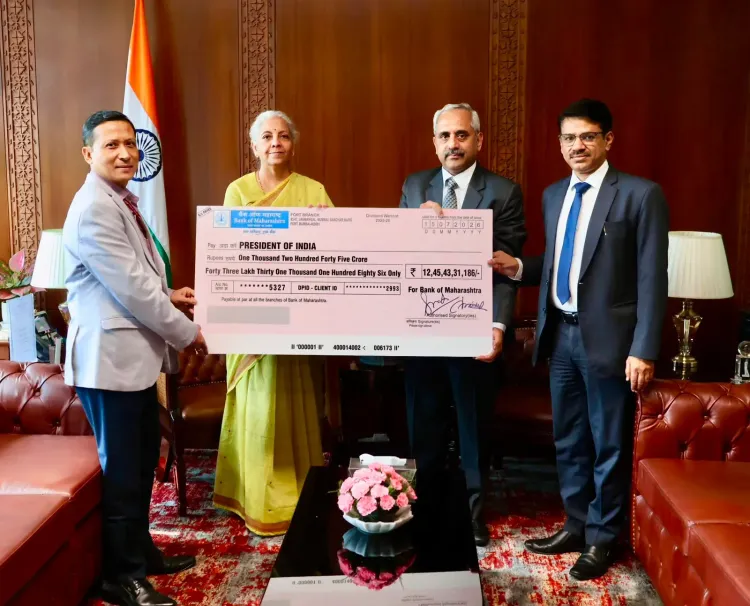
Union Finance Minister Nirmala Sitharaman received the FY 2025-26 dividend cheque from Bank of Maharashtra MD and CEO Nidhu Saxena on 15 July 2026, reflecting the sustained profitability of public sector banks and their growing contribution to central government non-tax revenues.
Key Takeaways
Nirmala Sitharaman received the FY 2025-26 dividend cheque from Bank of Maharashtra on 15 July 2026 .
The cheque was presented by Nidhu Saxena , MD and CEO of Bank of Maharashtra .
PSB dividends form part of the central government's non-tax revenue and support fiscal consolidation.
Public sector banks resumed consistent dividend payments from around FY 2018-19 after the post-NPA clean-up cycle.
Aggregate PSB dividend figures for FY 2025-26 will be disclosed in the next Union Budget receipts statement.
Bank of Maharashtra is a government-majority-owned lender operating primarily in western India.
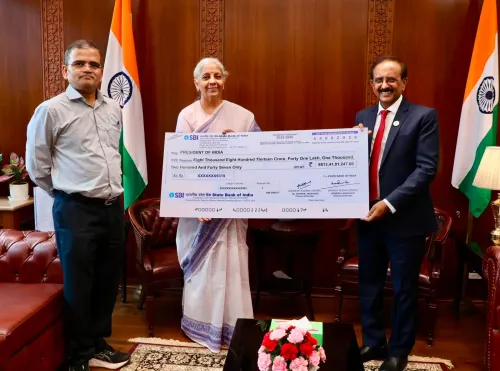
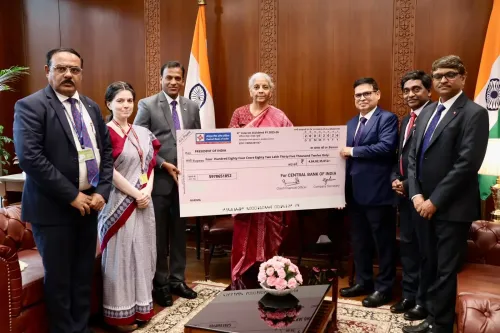
Union Finance Minister Nirmala Sitharaman on Wednesday, 15 July 2026 received a dividend cheque for FY 2025-26 from Nidhu Saxena, Managing Director and Chief Executive Officer of Bank of Maharashtra, in a formal handover that underscores the continued profitability of public sector banks and their contribution to the central government's non-tax revenue.
Context
The ceremonial presentation of a dividend cheque by a public sector bank (PSB) chief to the Finance Minister is a well-established fiscal ritual in New Delhi. Bank of Maharashtra, a government-majority-owned lender operating primarily in western India, handed over its contribution for the financial year ending March 2026. The Government of India, as the principal shareholder in all PSBs, receives these annual payouts as part of its non-tax revenue stream.
Such handovers typically take place at North Block, the seat of the Finance Ministry in New Delhi, and carry both symbolic and fiscal significance. They signal the health of individual banks while also feeding into the government's broader revenue arithmetic.
Policy Backdrop
The return of PSBs to consistent dividend-paying status is rooted in a decade-long clean-up of bank balance sheets. Following the Asset Quality Review of 2015-17, which forced banks to recognise and provision for bad loans, several lenders went through years of losses before staged recoveries enabled them to resume payouts from around FY 2018-19 onwards.
Since FY 2021-22, Union Budget documents have explicitly counted higher PSB dividends as a component of non-tax revenue supporting fiscal consolidation. These inflows — alongside surplus transfers from the Reserve Bank of India — help the government moderate the fiscal deficit without resorting to additional market borrowing. Improved governance norms, selective capital infusions and tighter NPA recognition standards have collectively underpinned this turnaround.
Stakeholders and Impact
Bank of Maharashtra is among the smaller PSBs by balance sheet size, yet its consistent dividend payment reflects the sector-wide improvement in profitability. For the central government, every PSB dividend cheque received contributes to the non-tax revenue pool, reducing pressure on the expenditure side of the budget.
For depositors, investors and employees of public sector banks, a dividend payout is a credible signal of financial health and adequate capital buffers. It also indicates that the bank has met regulatory capital adequacy requirements and has surplus earnings available for distribution to shareholders, of which the government is the largest.
What's Next
The aggregate dividend figures from all public sector banks will be reflected in the next Union Budget's receipts statement and the Medium-Term Fiscal Policy document. Analysts and market participants will watch whether the total PSB dividend pool for FY 2025-26 exceeds the previous year's record, as an indicator of the sector's sustained earnings momentum.
Any further announcements on capital allocation for weaker banks, governance reforms, or consolidation plans within the PSB universe are also likely to follow in the months ahead, as the Finance Ministry continues to balance shareholder returns with the developmental mandate of state-owned lenders.
Point of View
PSBs are now consistent contributors to the government's non-tax revenue — a reversal that strengthens the fiscal consolidation narrative ahead of the next budget cycle. For the Finance Ministry, each such cheque reinforces the argument that the state-ownership model in banking can be made to work without perpetual taxpayer bailouts. The ritual also quietly signals to markets that governance and profitability standards at PSBs have durably improved.
NationPress
15 Jul 2026
Frequently Asked Questions
Why did Bank of Maharashtra give a cheque to Nirmala Sitharaman?
Bank of Maharashtra presented a dividend cheque to Finance Minister Nirmala Sitharaman because the Government of India is the majority shareholder in the bank and is entitled to a share of its annual profits as dividends.
What is a PSB dividend and how does it help the government?
A public sector bank (PSB) dividend is a portion of the bank's annual profits paid to its shareholders. Since the Government of India holds a majority stake in PSBs, these dividends add to the government's non-tax revenue, helping reduce the fiscal deficit without extra borrowing.
Is Bank of Maharashtra a profitable bank in 2025-26?
The presentation of a dividend cheque for FY 2025-26 indicates that Bank of Maharashtra generated sufficient profits during the year to declare a dividend, consistent with the broader recovery of public sector banks since around FY 2018-19.
Who is Nidhu Saxena?
Nidhu Saxena is the Managing Director and Chief Executive Officer of Bank of Maharashtra, the public sector lender headquartered in Pune that operates primarily in western India.
How do PSB dividends contribute to India's fiscal consolidation?
PSB dividends, along with RBI surplus transfers and other non-tax receipts, reduce the government's dependence on market borrowings to fund expenditure, thereby helping keep the fiscal deficit within targeted limits as outlined in Union Budget documents.