Sitharaman to Chennai College Girls: Failure Fears No One
Synopsis
Union Finance Minister Nirmala Sitharaman addressed college girls in Chennai on 25 September 2026, urging them not to fear failure and to leverage government schemes like Beti Bachao Beti Padhao and Stand Up India, calling this moment 'the very best time to strive and achieve.'
Key Takeaways
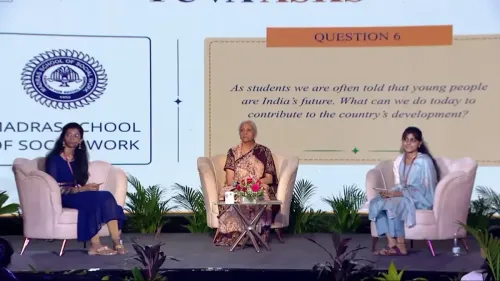
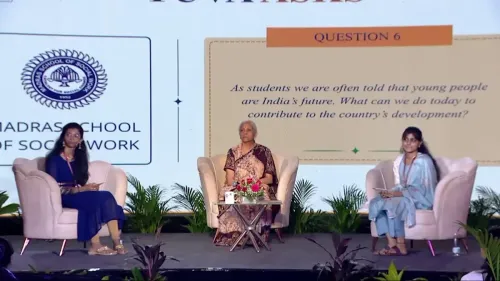
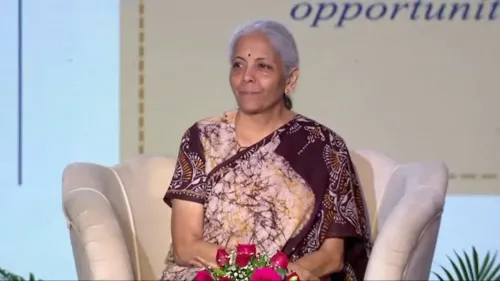
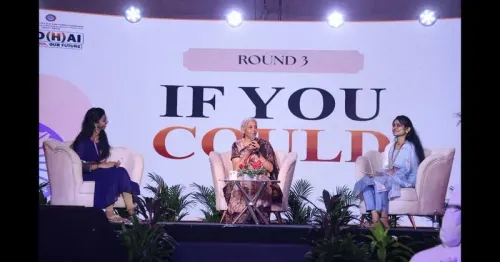
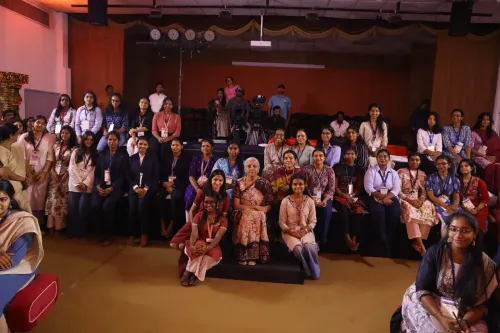
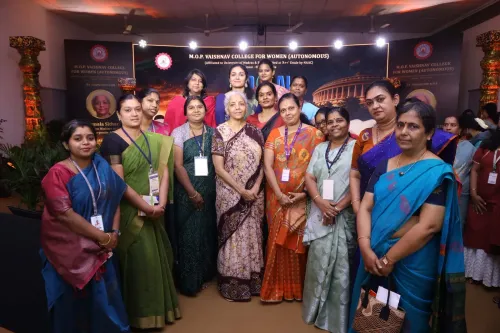
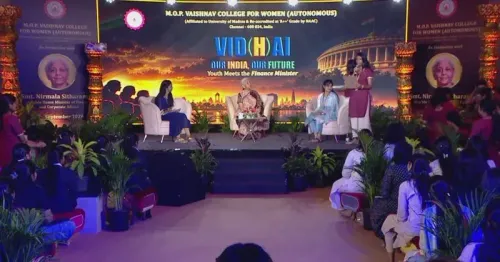
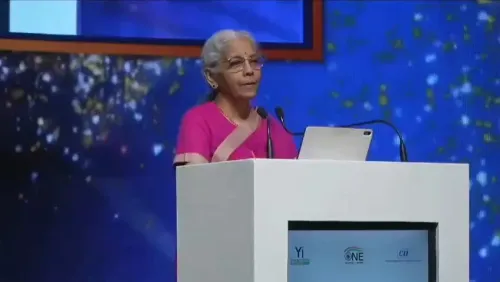
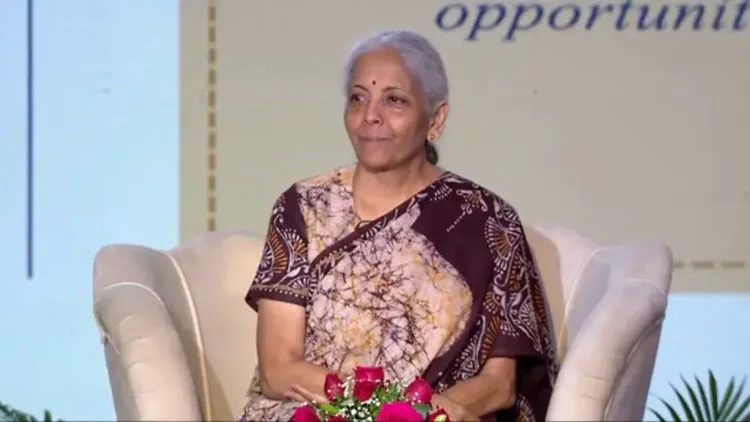
Finance Minister Nirmala Sitharaman addressed college girls at an interaction in Chennai, Tamil Nadu on 25 September 2026 , speaking in Tamil.
She said failure does not discriminate and that wholehearted effort succeeds 'ninety per cent of the time.' Sitharaman highlighted women-specific government schemes and facilities, urging students to tap into them.
Key schemes include Beti Bachao Beti Padhao (launched 2015 ) and Stand Up India (launched 2016 ), which provides loans to women entrepreneurs.
She framed the current moment as 'the very best time' for women to strive and achieve, placing the decision firmly on the students themselves.
Failure does not discriminate — and neither should ambition. That was the core message Union Finance Minister Nirmala Sitharaman delivered to college girls in Chennai, Tamil Nadu, on Friday, 25 September 2026, during an interactive session that blended frank personal counsel with a pointed reminder of the policy scaffolding now in place for Indian women.
Speaking in Tamil, the Finance Minister said: 'தோல்வி மனிதர்களிடையே பாகுபாடு பார்ப்பதில்லை' — 'Failure does not discriminate between people; even if it frightens us, we must not stop trying.' She urged the students to pursue their goals wholeheartedly and with good intent, adding that 'ninety per cent of the time, such effort ends in success.'
A Push Past Hesitation
The message carried a deliberate edge. Sitharaman did not just offer encouragement — she placed the decision squarely back on the young women in the room: 'The person who has to take that decision is you.' In a society where women still routinely cite self-doubt and social pressure as barriers to enterprise and higher education, that directness landed as a challenge, not a comfort.
She pointed to the breadth of women-specific schemes and facilities now available: 'There are numerous dedicated programmes and facilities allocated exclusively for women today.' The timing is not accidental — successive Union Budgets since 2014 have carried dedicated allocations for women in education, entrepreneurship, and safety, and the Finance Minister, as the architect of recent budgets, has a direct stake in seeing those provisions used.
Schemes Behind the Speech
Two flagship programmes underpin the ministerial pitch. The Beti Bachao Beti Padhao scheme, launched in 2015, was designed to improve child sex ratios and expand access to education for girls. The Stand Up India scheme, launched in 2016, provides bank loans specifically to women and SC/ST entrepreneurs — a direct lever for anyone in the audience considering starting a business rather than seeking employment.
The Chennai session fits a wider pattern of ministerial outreach in southern states, often conducted in regional languages to cut through the Delhi-to-district translation gap. By addressing students in Tamil, Sitharaman signalled that these programmes are not just national headline commitments — they are meant to be accessed by a student sitting in a college hall in Chennai.
Why 'Now' Is the Word She Chose
The Finance Minister's closing line carried the session's sharpest point: 'I would say this is the very best moment to strive and achieve.' That 'now' does real work. It tells these young women that the policy architecture, the awareness, and the cultural momentum are aligned in a way they have not always been. The bet is that enough of them will take her at her word.
Whether that translates into measurable uptake of women-centric schemes in Tamil Nadu — or into a Budget line that deepens those allocations — is the question the next fiscal cycle will answer.
Point of View
Such engagements also serve as feedback loops — the minister hears ground-level barriers first-hand, which can inform allocations. The rhetoric of individual courage layered over structural support is a consistent BJP framing: government provides the scaffold, the citizen climbs.
NationPress
25 Sept 2026
Frequently Asked Questions
What did Nirmala Sitharaman say to college girls in Chennai?
Sitharaman told college girls in Chennai on 25 September 2026 that failure does not discriminate, that wholehearted effort succeeds ninety per cent of the time, and that the current moment is the best time for women to strive and achieve.
Which government schemes for women did Sitharaman mention?
She pointed to numerous dedicated programmes and facilities for women, with key examples being Beti Bachao Beti Padhao (2015) for girls' education and Stand Up India (2016) for loans to women entrepreneurs.
What is the Beti Bachao Beti Padhao scheme?
Beti Bachao Beti Padhao is a central government scheme launched in 2015 to improve the child sex ratio and support girl child education and welfare across India.
What is the Stand Up India scheme and who benefits?
Stand Up India, launched in 2016, provides bank loans specifically to women and Scheduled Caste/Scheduled Tribe entrepreneurs to support new business ventures.
Why did Nirmala Sitharaman speak in Tamil at the Chennai event?
Addressing students in Tamil is part of a pattern of ministerial outreach in regional languages to ensure awareness of central government schemes reaches students in southern states directly and accessibly.