Sitharaman: India's trade pacts open doors for youth, IT and AI
Synopsis
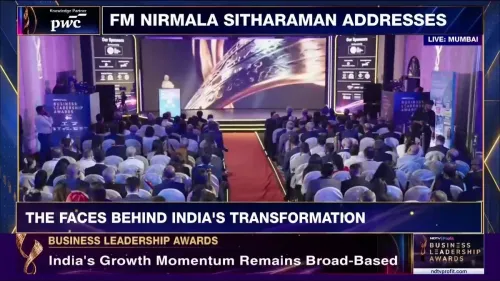
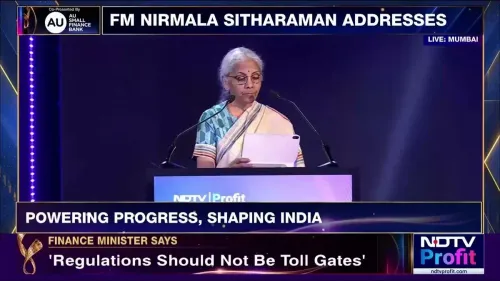
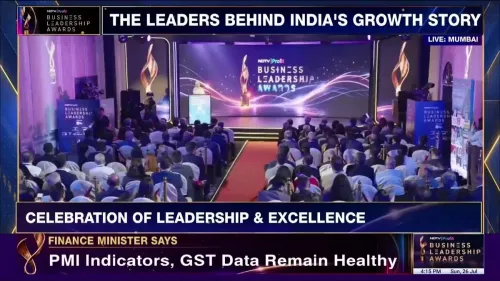
Finance Minister Nirmala Sitharaman, speaking at the NDTV Profit Business Leadership Awards 2026, said India's economic partnerships are built to open mobility pathways for students, IT professionals and digital services exporters, anchored by the Aatmanirbhar Bharat framework.
Key Takeaways
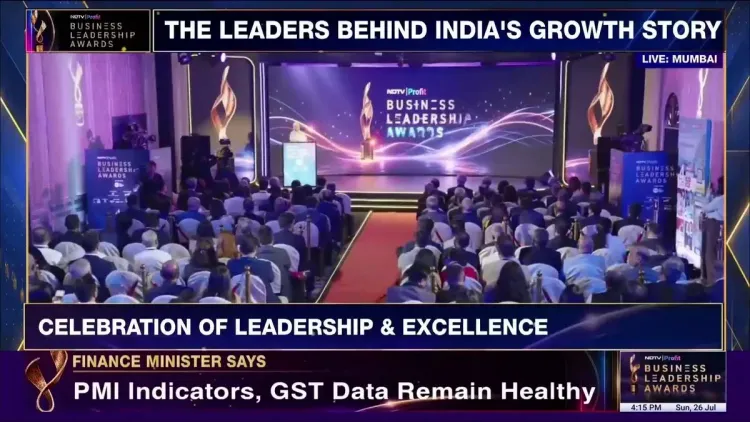
Finance Minister Nirmala Sitharaman addressed the NDTV Profit Business Leadership Awards 2026 on 26 July 2026 .
She said India's economic partnerships offer 'clear mobility pathways' for students, IT professionals, chefs and yoga instructors, including post-study work visas and social security relief.
The minister framed digital services and AI as key sectors these partnerships are designed to power.
India's trade strategy is explicitly anchored to Aatmanirbhar Bharat , balancing self-reliance with global openness.
Pending UK and EU free trade agreements, including mutual recognition of qualifications and totalisation pacts, remain the next major milestones.
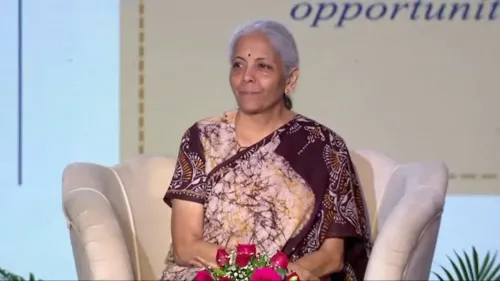
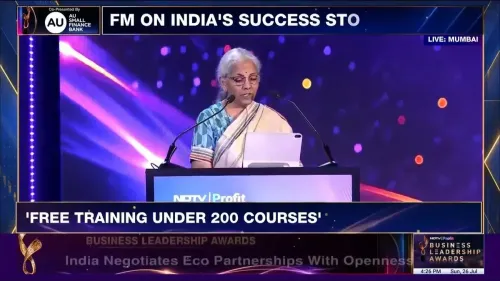
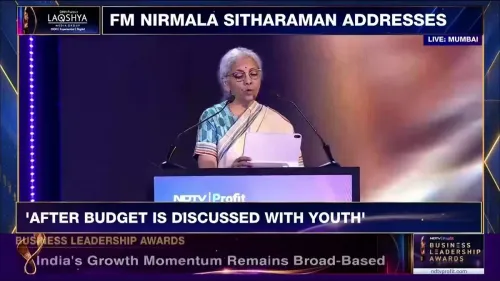
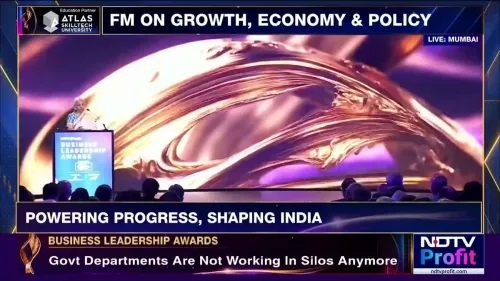
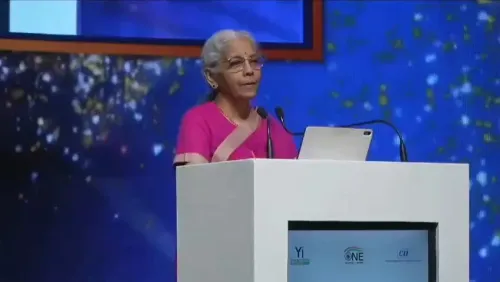
Union Finance Minister Nirmala Sitharaman on Sunday, 26 July 2026 said India's economic partnerships are designed to benefit young Indians, students, IT professionals and digital services exporters, while remaining anchored to the principle of Aatmanirbhar Bharat. She made the remarks while speaking at the NDTV Profit Business Leadership Awards 2026 in what was the second part of her address at the event.
Context
Sitharaman outlined a broad vision of who India's trade and economic partnerships are meant to serve. 'They are for talent — young Indians, our students, IT professionals, chefs, yoga instructors who now have choices and clear mobility pathways to work, to study and to build futures supported by post-study work visas, mobility and social security relief,' she said. The remarks signal a deliberate effort to frame India's international economic engagements not merely as government-to-government deals, but as instruments of opportunity for ordinary citizens and skilled workers.
She also highlighted the role of these partnerships in powering digital services and India's growing contribution to the world's artificial intelligence ecosystem, as well as their function in catalysing inbound and outbound investment.
Policy Backdrop
India has pursued a series of bilateral economic agreements that combine goods market access with services chapters, temporary movement of professionals, and investment facilitation. The Economic Cooperation and Trade Agreement with Australia, signed in April 2022, and the Comprehensive Economic Partnership Agreement with the UAE, implemented in May 2022, both incorporated provisions on mobility for skilled workers — a template that subsequent negotiations have built upon.
The overarching framework for these engagements is Prime Minister Narendra Modi's Aatmanirbhar Bharat Abhiyan, launched in May 2020, which seeks to promote domestic manufacturing and innovation while remaining open to strategic global trade linkages. Sitharaman's framing — 'openness, balance and our national priority of an Aatmanirbhar Bharat' — reflects this dual mandate of self-reliance alongside active international engagement.
India's comparative strengths in information technology, professional services, and creative sectors such as yoga and culinary arts have increasingly been embedded as explicit chapters in trade negotiations, allowing Indian professionals to access post-study work visas and social security totalisation benefits in partner countries.
Stakeholders and Impact
The beneficiaries Sitharaman named span a wide spectrum: students seeking post-study work rights abroad, IT professionals requiring smoother inter-country mobility, and niche skilled workers such as chefs and yoga instructors whose services are in demand globally. Social security relief — typically achieved through totalisation agreements that prevent double contributions — is a long-standing demand of the Indian diaspora and mobile workforce.
For the digital services sector, the minister's reference to 'powering the world's AI' underscores India's ambition to position itself as a critical node in the global artificial intelligence supply chain — from data annotation and software development to cloud infrastructure and AI model deployment. Investment facilitation chapters in these agreements are expected to attract capital into these high-growth segments.
What's Next
Attention will now turn to the progress of pending free trade agreement negotiations with the United Kingdom and the European Union, both of which include contentious chapters on the mutual recognition of professional qualifications and social security totalisation. Sitharaman's public articulation of the human-benefit case for these deals may be read as an effort to build domestic consensus for agreements that have faced prolonged negotiation timelines. The minister's emphasis on 'clear mobility pathways' suggests that services and talent mobility will remain non-negotiable priorities in any final texts.
Point of View
She is broadening the political constituency for trade liberalisation beyond the corporate sector. This framing also serves a strategic purpose: building domestic legitimacy for sensitive concessions, particularly on mobility and services, that are central to the stalled UK and EU FTA talks. The invocation of Aatmanirbhar Bharat alongside 'openness and balance' signals that the government sees no contradiction between self-reliance and deep global integration — a position it will need to defend as negotiations intensify.
NationPress
25 Oct 2026
Frequently Asked Questions
What did Nirmala Sitharaman say about India's trade agreements?
Sitharaman said India's economic partnerships create clear mobility pathways for young Indians, including students, IT professionals, chefs and yoga instructors, with benefits such as post-study work visas and social security relief, while also powering digital services and AI and catalysing investment.
What is Aatmanirbhar Bharat and how does it relate to trade deals?
Aatmanirbhar Bharat is Prime Minister Modi's self-reliance initiative launched in May 2020. Sitharaman has framed it as compatible with global trade engagement, describing India's partnerships as negotiated with 'openness, balance' and this national priority at their core.
Who benefits from India's economic partnerships according to Sitharaman?
According to Sitharaman, the beneficiaries include young Indians, students seeking post-study work rights, IT professionals needing mobility, niche skilled workers like chefs and yoga instructors, digital services exporters, and investors.
What are post-study work visas and why are they significant for Indians?
Post-study work visas allow international students to remain in a partner country and work for a defined period after completing their degree. For Indian students, these provisions — now being embedded in bilateral trade agreements — reduce uncertainty and expand career options abroad.
Which India trade agreements are currently pending?
Free trade agreement negotiations with the United Kingdom and the European Union are ongoing, with key unresolved issues including mutual recognition of professional qualifications and social security totalisation agreements for mobile workers.