Sitharaman wears Mekhela Chador, champions handloom on National Day
Synopsis
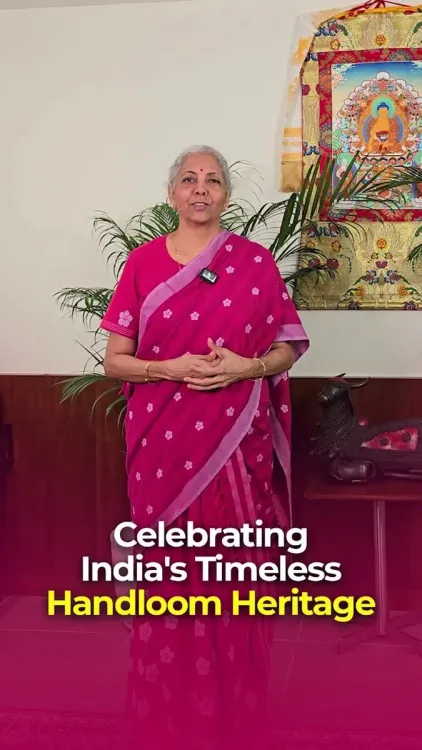
On National Handloom Day, Union Finance Minister Nirmala Sitharaman wore an Assamese Mekhela Chador and appealed to Indians to support handloom and the weaving families behind it, linking the observance to the 1905 Swadeshi Movement and PM Modi's 2015 declaration.
Key Takeaways
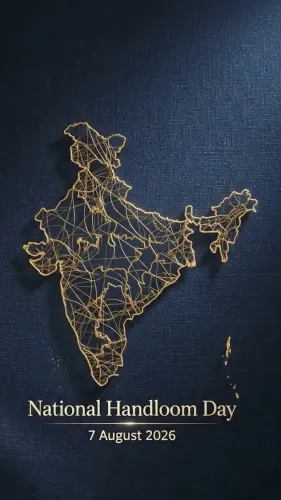
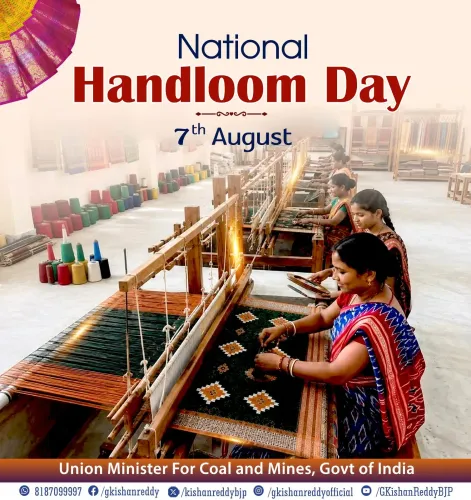
National Handloom Day is observed every year on 7 August , the anniversary of the 1905 Swadeshi Movement launch.
PM Narendra Modi formally instituted the observance in 2015 .
Finance Minister Nirmala Sitharaman chose to wear an Assamese Mekhela Chador — available in both silk and cotton — to mark the day.
Sitharaman issued a direct public appeal to support handloom products and the rural weaving families who produce them.
Every Indian state has a distinct handloom tradition; the sector is a major source of rural artisan income.
A garment woven by hand carries more than thread — it carries a family's livelihood. On National Handloom Day, 7 August, Union Finance Minister Nirmala Sitharaman stepped out in an Assamese Mekhela Chador and turned a personal wardrobe choice into a pointed public appeal: buy handloom, back the weavers.
From the Swadeshi bonfire of 1905 to a calendar date in 2015
The day is not arbitrary. 7 August 1905 is when the Swadeshi Movement ignited — a mass campaign against the partition of Bengal that saw Indians publicly burn foreign cloth and pledge allegiance to indigenous textiles. That act of defiance became the emotional anchor for the observance. Prime Minister Narendra Modi formally instituted National Handloom Day in 2015, linking the modern push for self-reliance directly to that century-old moment of resistance.
Why the Mekhela Chador, and why it matters
Assam's signature two-piece drape — the Mekhela Chador — is woven in both silk and cotton, and its patterns are as distinct as fingerprints depending on the weaving family and the district. By choosing it on this particular day, Sitharaman spotlighted a tradition that stretches across nearly every state in India: 'Har rajya ki ek samriddh bunai parampara hai' (every state has a rich weaving tradition). The gesture is deliberate — a Finance Minister's wardrobe is a policy signal as much as a personal one.
The weaver behind every thread
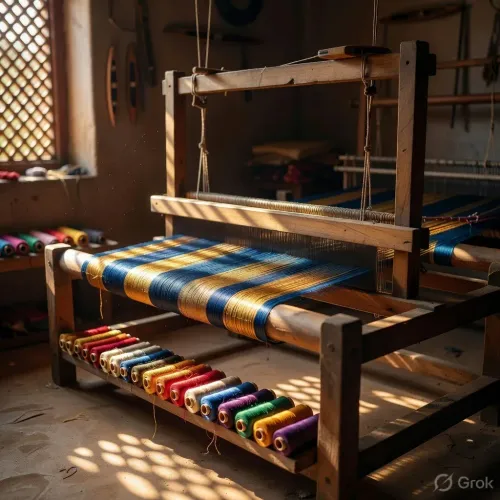
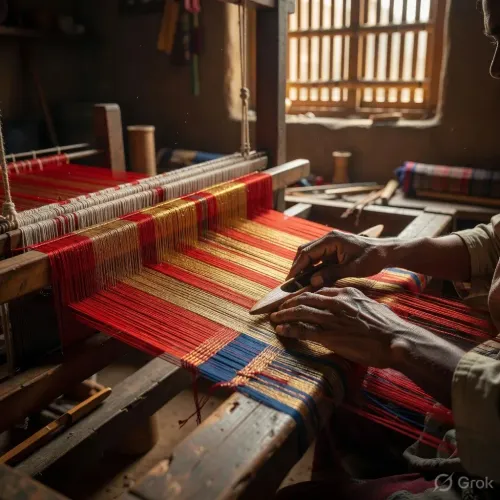
Sitharaman's appeal was direct: 'Whether silk or cotton, every handloom speaks of the families who weave them for us.' Handloom weavers — largely rural, often working on pit looms in their homes — represent one of India's largest artisan workforces. The sector sits at the intersection of cultural heritage and rural income, and annual observances like this one form a consistent thread in government messaging around indigenous production and artisan self-reliance.
One minister in a Mekhela Chador will not transform the sector overnight. But a Finance Minister making the appeal — to a national audience, on a day that traces its roots to an act of economic defiance — is a reminder that the loom is still political, and the families behind it are still waiting for the market to catch up.
Point of View
Acknowledging the Northeast's textile heritage at a moment when the Centre has invested politically in the region. The annual National Handloom Day has become a reliable vehicle for linking the BJP's self-reliance narrative back to the Swadeshi Movement, appropriating a Congress-era historical moment for contemporary political branding. Whether the symbolic push translates into measurable gains for weavers depends on procurement policy and e-commerce access — areas where announcements have historically outpaced delivery.
NationPress
7 Aug 2026
Frequently Asked Questions
What is National Handloom Day and when is it celebrated?
National Handloom Day is observed on 7 August every year to honour India's handloom sector and its weavers. The date marks the launch of the Swadeshi Movement on 7 August 1905, and PM Modi formally instituted the observance in 2015.
Why did Nirmala Sitharaman wear a Mekhela Chador on National Handloom Day?
Sitharaman wore the Assamese Mekhela Chador as a deliberate gesture to promote handloom traditions and draw attention to the weaving families who produce traditional textiles across India.
What is a Mekhela Chador?
The Mekhela Chador is a traditional two-piece drape from Assam , woven in silk or cotton, and is one of the most recognised handloom garments in Northeast India.
What was the Swadeshi Movement of 1905?
The Swadeshi Movement began on 7 August 1905 as a campaign against the British partition of Bengal. It promoted indigenous Indian goods — especially handloom textiles — as an act of economic and political resistance.
How can Indians support handloom weavers?
Sitharaman's appeal was straightforward: buy handloom products — whether silk or cotton — directly supporting the rural weaving families who produce them. Government initiatives and textile expos also periodically provide platforms for weavers to reach wider markets.