What Did FM Sitharaman Discuss About the India-EU FTA and Investments in Germany?
Synopsis
In her recent visit to Germany, Finance Minister Nirmala Sitharaman engaged in pivotal discussions with top leaders regarding the India-EU Free Trade Agreement. This meeting aimed to enhance trade relations and expand partnerships in various sectors including manufacturing and technology, showcasing India's commitment to global economic integration.
Key Takeaways
Strengthening bilateral trade relations with the EU.
Focus on manufacturing and technology advancement.
Emphasis on India's Digital Payment systems .
Plans for EU banks to establish branches in India .
Collaboration on climate change initiatives.
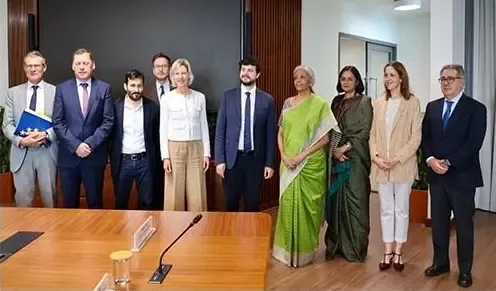
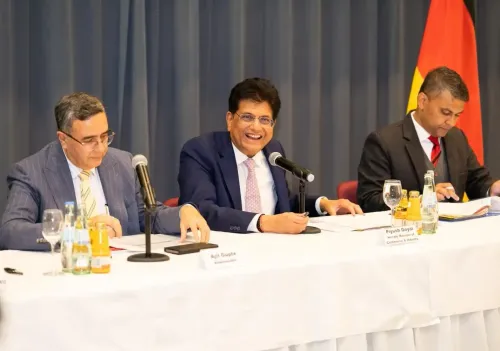
New Delhi, Feb 15 (NationPress) Finance Minister Nirmala Sitharaman engaged with prominent leaders and industry figures during her visit to Germany to discuss bilateral trade relations concerning the EU-India FTA agreement. The discussions aimed at enhancing cooperation across various sectors, including manufacturing, technology, and agriculture, as stated by the Finance Ministry on Sunday.
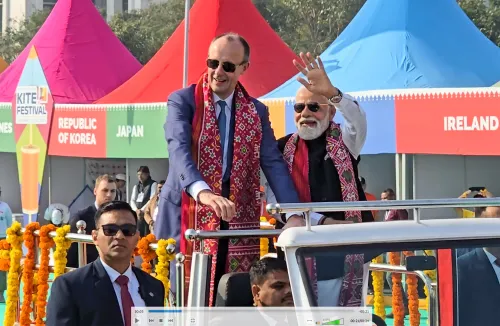
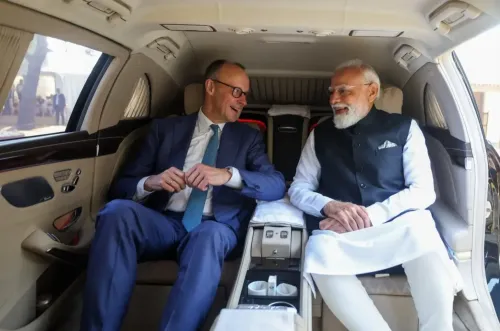
During her meeting with Lars Klingbeil, the Vice Chancellor and Federal Minister of Finance in Germany, Sitharaman highlighted the significance of the recent meeting between Prime Minister Narendra Modi and Federal Chancellor Friedrich Merz in India last January, which reinforced ties, particularly in defence, trade, and technology.
Merz's official visit to India took place on January 12-13, where he was accompanied by a high-profile delegation of 23 esteemed German CEOs and industry leaders.
Klingbeil emphasized that the Free Trade Agreement (FTA) represents a crucial advancement for trade and investment in India, focusing on bilateral development cooperation and the expansion of Metro rail systems in India, as noted in a post on X by the Finance Ministry.
Sitharaman informed Klingbeil about the achievements of India's Digital Payment Systems and expressed a desire to share insights on India's digital architecture with Germany.
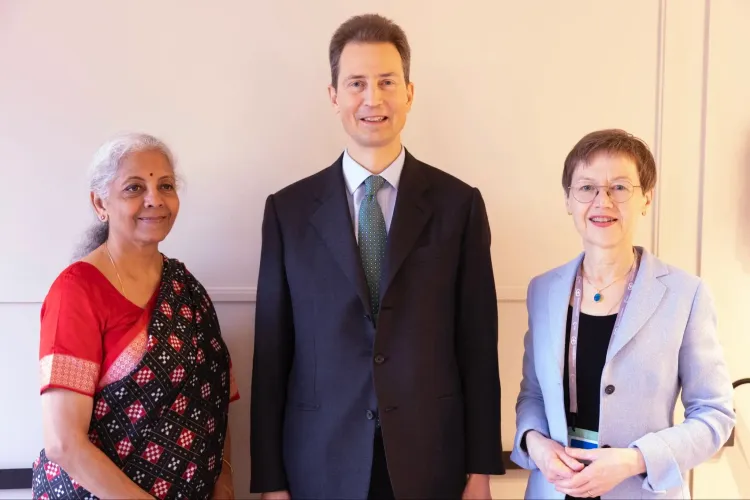
Additionally, she held discussions with Brigitte Haas, the Prime Minister of Liechtenstein, and Alois Philipp Maria, the Hereditary Prince of Liechtenstein in Munich. They deliberated on ongoing investments by Liechtenstein firms in India and the potential for further collaboration in areas such as manufacturing, eco-friendly technology, agricultural equipment, and climate change.
In a meeting with Christine Lagarde, President of the European Central Bank, they acknowledged the expected conclusion of the India-EU Free Trade Agreement by January 2026. Sitharaman emphasized the significant role the European Central Bank could play in facilitating trade under this agreement.
Furthermore, she indicated that through the Union Budget for FY2025-26 and FY 2026-27, India will permit EU banks to establish up to 15 branches over a span of four years within the framework of the India-EU FTA.
Earlier, she met Oliver Zipse, Chairman of the Board of Management at BMW AG, where they discussed the opening of India's economy in light of recent reforms, emphasizing policy stability and continuity.
Point of View
It is crucial to recognize the significance of Finance Minister Nirmala Sitharaman's discussions in Germany. These engagements not only strengthen bilateral relations but also underscore India's proactive approach in enhancing partnerships with global leaders, ultimately benefiting the nation's economic landscape.
NationPress
29 Sept 2026
Frequently Asked Questions
What is the significance of the India-EU FTA?
The India-EU Free Trade Agreement aims to bolster trade relations, reduce tariffs, and enhance investments between India and the EU, fostering economic growth and cooperation across various sectors.
Who did FM Sitharaman meet during her visit?
FM Sitharaman met several key leaders, including Lars Klingbeil, Brigitte Haas, Christine Lagarde, and Oliver Zipse, discussing significant topics related to trade and investment.
What sectors are being focused on in the discussions?
The discussions centered around manufacturing, technology, agriculture, and environmentally friendly technologies, indicating a broad scope of collaboration.