Mumbai's Kandivali Launches Skill Training for Cobblers to Boost Income

Synopsis
A skill development program in Mumbai's Kandivali is transforming the lives of traditional cobblers by providing modern training that significantly enhances their income potential. This initiative, backed by the government, aims to empower artisans and integrate their skills with industry demands.
Key Takeaways
Skill development initiative launched to empower traditional cobblers.
Participants trained in modern footwear manufacturing techniques.
Program aims to boost employment and income for marginalized communities.
Trainers from the Central Footwear Training Institute provided expertise.
Significant income increase reported by participants post-training.
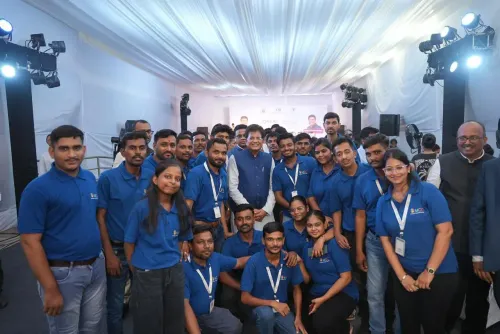
Mumbai, February 24 (NationPress) A dedicated skill development training initiative aimed at the leather artisans’ community took place at the Atal Bihari Vajpayee Skill Development Centre located in Kandivali (East), Mumbai. This initiative was launched under the guidance of Prime Minister Narendra Modi and Union Minister Piyush Goyal, with the objective of empowering traditional workers through modern technical training, thereby enhancing their employment prospects.
This program, which ran from January 27 to February 24, focused on uplifting disadvantaged groups involved in traditional trades and provided practical training for 20 participants.
Sessions were led by skilled trainers Devendra Tiwari and Mithun Kumar Singh from the Central Footwear Training Institute in Agra. Participants learned to craft Derby boots, stitched men's footwear, and women's shoes, merging traditional skills with modern production methods.
Officials indicated that this initiative aims to create sustainable work opportunities and economically uplift communities historically reliant on informal street-side jobs.
Mithun Kumar Rajput, one of the trainers from the institute, expressed appreciation for the program, noting that it represents a pivotal advancement in leather footwear technology training in Mumbai.
“Previously, our 20 trainees were limited to roadside cobbling. They are now equipped to independently create shoes, sandals, and slippers. Their earning potential has significantly increased—by four to six times compared to before,” he explained.
Participants shared the transformative effects of the training. Ramchandra Ahire, one of the attendees, mentioned that many workers previously depended solely on footpath cobbling to support their families.
“Upon learning about the opening of a 25-day training program here, we immediately decided to enroll. We gained skills in making new shoes and slippers,” he added, emphasizing that these new abilities could greatly enhance their income and working conditions.
This program is part of wider efforts to combine traditional craftsmanship with contemporary industry demands, enabling workers from marginalized communities to transition from informal labor to more structured and lucrative careers.
Point of View
This initiative reflects a commendable effort to enhance the livelihoods of traditional leather workers. By integrating modern skills with age-old craftsmanship, the program not only fosters self-reliance but also revitalizes the local economy, ensuring that marginalized communities can thrive in today's market.
NationPress
7 Oct 2026
Frequently Asked Questions
What is the primary goal of the skill development program?
The primary goal is to empower traditional leather workers with modern technical skills to enhance their income and employment opportunities.
Who conducted the training sessions?
The training sessions were conducted by expert trainers from the Central Footwear Training Institute in Agra.
How long did the training program last?
The training program lasted for 25 days, from January 27 to February 24.
What types of footwear did participants learn to manufacture?
Participants learned to manufacture Derby boots, men's stitched footwear, and women's shoes.
How has the training impacted the participants' income?
Participants have reported that their earning potential has increased by four to six times compared to their previous income.