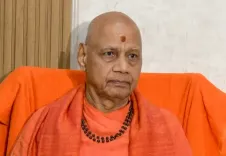
Pralhad Joshi Hails Slovakia's Top Honour for PM Modi
Synopsis
Union Consumer Affairs Minister Pralhad Joshi welcomed the Slovak Republic conferring its highest state honour, the Order of the White Double Cross (1st Class), on PM Narendra Modi, calling it recognition of his leadership in advancing India-Europe ties and signalling new momentum for bilateral cooperation.
Key Takeaways
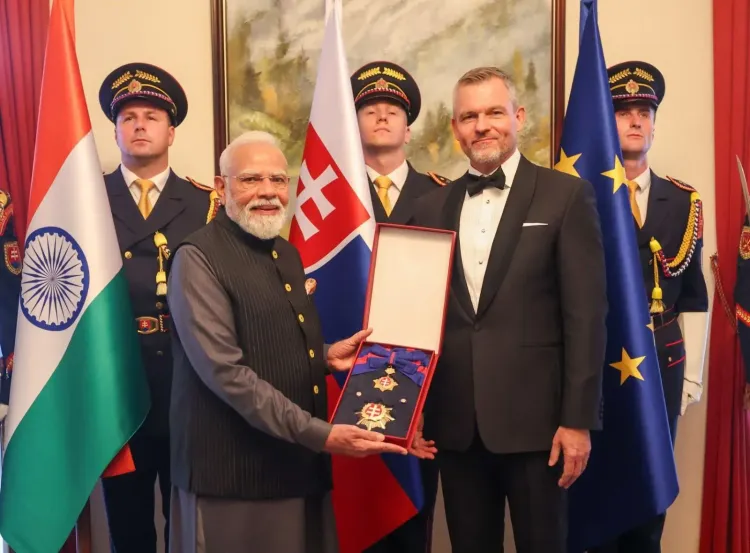
The Order of the White Double Cross (1st Class) is the highest state honour of the Slovak Republic , conferred on PM Narendra Modi .
Union Minister Pralhad Joshi publicly welcomed the honour on June 16, 2026 , calling the accompanying visit 'historic.' India and Slovakia have maintained diplomatic relations since 1993 , following the dissolution of Czechoslovakia.
The visit is expected to open new avenues in trade, innovation, and people-to-people exchanges between the two nations.
The development aligns with India's broader strategy of deepening engagement with Central and Eastern European EU member states.
Follow-up announcements on MoUs in IT, defence manufacturing, or green energy are being closely watched.
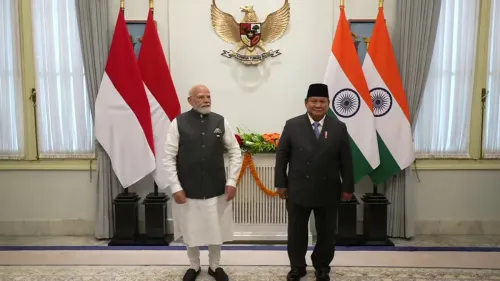
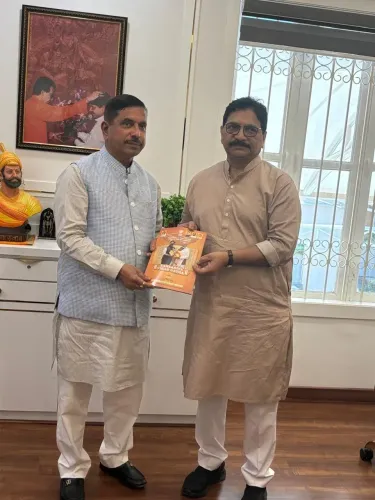
Union Consumer Affairs Minister Pralhad Joshi on Tuesday, June 16, 2026, welcomed the conferment of The Order of the White Double Cross (1st Class) — the highest state honour of the Slovak Republic — upon Prime Minister Narendra Modi, calling it a recognition of his 'visionary leadership in deepening the India-Slovakia partnership and advancing India's engagement with Europe.'
Context
The Order of the White Double Cross (1st Class) is Slovakia's most prestigious state decoration, awarded for exceptional contributions to bilateral relations or international cooperation. PM Modi's receipt of the honour marks a significant moment in the diplomatic calendar between New Delhi and Bratislava, accompanying what Minister Joshi described as a 'historic visit' to the Central European nation.
Joshi stated that the honour, 'coupled with the historic visit, will further strengthen bilateral ties and unlock new avenues of cooperation, trade, innovation and people-to-people exchanges between our two nations.'
Policy Backdrop
India and the Slovak Republic established formal diplomatic relations in 1993 following the dissolution of Czechoslovakia — an event known as the Velvet Divorce. Since then, ties have grown steadily, though the relationship has historically operated at a lower intensity compared to India's engagement with larger EU economies such as Germany and France.
High-level visits by Indian prime ministers to Central and Eastern Europe have increasingly become a feature of India's multi-alignment foreign policy, aimed at broadening strategic and economic partnerships across the continent. Such visits typically generate momentum for discussions on trade, technology transfer, defence manufacturing, and green energy cooperation.
Stakeholders and Impact
The visit and the accompanying honour are expected to energise trade negotiators and innovation partners on both sides. Slovakia, as a member of both the European Union and NATO, occupies a strategically relevant position in Central Europe, making deeper engagement with it part of India's broader outreach to the EU bloc.
People-to-people exchanges — including academic, cultural, and diaspora linkages — are also flagged as an area of potential growth. Senior ministers across the BJP-led government echoing the visit's significance signals coordinated diplomatic messaging from New Delhi.
What's Next
Observers will watch for follow-up announcements on any new Memoranda of Understanding in sectors such as information technology, defence manufacturing, or green energy that may emerge from the visit. The conferment of a state honour of this stature typically precedes or accompanies substantive bilateral agreements.
India's engagement with Central and Eastern Europe is likely to deepen further as New Delhi seeks to complement its ties with major EU economies and position itself as a key partner for the broader European bloc in trade and strategic affairs.
Point of View
Such honours serve a dual purpose: reinforcing PM Modi's global stature domestically while opening doors to deeper economic and strategic partnerships with EU member states. Central and Eastern Europe has long been an underleveraged frontier in India's European outreach, and high-profile visits backed by state honours can accelerate that shift. The coordinated ministerial messaging from figures like Joshi suggests New Delhi is treating this visit as a milestone worth amplifying across the political establishment.
NationPress
15 Sept 2026
Frequently Asked Questions
What is the Order of the White Double Cross awarded to PM Modi?
The Order of the White Double Cross (1st Class) is the highest state honour of the Slovak Republic, conferred for exceptional contributions to bilateral relations or international cooperation. PM Narendra Modi received this honour during his visit to Slovakia in June 2026.
Why did Slovakia give PM Modi its highest honour?
Slovakia conferred the honour in recognition of PM Modi's leadership in deepening India-Slovakia ties and advancing India's broader engagement with Europe, as noted by Union Minister Pralhad Joshi.
When did India and Slovakia establish diplomatic relations?
India and Slovakia established formal diplomatic relations in 1993, following the dissolution of Czechoslovakia in what is known as the Velvet Divorce.
What is the significance of PM Modi's visit to Slovakia?
The visit is described as 'historic' by senior Indian ministers and is expected to unlock new cooperation in trade, innovation, and people-to-people exchanges, with potential MoUs in IT, defence manufacturing, and green energy.
What did Pralhad Joshi say about PM Modi's Slovakia honour?
Minister Pralhad Joshi said the honour was a recognition of PM Modi's 'visionary leadership' and that the visit would 'strengthen bilateral ties and unlock new avenues of cooperation, trade, innovation and people-to-people exchanges' between India and Slovakia.