Smriti Irani backs India-UK education ties at New Delhi event
Synopsis
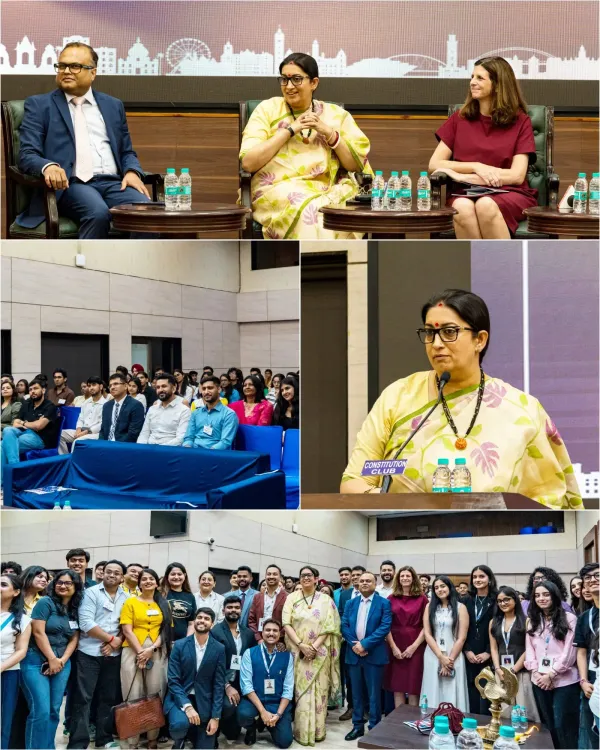
BJP leader Smriti Irani attended the INSA UK event in New Delhi on 28 July 2026, calling for India-UK collaboration in education, research, skills and innovation to move beyond knowledge exchange toward strategic economic investment for both nations.
Key Takeaways
Smriti Irani participated in the INSA UK event in New Delhi on 28 July 2026 , meeting students and British Council leadership.
Discussions focused on preparing students for a globally interconnected world through innovation, adaptability and purposeful leadership.
The UK-India Education and Research Initiative (UKIERI) , launched in 2006 , forms the foundational bilateral framework for such partnerships.
India's National Education Policy 2020 explicitly supports international academic collaborations, credit transfers and foreign university campuses.
Irani framed global educational exposure as a strategic economic investment, not merely a cultural exchange.
The next India-UK bilateral summit or education ministerial meeting will be key to watch for new MoUs on research funding or qualification recognition.
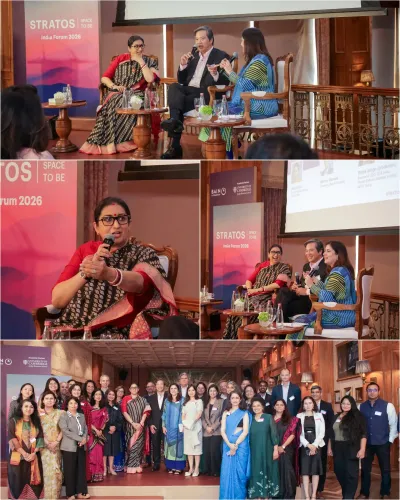
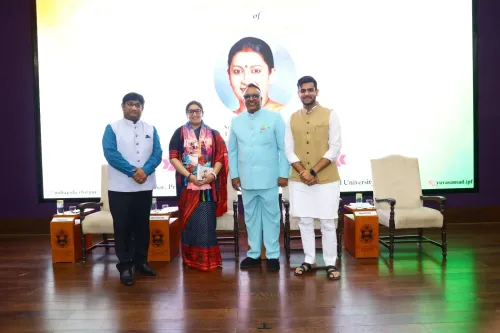
At a gathering in New Delhi on 28 July 2026, BJP leader Smriti Irani sat across from students, British Council leadership, and education stakeholders to map what a deeper India-UK academic partnership could look like — and the conversation, by her account, went well beyond the ceremonial.
Irani, a former Union Minister who has navigated both education and skills portfolios over her political career, described the discussions at the INSA UK event as centred on 'preparing the next generation for an increasingly interconnected world, where academic excellence must be complemented by innovation, adaptability and purposeful leadership.' The framing was deliberate: not student exchange as goodwill gesture, but as strategic investment.
Two decades of India-UK academic architecture
The conversation Irani joined did not start in 2026. The UK-India Education and Research Initiative (UKIERI), launched in 2006, has spent two decades building the institutional scaffolding — joint research, student mobility, faculty links — that makes events like this possible. The British Council has been a consistent implementing partner across successive Indian governments, regardless of which party held power in New Delhi.
India's National Education Policy 2020 gave this bilateral architecture fresh momentum by explicitly encouraging international collaborations, credit transfers, and foreign university campuses on Indian soil. The policy effectively signalled that global academic partnerships were no longer peripheral — they were structural.
Why 'global exposure' is being reframed as economic strategy
Irani's sharpest line was also her most consequential: that global exposure should be 'not merely an exchange of knowledge, but an investment in creating solutions, expanding opportunity and building lasting value for both our nations.' That is a direct pivot from soft-power language to economic framing — and it reflects a broader shift in how successive Indian governments have positioned education partnerships with the UK.
The stakes are real. India's higher education system serves hundreds of millions of students, and skills gaps in emerging sectors remain a persistent policy challenge. Deeper collaboration with UK institutions in research, skills and innovation — the three pillars Irani named — could accelerate qualification recognition and research funding flows, two areas where progress has historically been slow.
The next India-UK bilateral summit or education ministerial meeting will be the moment to watch: whether the conversations in rooms like this one translate into new MoUs with teeth, or remain aspirational frameworks, will define the partnership's next chapter.
Point of View
Using bilateral education partnerships as both soft-power and economic instruments. Her reframing of student exchange as 'investment in solutions' rather than cultural goodwill signals a maturation in how Indian political leaders articulate the value of international academic ties. With NEP 2020 providing the domestic policy runway, the real test is whether this diplomatic energy converts into binding agreements on qualification recognition and research co-funding — areas where ambition has repeatedly outpaced delivery. The British Council's sustained presence across governments of all stripes suggests the institutional appetite is there; political will on both sides will determine the pace.
NationPress
28 Jul 2026
Frequently Asked Questions
What is the INSA UK event that Smriti Irani attended?
The INSA UK event is a platform focused on India-UK academic and educational engagement. Irani attended its New Delhi edition on 28 July 2026 , meeting students and British Council leadership, though specific details of the event's agenda and full participant list have not been officially confirmed.
What is the UK-India Education and Research Initiative (UKIERI)?
The UK-India Education and Research Initiative (UKIERI) was launched in 2006 to build institutional links, support joint research and enable student mobility between India and the United Kingdom. It remains one of the primary bilateral frameworks for India-UK academic collaboration.
How does India's National Education Policy 2020 support international partnerships?
India's National Education Policy 2020 explicitly encourages international academic collaborations, credit transfers and the establishment of foreign university campuses in India, giving India-UK partnerships like those discussed at the INSA UK event a strong domestic policy foundation.
What role has the British Council played in India-UK education ties?
The British Council has been a consistent implementing partner in India-UK education initiatives across successive Indian governments, supporting student exchanges, institutional partnerships and cultural-educational programmes for decades.
What should we watch for next in India-UK education collaboration?
The next India-UK bilateral summit or education ministerial meeting is the key moment to watch, as it could produce new MoUs on research funding, skills development and qualification recognition — the concrete outcomes that would follow from conversations like those at the INSA UK event.