Smriti Irani Cites 'Two Proofs' of Congress Crushing Democracy

Synopsis
BJP leader Smriti Irani on June 26, 2026 — the Emergency anniversary — posted on X claiming 'two proofs' that Congress and its allies crushed the Constitution and democracy, reigniting a recurring BJP-Congress battle over India's democratic record.
Key Takeaways
Smriti Irani posted on X on June 26, 2026 , claiming 'two proofs' of Congress and allies crushing the Constitution and democracy.
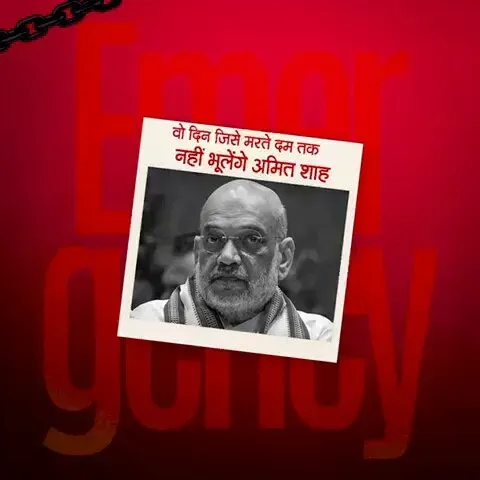
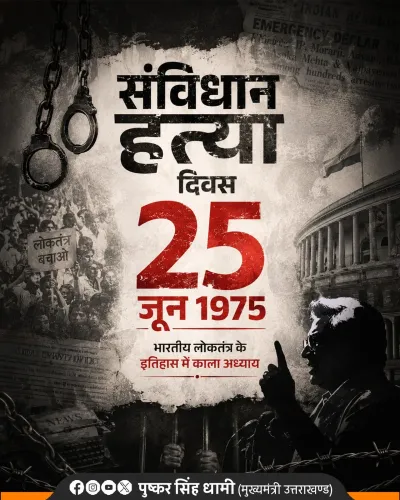
The post was timed to the anniversary of the 1975 National Emergency declared by Indira Gandhi under Article 352 .
The 21-month Emergency suspended fundamental rights, jailed opposition leaders, and censored the press.
The 42nd Constitutional Amendment (1976) passed during the Emergency expanded executive power and curtailed judicial review.
The specific 'two proofs' cited in the video accompanying the post have not been independently verified.
BJP routinely uses the Emergency anniversary to challenge Congress's democratic credentials, a pattern that recurs in Parliament and election campaigns.
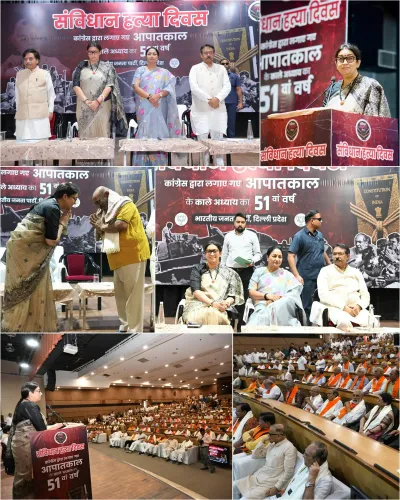
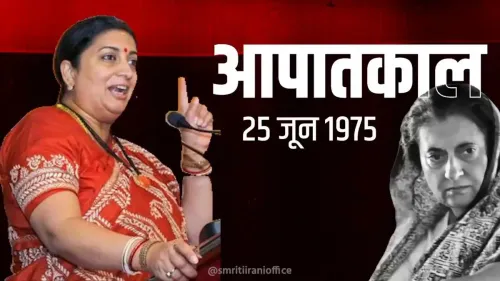
BJP leader Smriti Irani on Friday, June 26, 2026 took to X to level a sharp attack on the Indian National Congress and its allies, claiming she had 'two proofs' of how they had 'crushed the Constitution and democracy.' The post, shared on the anniversary of the 1975 Emergency, was accompanied by a video and written in Hindi.
In her post, Irani wrote: 'Kaangres parti aur unke sahyogi dalon ne Samvidhan aur loktantra ko kaise kuchla hai uske do pramaan...' ('Two proofs of how the Congress party and its allied parties have crushed the Constitution and democracy...'). While the specific evidence cited in the accompanying video has not been independently verified, the post is clearly timed to coincide with the anniversary of one of the most contested episodes in Indian political history.
Context
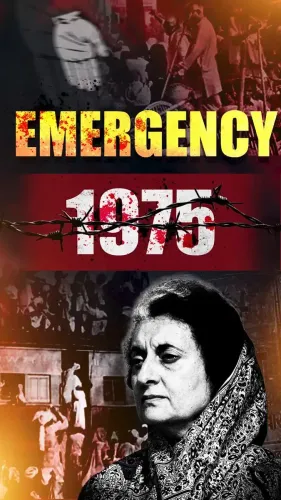
June 26 marks the anniversary of the proclamation of the National Emergency of 1975, declared by then Prime Minister Indira Gandhi under Article 352 of the Constitution. The 21-month Emergency (1975–1977) saw fundamental rights suspended, opposition leaders imprisoned, and the press subjected to censorship. It remains one of the most cited examples in Indian political discourse when questions of constitutional propriety are raised.
BJP and its predecessors have consistently invoked the Emergency as a defining indictment of Congress's democratic record. For Irani, a senior party voice and former Union Minister, the timing of the post reinforces that the party intends to keep this historical grievance central to its political messaging.
Policy Backdrop
The Emergency era also produced the 42nd Constitutional Amendment of 1976, which significantly expanded parliamentary powers and curtailed the scope of judicial review — changes that critics argue tilted the constitutional balance away from the citizen and toward the executive. Many of these provisions were later reversed or moderated by the Janata government through the 44th Amendment of 1978, but the episode continues to define how both sides frame debates on institutional independence.
Congress has consistently contested this framing, arguing that post-2014 governance has seen the use of central investigative agencies against opposition figures and the erosion of independent institutions. This counter-narrative forms the other side of a recurring axis of political rhetoric that surfaces in Parliament, election campaigns, and now, on social media.
Stakeholders and Impact
The post is directed at a broad audience: opposition parties, civil society, and voters who lived through or have studied the Emergency period. For BJP's base, such messaging reinforces a foundational argument about which party is the natural guardian of the Constitution. For the Congress and its allies, it represents a political attack that they are likely to rebut by pointing to contemporary governance concerns.
Citizens and constitutional scholars remain the ultimate stakeholders in this debate, as the competing claims touch on questions of press freedom, judicial independence, and the use of state power — issues that are as live today as they were in 1975.
What's Next
With the Emergency anniversary serving as an annual flashpoint, expect BJP leaders to sustain this line of attack through parliamentary sessions and any upcoming state assembly elections where democratic credentials become a campaign issue. Congress is expected to respond with its own counter-narrative around institutional autonomy and the conduct of central agencies. The debate over India's constitutional legacy — who protected it and who undermined it — is unlikely to recede from the political foreground anytime soon.
Frequently Asked Questions
What did Smriti Irani post about Congress on June 26 2026?
Smriti Irani posted on X on June 26, 2026, claiming she had 'two proofs' of how the Congress party and its allied parties had crushed the Constitution and democracy, sharing a video alongside the Hindi-language post.
Why is June 26 significant in Indian political history?
June 26 marks the anniversary of the 1975 National Emergency declared by Prime Minister Indira Gandhi , during which fundamental rights were suspended, opposition leaders were jailed, and the press was censored for 21 months .
What was the 42nd Constitutional Amendment?
The 42nd Constitutional Amendment , passed in 1976 during the Emergency, expanded parliamentary powers and curtailed judicial review. Many of its provisions were later reversed by the 44th Amendment of 1978 .
How does BJP use the 1975 Emergency in current politics?
BJP routinely cites the 1975 Emergency and related constitutional changes as evidence of Congress-era authoritarianism, deploying this argument in Parliament, election campaigns, and on social media, particularly around the June 26 anniversary.
What is Congress's response to BJP's Emergency accusations?
Congress counters by pointing to what it describes as the use of central investigative agencies against opposition figures and pressure on independent institutions under recent governments, framing itself as the defender of constitutional norms today.