Smriti Irani: Forces Dividing Society Are Enemies of India
Synopsis
BJP senior leader Smriti Irani on October 20, 2026 labelled forces that wound national honour, divide society, and hate Indian culture as 'enemies of the nation,' calling on citizens to unite and fight them collectively.
Key Takeaways
Smriti Irani posted a strongly worded statement in Hindi on October 20, 2026 via X.
She identified three categories of threat: forces hurting national honour, those dividing society, and those hostile to Indian culture.
All three were collectively labelled desh ke dushman — enemies of the nation.
Her closing call was for collective, united resistance against these forces.
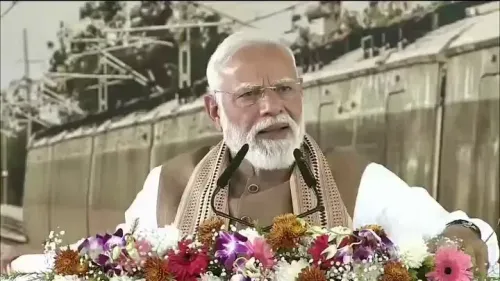
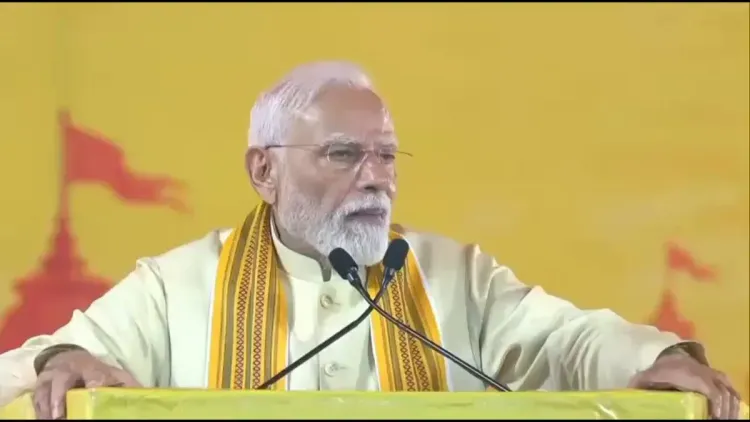
The post was accompanied by a video, suggesting a larger public address or event context.
No specific individual, party, or organisation was named in the statement.
They wound the nation's honour, fracture its social fabric, and nurse a hatred for its culture — BJP leader Smriti Irani named these forces plainly on Tuesday, October 20, 2026: enemies of the country, and ones that must be fought together.
In a sharply worded post in Hindi, Irani declared: 'देश के मान-सम्मान को चोट पहुंचाने वाली ताक़तें, समाज को बांटने वाले लोग, हमारी संस्कृति से नफरत करने की मानसिकता... ये देश के दुश्मन हैं।' — 'Forces that hurt the country's honour, people who divide society, the mentality that hates our culture... these are the enemies of the nation. We must unite and fight against them.'
Three Accusations, One Target
Irani's framing is deliberate and tripartite: those who attack national dignity, those who engineer social division, and those animated by cultural hostility. By bundling all three under a single label — desh ke dushman, enemies of the nation — she issues a call to collective action rather than a critique aimed at any one political actor by name.
The language is combative but structurally broad, a rhetorical posture that allows the charge to land across multiple registers at once: electoral, civilisational, and moral.
The Appeal to Unity as a Political Instrument
The closing line — 'हमें देश के दुश्मनों के साथ, मिलकर लड़ना होगा', 'We must fight together against the enemies of the nation' — is the post's real payload. It is an invitation to solidarity, casting the struggle not as a partisan contest but as a national obligation that transcends party lines.
This framing is a well-worn but potent tool in Indian political discourse: defining the opposition not as a rival ideological bloc but as an existential threat, thereby repositioning one's own side as the default patriotic choice.
Irani's Positioning Within BJP's Broader Narrative
As a former Union Minister of Women and Child Development and Minority Affairs and a senior BJP voice, Irani has historically carried the party's cultural-nationalist messaging with particular intensity. Her social media presence has consistently amplified themes of national pride, cultural heritage, and the defence of constitutional institutions.
A video accompanies the post — its content unspecified — suggesting this remark is part of a larger event or address, lending it the weight of a set-piece political statement rather than an offhand observation.
With no named adversary, the post functions as an open challenge — one whose target every listener is invited to fill in for themselves. That ambiguity is not a weakness. It is the point.
Point of View
Social division, and attacks on national honour as a unified enemy phenomenon, she simultaneously consolidates BJP's core nationalist base and places any critic on the defensive. The tripartite charge without named targets gives the statement wide rhetorical reach — applicable to opposition politics, separatist movements, or cultural commentary depending on the audience. It reflects a BJP communication strategy in which cultural sovereignty and national unity continue to serve as the dominant electoral grammar heading into the political calendar.
NationPress
20 Oct 2026
Frequently Asked Questions
What did Smriti Irani say about enemies of the nation?
On October 20, 2026, Smriti Irani stated that forces hurting national honour, people dividing society, and those harbouring hatred for Indian culture are 'enemies of the nation,' and called for collective resistance against them.
Who did Smriti Irani target in her October 2026 post?
Irani did not name any specific individual, party, or organisation. Her statement was broadly worded, covering those who wound national pride, engineer social division, and promote cultural hostility.
What does 'desh ke dushman' mean in Irani's post?
'Desh ke dushman' translates to 'enemies of the nation' in English — the label Irani applied collectively to forces she described as divisive, culturally hostile, and harmful to India's honour.
Is Smriti Irani a senior BJP leader?
Yes. Smriti Irani is a senior BJP leader and former Union Minister who held the portfolios of Women and Child Development and Minority Affairs, and has been a prominent voice on the party's cultural-nationalist platform.
What is the significance of Irani's call to 'fight together'?
The call to 'milkar ladna' — fight together — frames the struggle as a national, cross-partisan obligation rather than a party-political contest, a rhetorical strategy aimed at building broad solidarity around a nationalist platform.